Story problems → Operation choice → Learner tells when to add more or subtract away from the starting number.
Number sentences → Calculation → Learner finds totals for two addition stories and a leftover amount for one subtraction story.
Math stories → Reading for math details → Learner uses words like more, jump away, and left to guide solving.

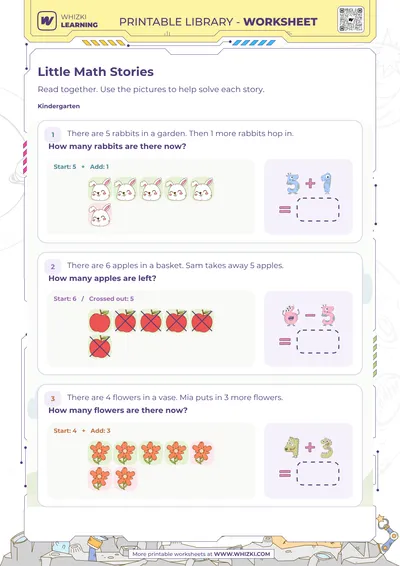
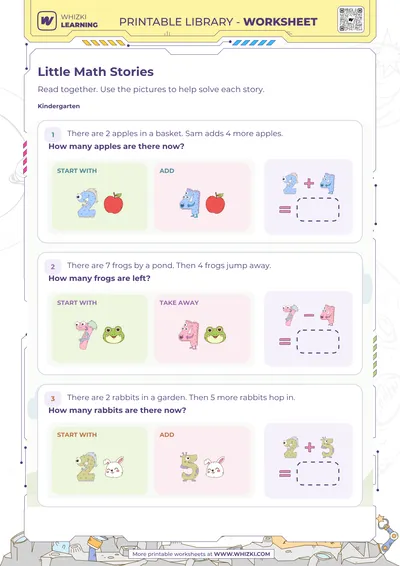
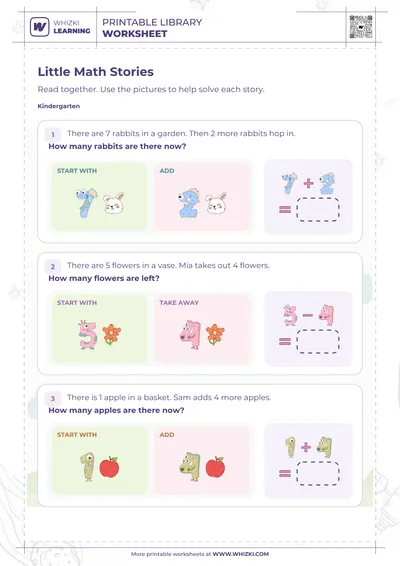
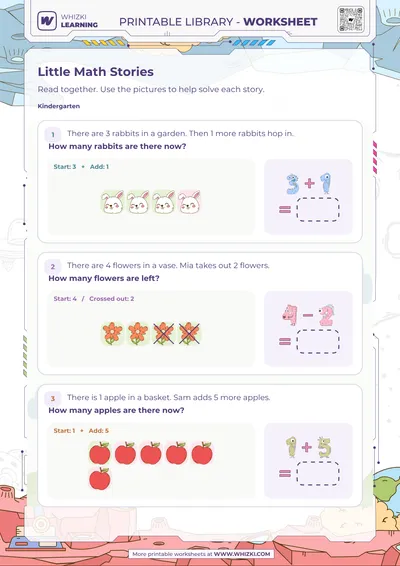
First graders can know how to count and still stall when a short story asks, “Do I add or subtract?” This page gives three little math stories: apples with 3 in a basket and 8 more added, frogs with 17 by a pond and 14 jumping away, and rabbits with 12 in a garden and 6 more hopping in. Kids read each story, notice what changed, and answer how many there are now or how many are left.
This is a good fit for a 6-year-old who is working on addition and subtraction within first-grade numbers. If the reading feels like a lot, read the story aloud while your child follows along. The math work is still theirs: listening for more, takes away, jump away, now, and left, then deciding which operation matches the action.
Sit together and take one story at a time. Ask, “What number do we start with?” then, “Did the group get bigger or smaller?” For the apple story, your child can start with 3 and count on 8 more. For the frog story, they can begin with 17 and take away 14 using counters, fingers, or quick pencil marks. For the rabbit story, they can combine 12 and 6, then write the answer clearly.
When this page is done, choose the next step based on what felt tricky. If the story format helped, try another short word-problem round with the Little Math Stories Addition and Subtraction Worksheet. If adding on is the part that needs more hands-on support, the Make Ten Addition Ten Frames Worksheet gives a visual way to build numbers before returning to mixed stories.
Boost your child’s skills with our discounted workbooks. Engaging activities for preschool, kindergarten, and grade 1 - now at special sale prices!


Fast shipping
Secure Payment
Licensed Teachers
For the planet
Printed in the USA
Helpful guides for parents and teachers, and tips for making learning at home super fun.

Picture labels can build meaning, first-sound attention, or guessing habits. Use this parent-friendly decision tree to know when to cover or reveal the picture.

A vague school screening notice can leave families guessing, so start with seven plain questions about the test, timing, language, evidence, and next steps.

A field note on the May 2026 move to one shared worksheet generator API, with a simple parent preview for print consistency and handwriting comfort.

A seven-minute apple observation helps children compare color, stem, skin, weight, smell, and a cut surface, then draw what children noticed before any craft begins.
Get exclusive activities, expert tips, and inspiration for a more meaningful, offline family life.