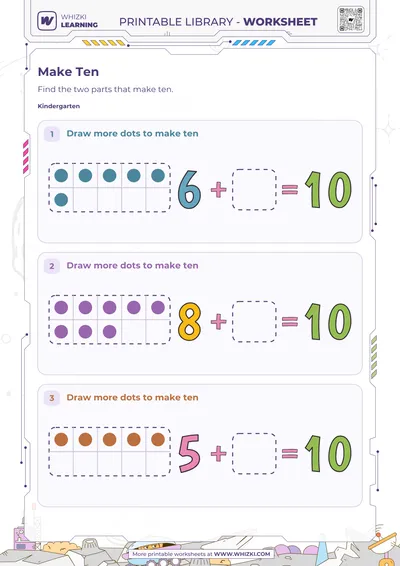
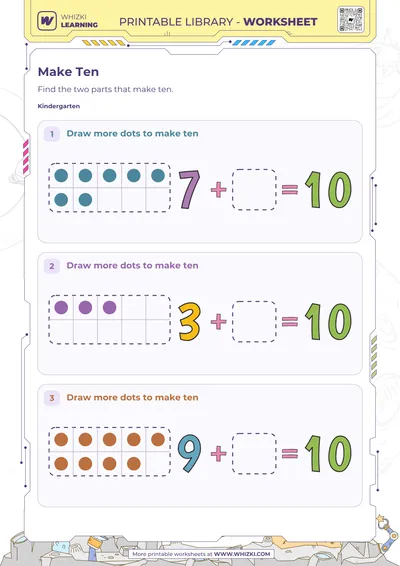
Ten frames → Count filled and empty spaces → Names pairs that make ten using visible groups on the page.
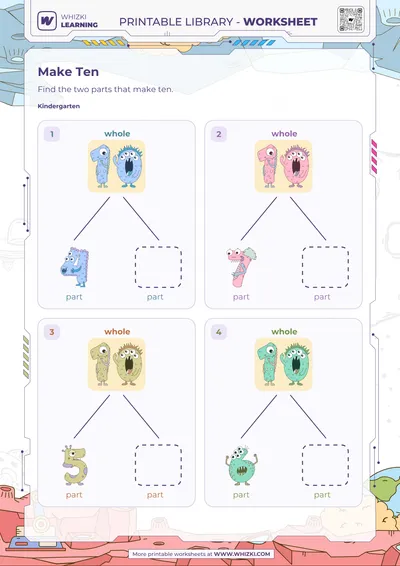
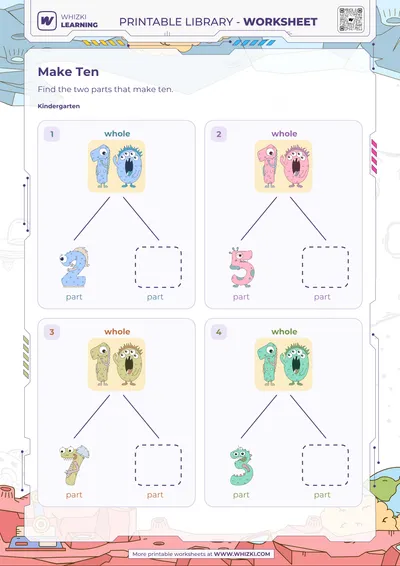
Number pairs → Read six and four, one and nine, nine and one → Connects each pair to ten.
Writing fields → Copy the shown addends and total → Practices neat number formation while recording three make-ten combinations.

Make-ten facts can feel slippery at first, especially when kids are still checking every dot one by one. This printable gives your first grader a calm, focused page with ten frames for three combinations: 6 and 4, 1 and 9, and 9 and 1. They look at the filled spaces, count the parts, and use the writing fields to record how the parts make 10.
This page is a good fit when a child can count to 10 and is starting to see numbers as parts of a whole. You do not need to rush the writing. Sit beside them, point to one group, then the other, and say the fact out loud together: “Six and four make ten.” For another way to show the same target number, try the make ten number bonds worksheet, which helps kids see the two parts in a different layout.
The practice works because the total stays the same each time. That lets your child focus on the changing partners that make 10 instead of juggling too many new facts at once. The 1 and 9, then 9 and 1 examples also give a simple look at order in addition. The parts switch places, but the total is still 10.
If your child gets stuck, cover one part of the ten frame and ask, “How many do we see? How many more would fill the frame?” Keep the session short, and let them check by counting when they need to. As a next step, the little math stories addition and subtraction worksheet gives these part-whole ideas a story setting, which can make the numbers feel more concrete.
Boost your child’s skills with our discounted workbooks. Engaging activities for preschool, kindergarten, and grade 1 - now at special sale prices!


Fast shipping
Secure Payment
Licensed Teachers
For the planet
Printed in the USA
Helpful guides for parents and teachers, and tips for making learning at home super fun.

Help young children measure with paper clips before a ruler, using equal units, clear endpoints, and quick fixes for gaps, overlaps, and different answers.

Picture labels can build meaning, first-sound attention, or guessing habits. Use this parent-friendly decision tree to know when to cover or reveal the picture.

A vague school screening notice can leave families guessing, so start with seven plain questions about the test, timing, language, evidence, and next steps.

A field note on the May 2026 move to one shared worksheet generator API, with a simple parent preview for print consistency and handwriting comfort.
Get exclusive activities, expert tips, and inspiration for a more meaningful, offline family life.