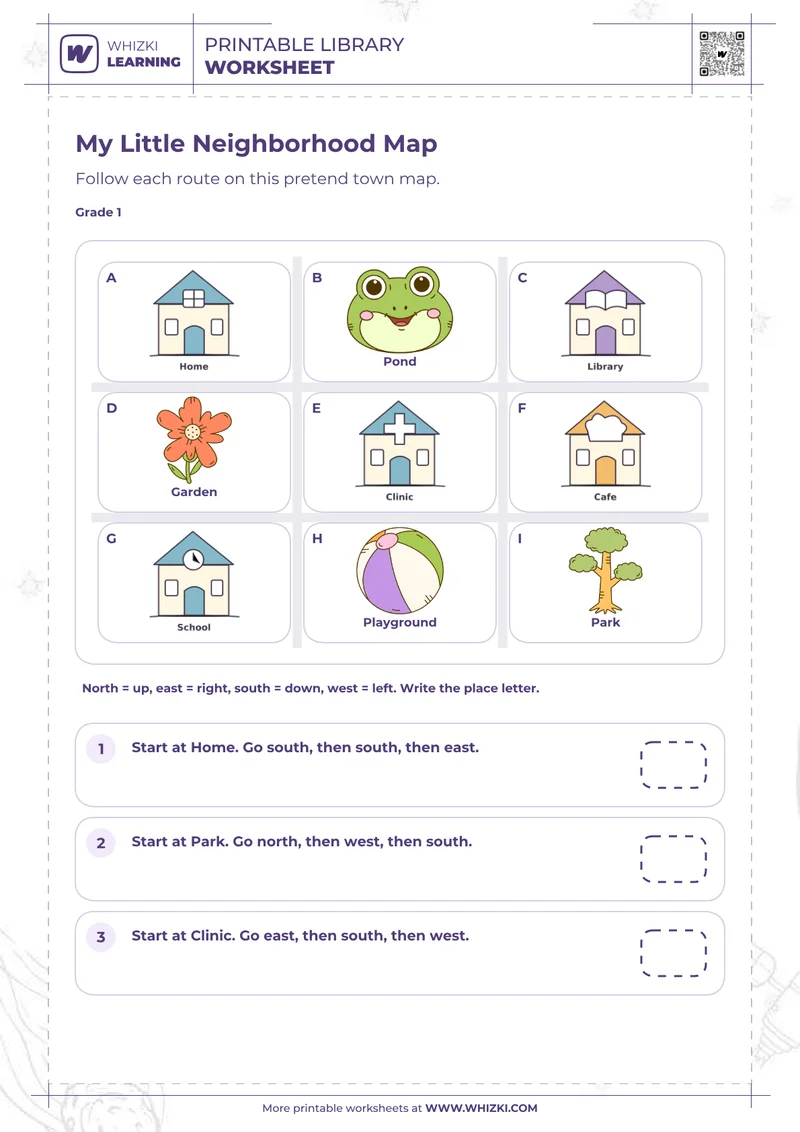


Map skills worksheet → Reading simple map features → First graders identify places, directions, and location clues with more confidence.
Geography practice page → Using location vocabulary → Six-year-olds describe where objects are using words like near, beside, above, and below.
Printable social studies activity → Explaining map choices → Children practice careful observation and speak in complete location-based sentences.

The Map Skills and Geography Worksheet is a printable first grade social studies page for practicing maps and geography. The worksheet helps a six-year-old read simple location clues, notice map details, and connect geography words to places on the page.
Map skills matter in first grade because children are starting to describe where things are, how places relate, and how a picture can stand for a real location. Many six-year-olds rush past small map details or mix up direction words, so a short paper activity gives the child time to slow down and look closely.
A parent or teacher can sit beside the child and read the first prompt aloud, then ask the child to point to the part of the worksheet that gives the clue. After the child answers, invite the child to explain the choice in one sentence, such as “I found the park near the school,” or “The river is beside the road.”
The worksheet is useful because the page keeps the focus on one early geography goal instead of crowding the child with too many tasks. The printable format also makes room for pointing, circling, talking, and correcting gently, which turns map practice into shared off-screen time rather than a rushed quiz.
Boost your child’s skills with our discounted workbooks. Engaging activities for preschool, kindergarten, and grade 1 - now at special sale prices!


Fast shipping
Secure Payment
Licensed Teachers
For the planet
Printed in the USA
Helpful guides for parents and teachers, and tips for making learning at home super fun.

Picture labels can build meaning, first-sound attention, or guessing habits. Use this parent-friendly decision tree to know when to cover or reveal the picture.

A vague school screening notice can leave families guessing, so start with seven plain questions about the test, timing, language, evidence, and next steps.

A field note on the May 2026 move to one shared worksheet generator API, with a simple parent preview for print consistency and handwriting comfort.

A seven-minute apple observation helps children compare color, stem, skin, weight, smell, and a cut surface, then draw what children noticed before any craft begins.
Get exclusive activities, expert tips, and inspiration for a more meaningful, offline family life.