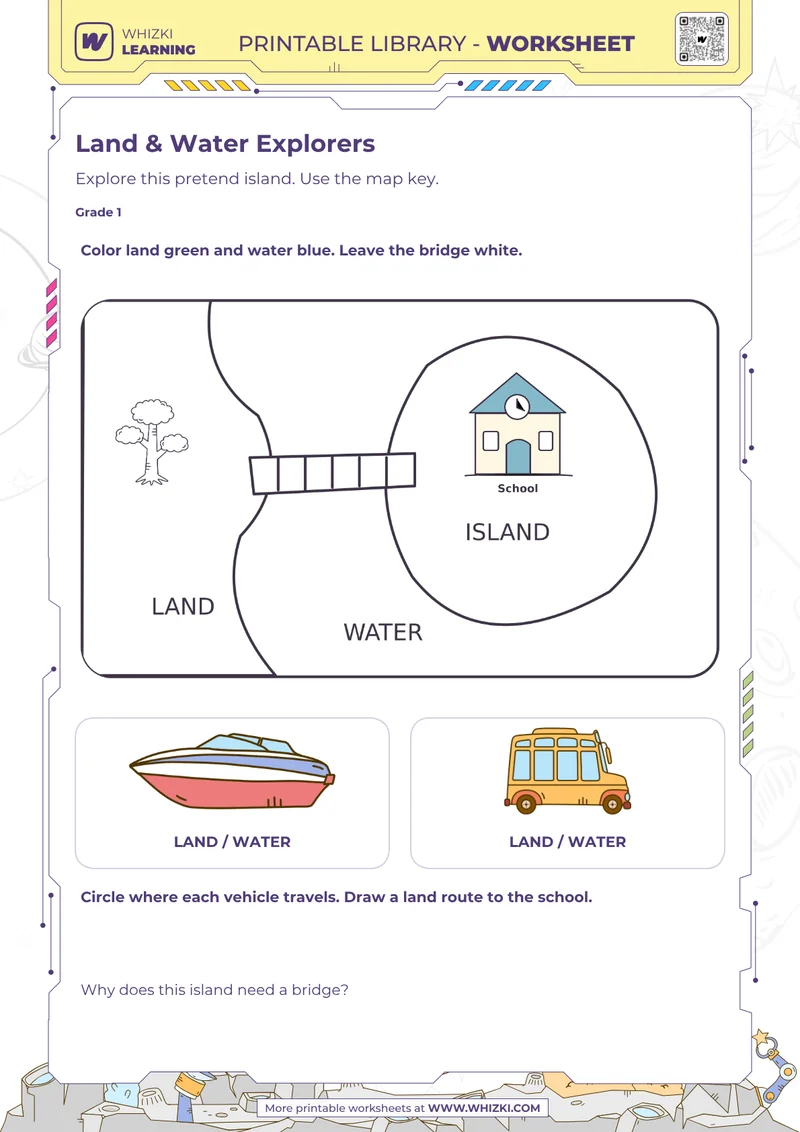


Maps and geography worksheet → Reads simple map details → Child connects pictures, places, and directions with less guessing.
First grade social studies page → Uses location words → Child describes where places are using clear map language.
Printable geography practice → Matches visual clues to places → Child builds confidence reading maps during shared adult-child work.

The Maps and Geography Worksheet for First Grade gives 6-year-olds practice with map skills, simple place words, and early geography thinking. The worksheet focuses on reading visual clues, noticing location words, and connecting map ideas to real places children can picture.
First graders are ready to talk about near, far, left, right, land, water, and neighborhood places, but map language can still feel mixed up. A child may know where the park is in real life and still stall when the same place appears on a printed map.
A parent or teacher can sit beside the child with a pencil and crayons, then read each prompt out loud before the child answers. Ask the child to point first, say the location word next, and mark the answer last, so map reading becomes a short shared conversation instead of a guessing race.
The worksheet is useful because the page keeps the task simple and visual while still asking the child to think carefully about place and direction. The printable format also makes the activity easy to use at the kitchen table, in a small group, or as a quick social studies review without extra setup.
Boost your child’s skills with our discounted workbooks. Engaging activities for preschool, kindergarten, and grade 1 - now at special sale prices!


Fast shipping
Secure Payment
Licensed Teachers
For the planet
Printed in the USA
Helpful guides for parents and teachers, and tips for making learning at home super fun.

Picture labels can build meaning, first-sound attention, or guessing habits. Use this parent-friendly decision tree to know when to cover or reveal the picture.

A vague school screening notice can leave families guessing, so start with seven plain questions about the test, timing, language, evidence, and next steps.

A field note on the May 2026 move to one shared worksheet generator API, with a simple parent preview for print consistency and handwriting comfort.

A seven-minute apple observation helps children compare color, stem, skin, weight, smell, and a cut surface, then draw what children noticed before any craft begins.
Get exclusive activities, expert tips, and inspiration for a more meaningful, offline family life.