Learning Outcomes
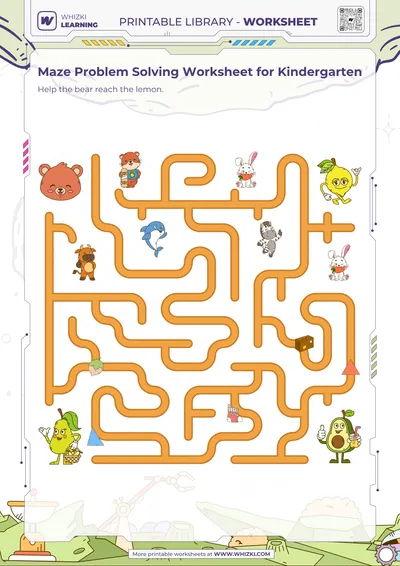
Builds pencil control. Children guide a crayon or pencil through narrow maze paths while trying to avoid the walls.
Practices visual tracking. Children scan the maze from the bear toward the lemon and pear to locate a workable route.
Strengthens problem solving. Children test turns, notice dead ends, and adjust their path when the first choice does not work.

Bear Maze Puzzle: Reach the Lemon and Pear
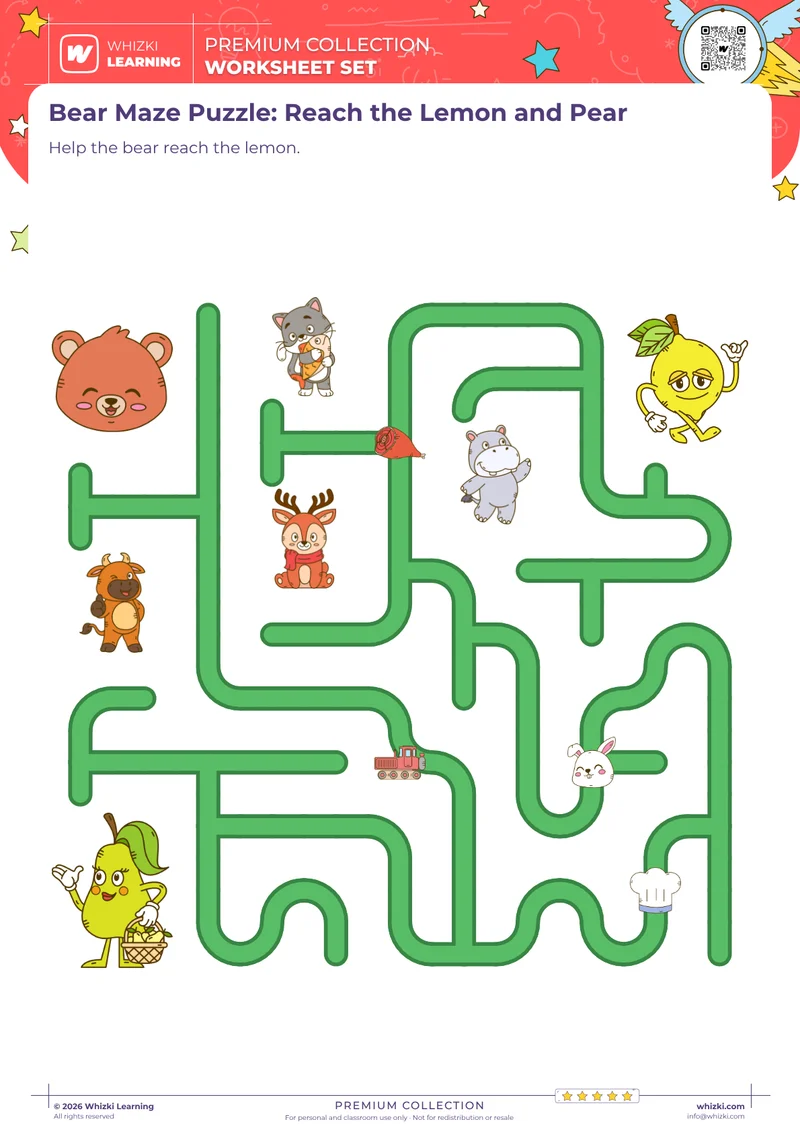
Getting a preschooler or kindergartener to slow down with a pencil can be tough, especially when they want to rush to the finish. This maze page gives that busy energy a clear job: help the bear reach two fruity goals without bumping into the maze walls.
Children begin at the bear, follow the open path, and work toward the lemon and pear. The medium difficulty adds a few turns and choices, so kids practice visual tracking, left-to-right and up-and-down movement, planning ahead, and steady crayon control as they draw one continuous route.
For an easy setup, print one page and offer a crayon or pencil. Ask your child to point to the bear, name the lemon and pear, then trace the path with a finger before drawing it. If they hit a dead end, have them pause, back up, and try a new opening.
This worksheet belongs to Maze Adventures, a premium set in the Whizki Plus tier. The set invites children to follow illustrated paths, explore different maze shapes, and finish playful picture hunts, giving you a screen-free puzzle option for centers, quiet time, homeschool, or a quick table activity.
Keep it short and cheerful. Set a 5 to 10 minute window, praise careful looking more than speed, and let your child color the bear or fruit when the maze is done if they still want a little extra page time.
Limited-time savings
on Whizki workbooks.
Boost your child’s skills with our discounted workbooks. Engaging activities for preschool, kindergarten, and grade 1 - now at special sale prices!


Fast shipping
Secure Payment
Licensed Teachers
For the planet
Printed in the USA
Find fresh ideas
To help your little learners grow!
Helpful guides for parents and teachers, and tips for making learning at home super fun.

A seven-minute apple observation helps children compare color, stem, skin, weight, smell, and a cut surface, then draw what children noticed before any craft begins.

A field note on why Ukrainian-English workbook pages need fresh design choices for letters, examples, space, and language-specific skills.

A fast weather window journal helps ages 3-7 notice sky and temperature feeling with simple symbols, compare a few days, and learn observation versus forecast.

A five-minute snack sort turns crackers, berries, or allergy-friendly objects into early data practice as children sort, count, compare, and clean up.
Join the Screen-Free Movement.
Get exclusive activities, expert tips, and inspiration for a more meaningful, offline family life.