Learning Outcomes
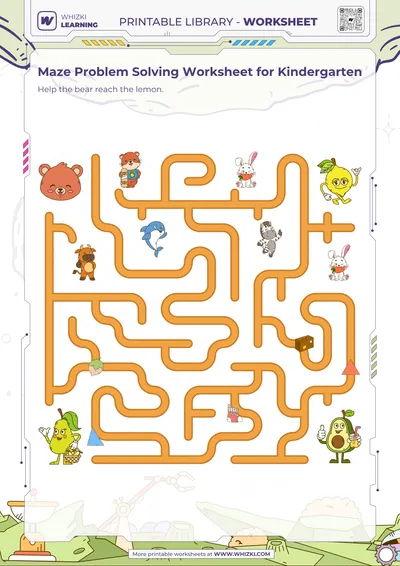
Builds visual tracking. Children scan connected honeycomb spaces to decide where the path can continue.
Practices pencil control. Children guide a crayon or pencil through turns while staying within the maze path.
Strengthens problem-solving. Children pause at blocked spaces, backtrack with a finger, and choose a new route.

Easy Honeycomb Maze Adventure with Scene Count
Some days, getting a child to slow down with a pencil feels harder than finding the path itself. This honeycomb maze gives busy hands a clear, low-pressure job that fits a screen-free table time, center rotation, or homeschool warm-up.
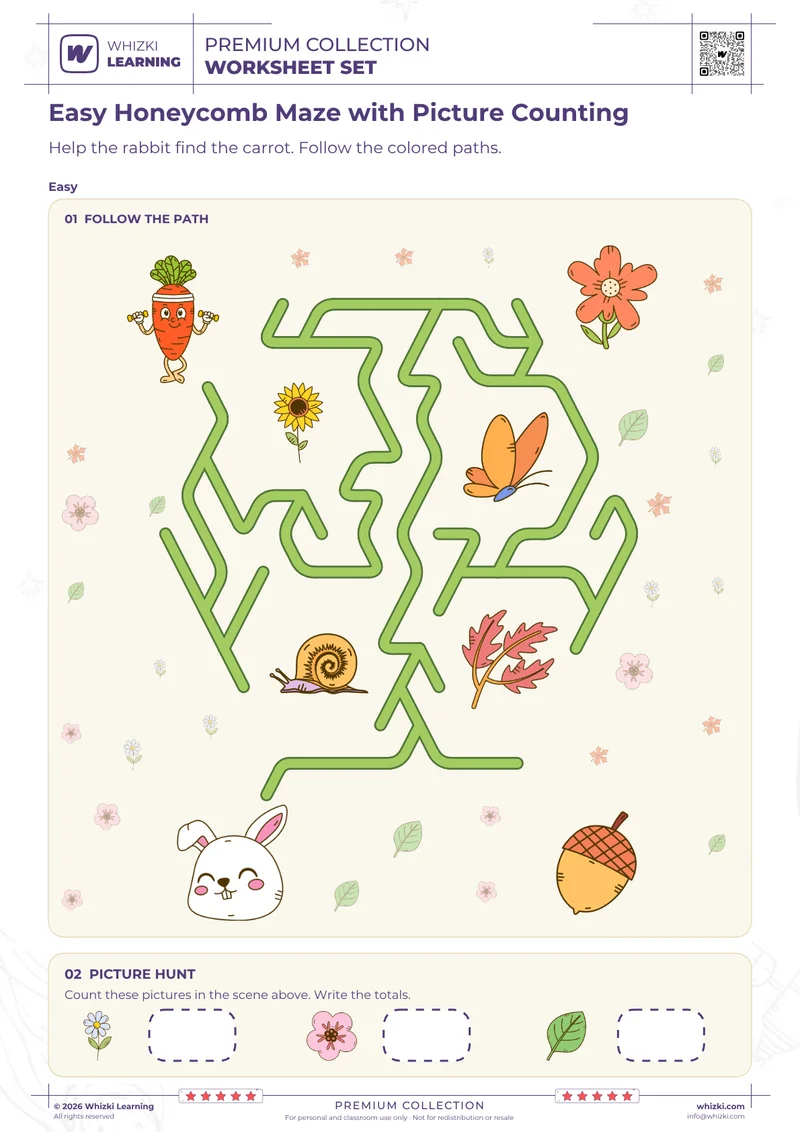
On the page, children trace a route through an easy honeycomb-shaped maze from the starting point to the finish. They follow the connected spaces with a crayon or pencil, make small direction changes, and use visual scanning to stay inside the path. The scene-count activity adds a simple look-and-count finish after the maze.
Start by asking your child to point to the opening and talk through the first few moves before drawing. If they hit a blocked space, have them pause, back up with a finger, and try another route before marking more of the path.
This printable belongs to the Maze Adventures set in the Whizki Plus tier, where children follow illustrated paths, explore different maze shapes, and finish playful picture hunts. The honeycomb layout adds variety without overwhelming younger learners, so it works well for preschool, kindergarten, and early first grade practice.
Keep the session short and calm. Five to ten minutes is enough for tracing the maze and completing the count, especially if you celebrate careful looking more than speed.
Limited-time savings
on Whizki workbooks.
Boost your child’s skills with our discounted workbooks. Engaging activities for preschool, kindergarten, and grade 1 - now at special sale prices!


Fast shipping
Secure Payment
Licensed Teachers
For the planet
Printed in the USA
Find fresh ideas
To help your little learners grow!
Helpful guides for parents and teachers, and tips for making learning at home super fun.

A seven-minute apple observation helps children compare color, stem, skin, weight, smell, and a cut surface, then draw what children noticed before any craft begins.

A field note on why Ukrainian-English workbook pages need fresh design choices for letters, examples, space, and language-specific skills.

A fast weather window journal helps ages 3-7 notice sky and temperature feeling with simple symbols, compare a few days, and learn observation versus forecast.

A five-minute snack sort turns crackers, berries, or allergy-friendly objects into early data practice as children sort, count, compare, and clean up.
Join the Screen-Free Movement.
Get exclusive activities, expert tips, and inspiration for a more meaningful, offline family life.