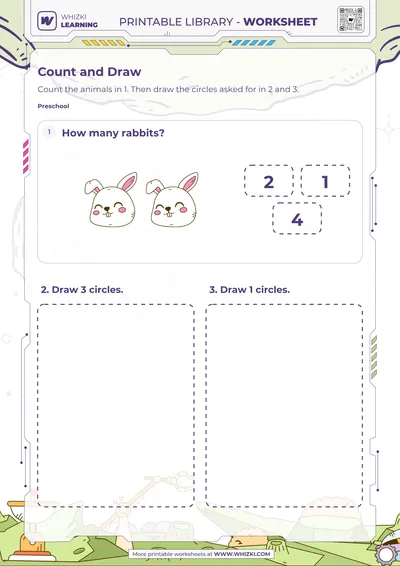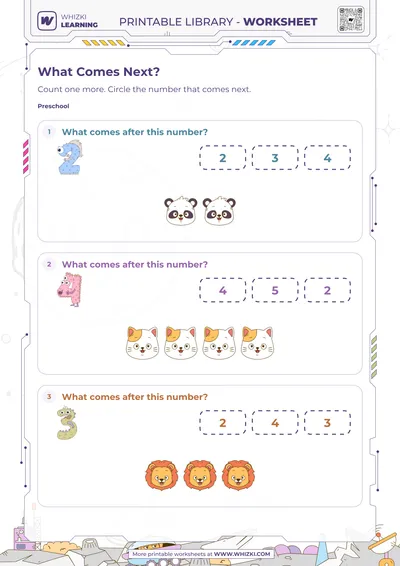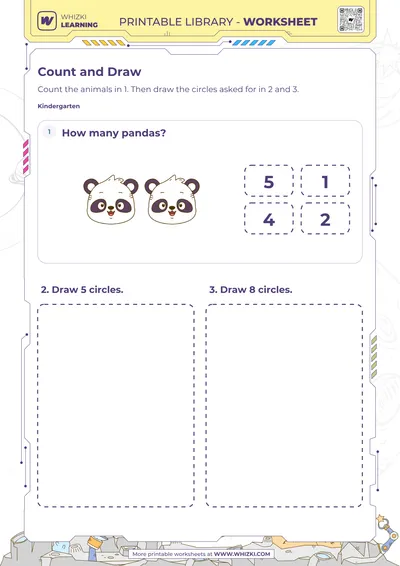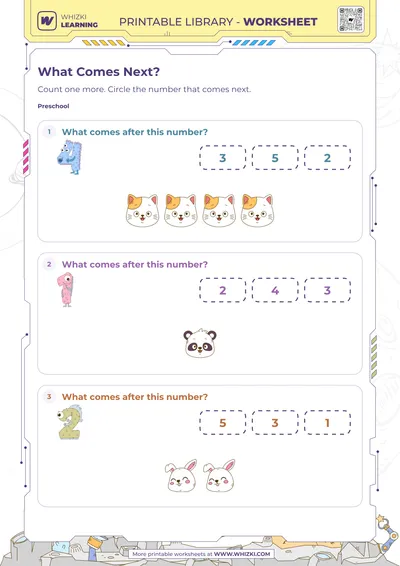


Number sequence → Count one forward from a given number → Identifies the next whole number within twenty.
Numbers to twenty → Connects spoken counting order to printed numerals → Chooses the number that comes next.
Problem choices → Compares nearby whole numbers → Selects the answer that follows the starting number in order.

Some first graders can race through counting aloud, then stall when the number is sitting alone on paper. This worksheet keeps the task clear: look at a given whole number, count one step forward, and choose the next number. Every answer stays at 20 or below, so the practice stays focused on counting order, not big-number stress.
This is a good fit when a child can count forward through the teen numbers but still mixes up what comes right after 12, 15, or 18. Sit together for the first few problems and say the numbers softly if needed: “14, 15.” Then have your child point to or choose the number that comes next. If the teen numbers feel shaky, a quick warm-up with number cards to twenty can make the printed numerals feel more familiar before starting.
The practice works because each item asks for one small move in the number sequence. Instead of counting a whole group of objects, the child uses the starting number as a place on the counting path and moves ahead by one. That builds comfort with one-more thinking, which later helps with addition, missing numbers, and comparing nearby numbers.
If your child guesses, pause and go back to the counting words. Cover the answer choices for a moment, count from the given number to the next number, and then uncover the choices. For a next step, try a number trail activity like missing numbers in number trails, which gives more practice using number order in a slightly different format.
Boost your child’s skills with our discounted workbooks. Engaging activities for preschool, kindergarten, and grade 1 - now at special sale prices!


Fast shipping
Secure Payment
Licensed Teachers
For the planet
Printed in the USA
Helpful guides for parents and teachers, and tips for making learning at home super fun.

Picture labels can build meaning, first-sound attention, or guessing habits. Use this parent-friendly decision tree to know when to cover or reveal the picture.

A vague school screening notice can leave families guessing, so start with seven plain questions about the test, timing, language, evidence, and next steps.

A field note on the May 2026 move to one shared worksheet generator API, with a simple parent preview for print consistency and handwriting comfort.

A seven-minute apple observation helps children compare color, stem, skin, weight, smell, and a cut surface, then draw what children noticed before any craft begins.
Get exclusive activities, expert tips, and inspiration for a more meaningful, offline family life.