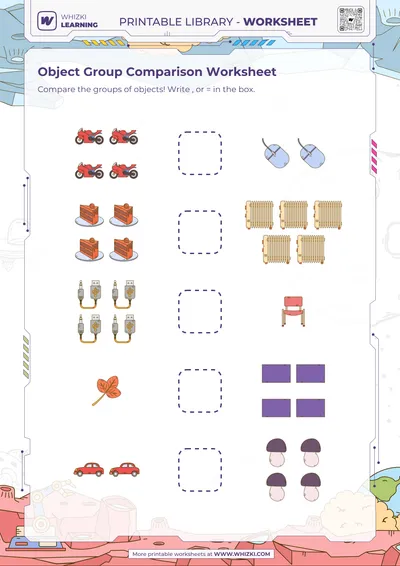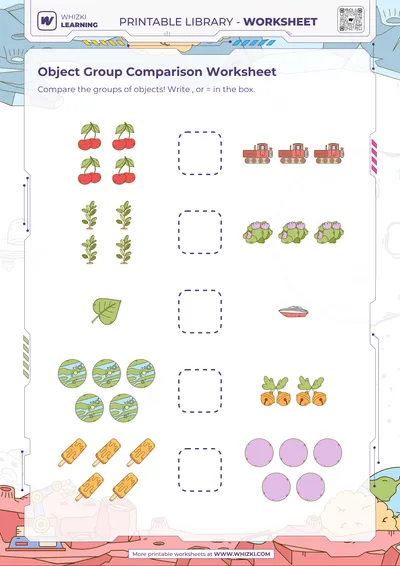


Picture groups → Counting objects one by one → Identifies how many are in each set before comparing.
Kindergarten child → Comparing two counted sets → Chooses whether a group is bigger, smaller, or equal.
Math language → Using bigger, smaller, and equal → Explains a comparison with clear words instead of guessing.

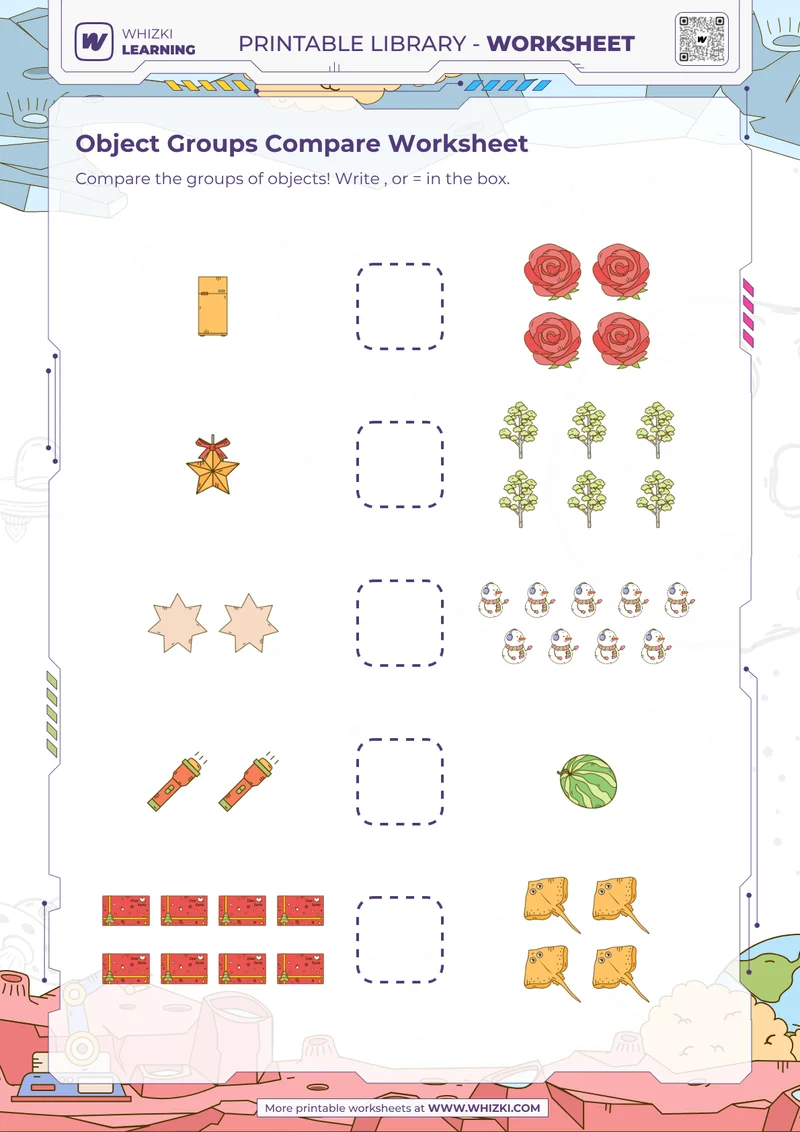
Kids often know how to count, then stall when they have to decide which group has more. This worksheet keeps the comparison hands-on. The child counts two groups of pictures, then decides whether one group is bigger, smaller, or equal. There are no digits to solve first, so the focus stays on looking carefully and counting actual objects.
This is a good fit when a kindergartener can count objects one at a time and is starting to compare amounts. If they skip an object or count one twice, that is useful information. Point, touch, or cover each picture as they count. Then ask, “Which group has more?” or “Are they the same?” Short, calm rounds work better than trying to finish every item in one sitting.
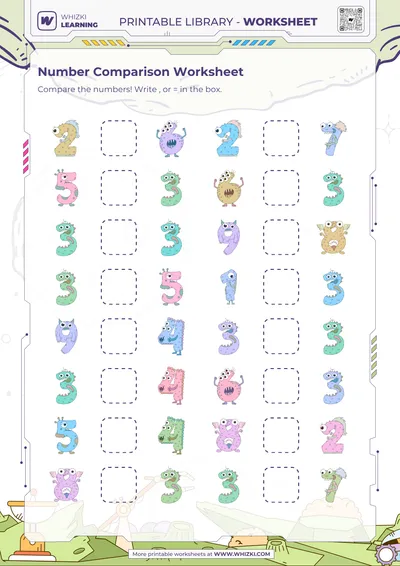
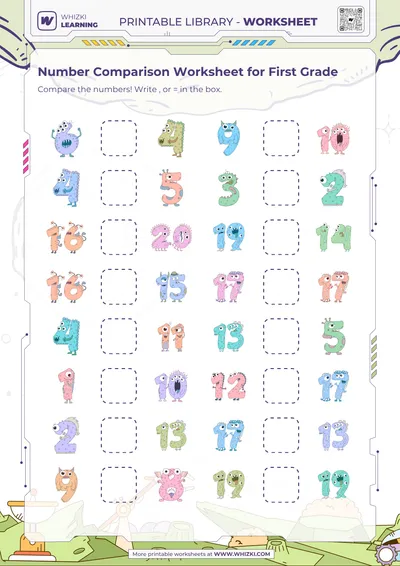
The practice builds math language through real choices. Counting each group helps the child attach a number to a set. Comparing the totals helps them use words like bigger, smaller, and equal with meaning. If they are ready for number-only comparisons later, the Number Comparison Worksheet for Kindergarten is a helpful next step because it moves from pictures toward written numbers.
Sit nearby and let them do the counting aloud if they want to. If an answer is off, avoid jumping straight to correction. Try, “Let’s count this side again together,” then compare the two totals. After this page, you can build toward simple joining and taking-away ideas with the Little Math Stories Addition and Subtraction Worksheet, which uses short story contexts after children have practiced noticing amounts.
Boost your child’s skills with our discounted workbooks. Engaging activities for preschool, kindergarten, and grade 1 - now at special sale prices!


Fast shipping
Secure Payment
Licensed Teachers
For the planet
Printed in the USA
Helpful guides for parents and teachers, and tips for making learning at home super fun.

Use one familiar snack to build science talk and vocabulary without pressure to taste. This kitchen-table investigation honors allergies, texture needs, and child choice.

Help young children measure with paper clips before a ruler, using equal units, clear endpoints, and quick fixes for gaps, overlaps, and different answers.

Picture labels can build meaning, first-sound attention, or guessing habits. Use this parent-friendly decision tree to know when to cover or reveal the picture.

A vague school screening notice can leave families guessing, so start with seven plain questions about the test, timing, language, evidence, and next steps.
Get exclusive activities, expert tips, and inspiration for a more meaningful, offline family life.