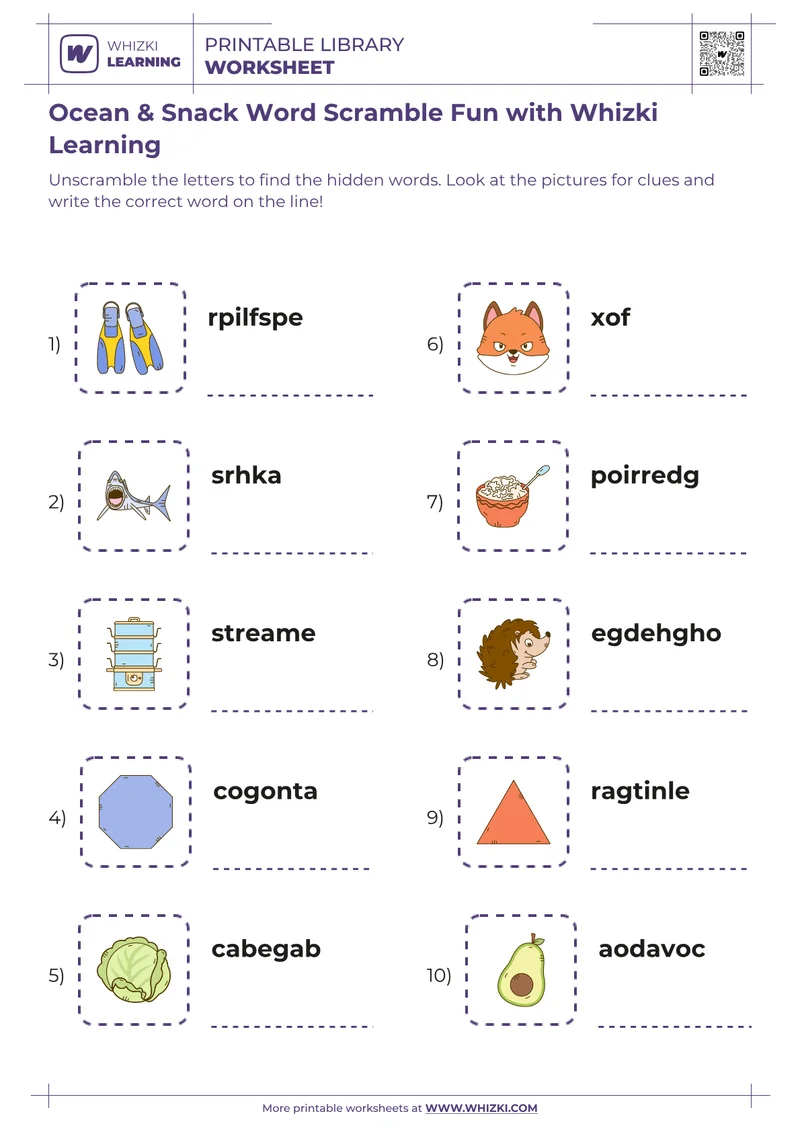
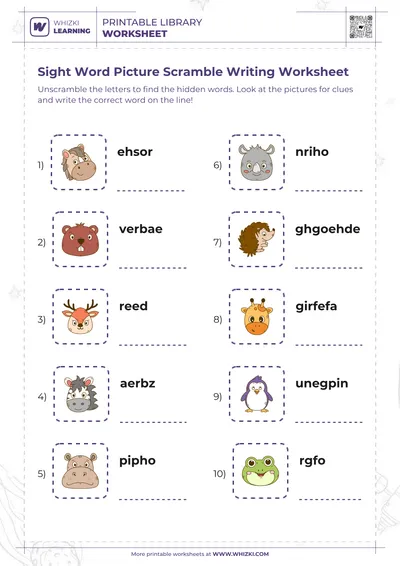
Pictures give a child a starting point for writing words. This picture word scramble worksheet includes flippers, shark, and steamer, with 10 picture prompts and writing lines. Each picture has jumbled letters to rearrange into its name. The word selection is flippers, shark, steamer, octagon, cabbage, fox, porridge, hedgehog, triangle, and avocado. Use it when your child is ready to connect familiar spoken names with written words.
Begin with flippers. Ask your child to name the picture aloud before writing. Look at the letters rpilfspe and try placing them in the order needed for flippers. Use each printed letter once, including repeated letters, then read the result and compare it with the picture.
Move to shark when the first example feels manageable. A child can move handwritten letter slips on the table before committing to a pencil answer. Keep the slips matched to the printed letters, and check that none are missing or added. If a picture suggests another everyday name, agree on the intended word before treating the response as a spelling task.
Complete a small selection and revisit the other pictures later. Read the finished words together, checking letter order and choosing one for a spoken sentence. Explore the Spelling and Word Building set for more written-word practice. The Alphabet Starter Pack provides a separate next step when forming individual letters needs more support. Keep that handwriting practice brief so the word activity remains manageable.