Learning Outcomes
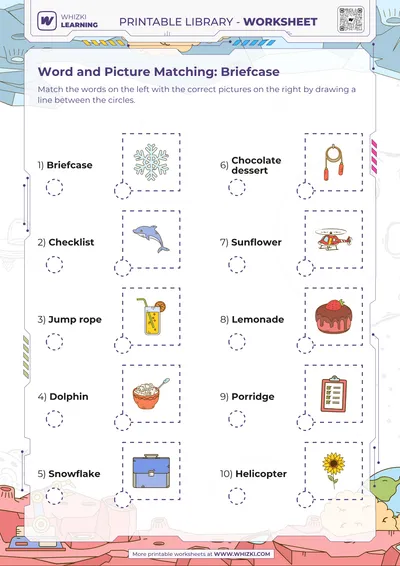
The Whizki Learning worksheet strengthens early vocabulary breadth by introducing 10 distinct nouns with matching visuals, helping young readers accurately link printed words to real-world objects.
The Whizki Learning word-picture matching activity improves reading comprehension accuracy by requiring children to choose correct images for each word, reinforcing meaning-based decoding rather than guesswork.
The Whizki Learning resource introduces the concept of category-based thinking by grouping words into clothing, technology, shapes, animals, and household items, supporting organized mental word networks.
Alphabet & Letters
ABC
A–Z alphabet learning with words, examples, and early reading practice
Picture Match Party: First Words Fun with Whizki Learning
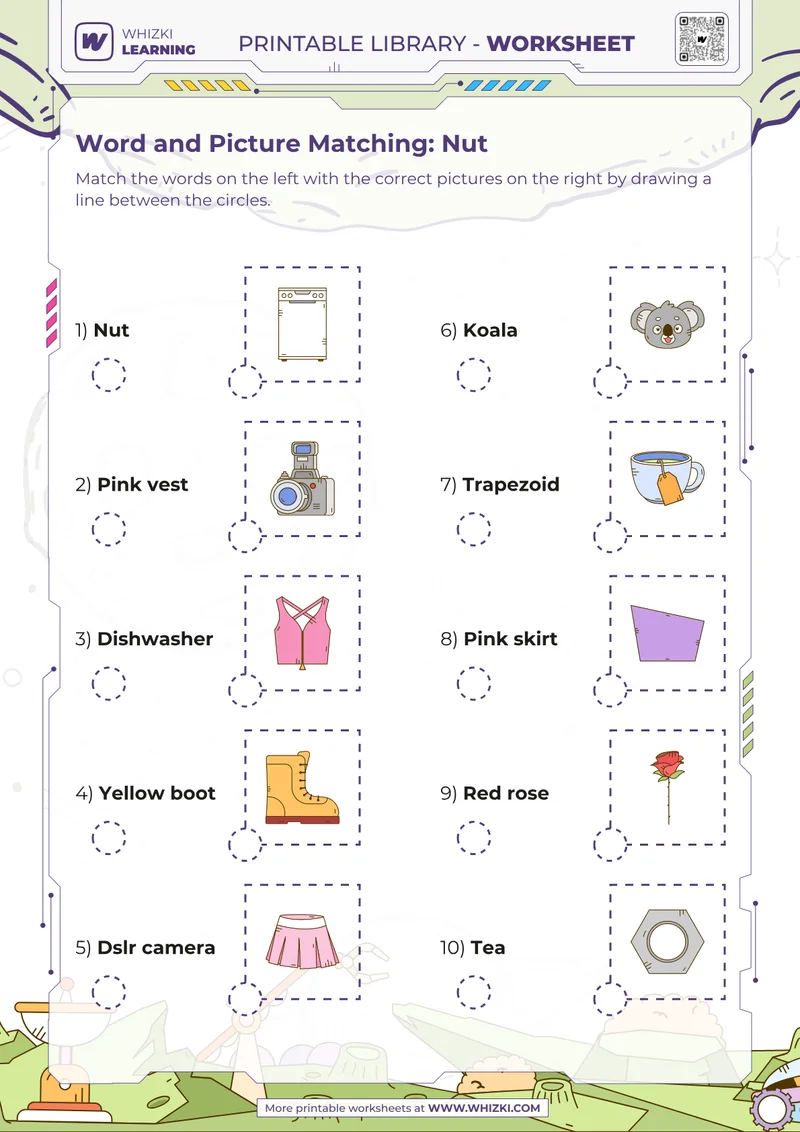
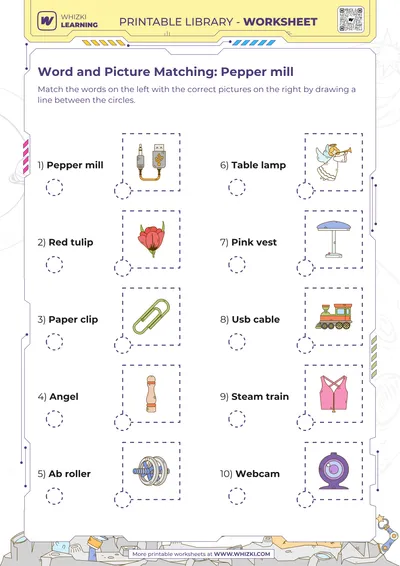
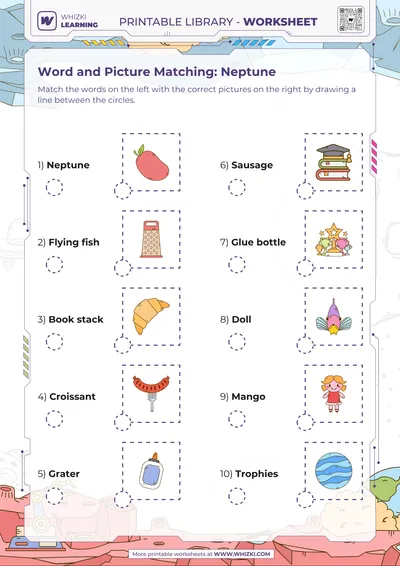
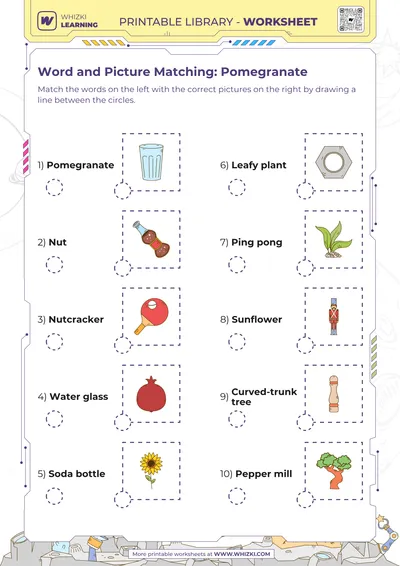
The Whizki Learning word-to-picture matching worksheet for 5-year-olds introduces early readers to high-utility nouns through clear, engaging illustrations and easy-to-read labels. The worksheet invites children to connect each printed word to a fun picture, building recognition of common objects such as clothing, animals, and shapes. Educator-designed prompts support first grade reading expectations and encourage young learners to scan from left to right while decoding each word. Parents and teachers gain a classroom-ready or homeschool-ready resource that supports daily literacy practice in just a few focused minutes.
The Whizki Learning worksheet promotes vocabulary expansion by pairing each featured word with a concrete, visually distinctive image. Children see words like "koala" or "dishwasher" directly above or beside matching pictures, which strengthens word-meaning connections and long-term memory. Literacy specialists who contributed to the Whizki Learning design selected a blend of everyday and slightly challenging words to stretch young readers without causing frustration. Repeated practice with word-picture links helps children recall vocabulary in real-life conversations and future reading activities.
The Whizki Learning word-to-picture matching worksheet also nurtures early reading comprehension skills, not just simple word calling. Children must understand each word well enough to decide which picture represents the correct meaning, encouraging active thinking rather than guessing from first letters alone. By carefully checking every option, young learners practice attention to detail and mental comparison, two cornerstone skills for future story comprehension. Reading specialists involved in Whizki Learning resources emphasize that early, playful exposure to meaning-based tasks greatly improves later success with longer texts.
The Whizki Learning worksheet further supports pre-writing and early writing skills by encouraging children to say each word aloud and trace or copy selected words. When a child verbalizes a word like "tea" or "trapezoid" while pointing to the correct image, oral language development and phonemic awareness strengthen together. Caregivers can extend the worksheet by inviting children to write a simple label or attempt a short sentence about a favorite picture, reinforcing letter formation and sound-spelling connections. Whizki Learning curriculum designers draw on classroom experience and literacy research so every playful page supports measurable, age-appropriate progress in foundational reading and writing.
Limited Time Sale
Kids’ Workbooks!
Boost your child’s skills with our discounted workbooks. Engaging activities for preschool, kindergarten, and grade 1 - now at special sale prices!


Fast shipping
Secure Payment
Licensed Teachers
For the planet
Printed in the USA
Find fresh ideas
To help your little learners grow!
Helpful guides for parents and teachers, and tips for making learning at home super fun.

Getting an energetic preschooler to sit still for handwriting practice often results in frustrating power struggles. This educator-approved playbook provides 10 screen-free, proprioceptive calm-down activities designed to regulate a dysregulated nervous system. Learn how heavy work, fine motor warm-ups, and breath control prepare a child's body and mind for successful, tear-free tracing and writing.
Sunny Hedge
When a preschooler complains of boredom, parents often feel immediate guilt and offer digital entertainment. This educator-approved guide explains the psychological mechanism of unstructured time and why boredom is the ultimate catalyst for independent play. Learn how to survive the initial complaining phase and utilize high-quality printed workbooks to bridge the gap between digital stimulation and deep, analog focus.
Sunny Hedge
Many parents panic when their preschooler cannot sit still for more than two minutes, fearing the child is not ready for formal schooling. This educator-tested guide explains why early attention spans are naturally short and provides a step-by-step plan to gently stretch cognitive stamina. Learn how to build a reliable 15-minute focus habit using screen-free, analog activities before the first day of kindergarten.
Sunny Hedge
The kitchen provides a natural, highly engaging mathematics classroom for preschoolers. This educator-approved playbook details 10 easy, screen-free number games using everyday pantry items and snacks. Learn how sorting pasta, measuring water, and counting blueberries builds foundational counting skills, one-to-one correspondence, and deep number recognition without any formal preparation.
Sunny HedgeJoin the Screen-Free Movement.
Get exclusive activities, expert tips, and inspiration for a more meaningful, offline family life.