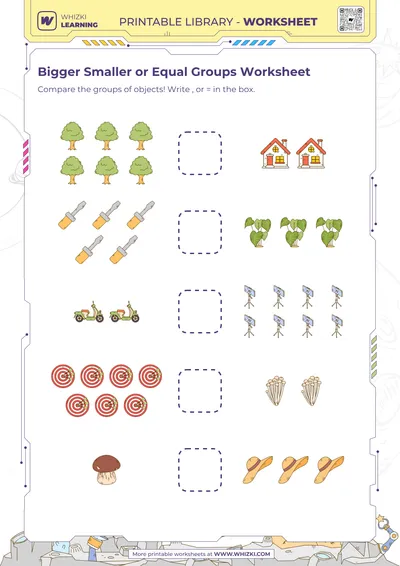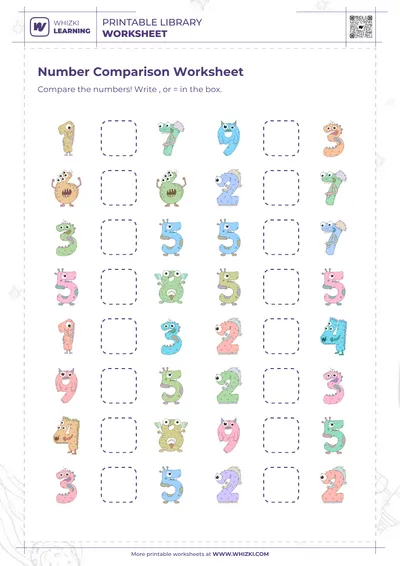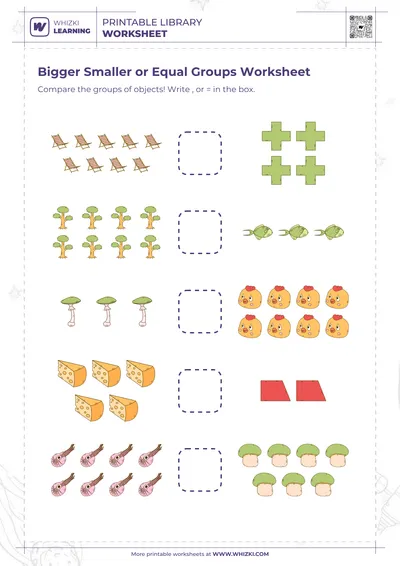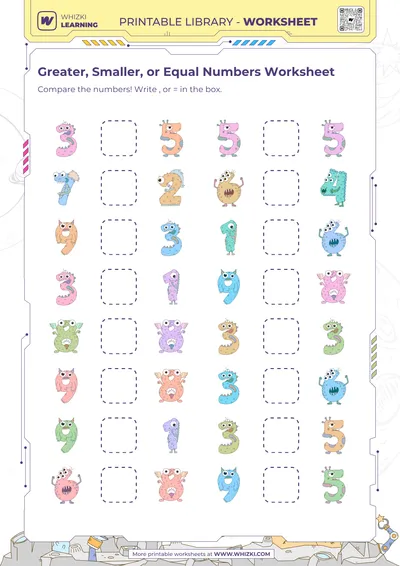
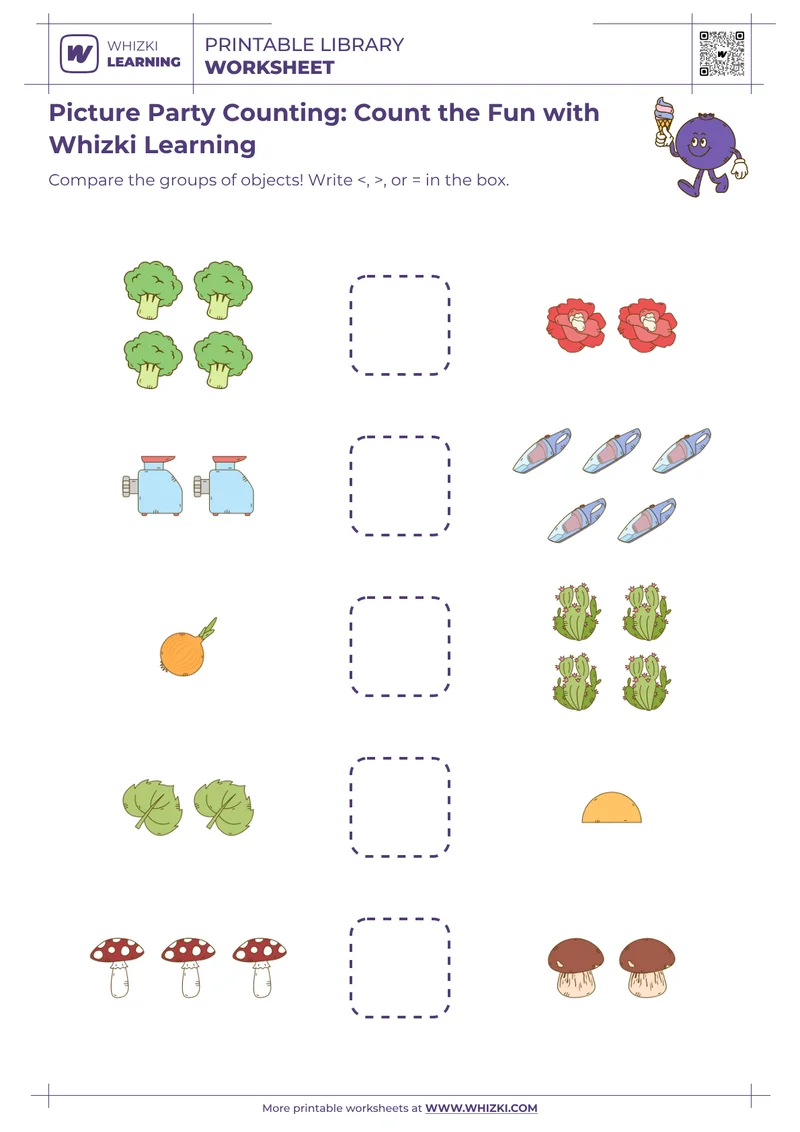


Compare two quantities and select a greater-than, less-than, or equal-to symbol, using the printed picture groups as the starting information.
Read a comparison from left to right and explain which quantity is larger or why the quantities are equal.
Check a comparison by counting or pairing counters, explaining the result during an adult-supported discussion.

Children can practice explaining an answer as they work through this picture-based quantity comparison worksheet. The page contains 5 comparisons and asks them to write greater-than, less-than, or equal-to symbols. The pictured groups give a visible representation of the quantities. The largest quantity in this selection is 5; choose the page when that range is comfortable with support.
The first question represents 4 is greater than 2. Compare the two quantities before choosing a sign. The open side of a greater-than or less-than sign faces the larger value; use the equals sign when the two values are the same. Touch each picture once when counting a group, and return to the counted total before writing.
Read a completed comparison from left to right and ask the child to explain its meaning. If two groups look different, check their quantities by counting or matching counters one to one. An arrangement that takes more space is not necessarily a larger amount. Model one example, then give the child time to attempt the next.
For another page at a similar stage, browse the counting and number sense worksheets. The Early Math Essentials set offers related formats. Use a few questions during a short home practice session, math center, or supported lesson. Pause when the child needs a new explanation, and return to unfinished questions after revisiting the quantities with a simpler example.
Boost your child’s skills with our discounted workbooks. Engaging activities for preschool, kindergarten, and grade 1 - now at special sale prices!


Fast shipping
Secure Payment
Licensed Teachers
For the planet
Printed in the USA
Helpful guides for parents and teachers, and tips for making learning at home super fun.

Picture labels can build meaning, first-sound attention, or guessing habits. Use this parent-friendly decision tree to know when to cover or reveal the picture.

A vague school screening notice can leave families guessing, so start with seven plain questions about the test, timing, language, evidence, and next steps.

A field note on the May 2026 move to one shared worksheet generator API, with a simple parent preview for print consistency and handwriting comfort.

A seven-minute apple observation helps children compare color, stem, skin, weight, smell, and a cut surface, then draw what children noticed before any craft begins.
Get exclusive activities, expert tips, and inspiration for a more meaningful, offline family life.