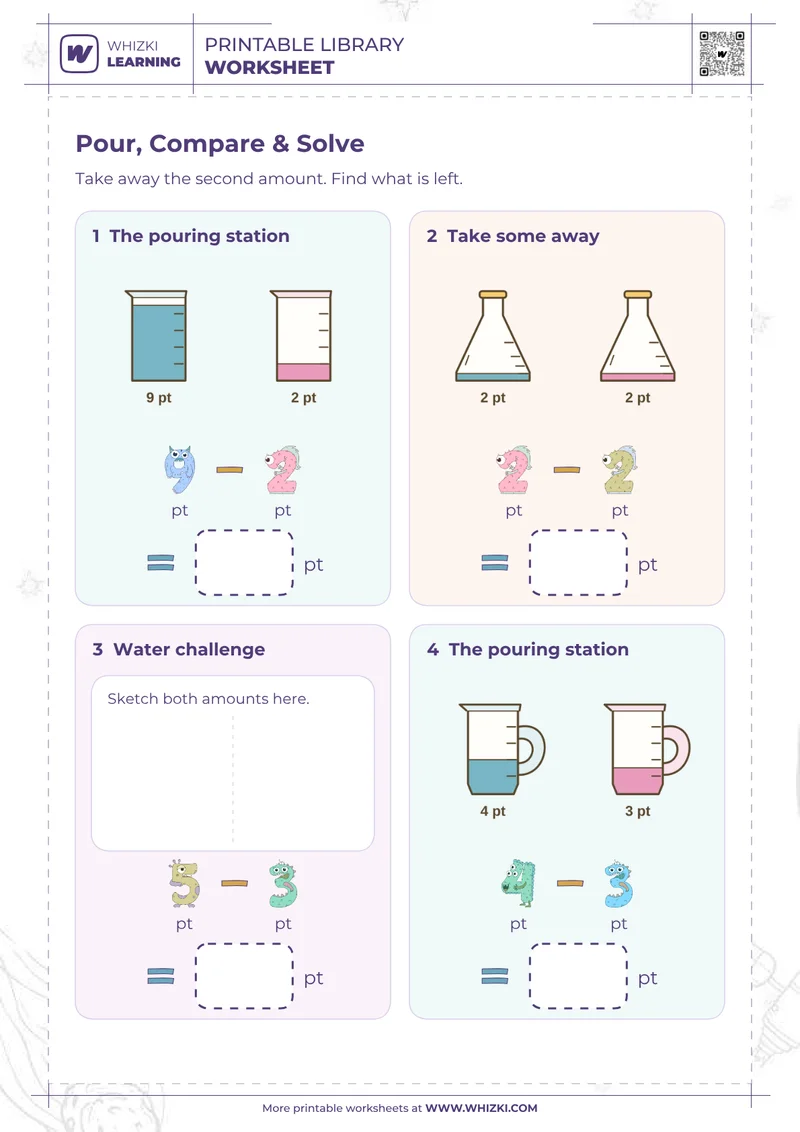


Pint subtraction problems → subtract quantities labeled pt → record the remaining amount with the correct measurement unit.
Illustrated measurement models → read shown quantities → connect the picture cue to the subtraction sentence on the page.
Kindergarten math learners → compare before and after amounts → explain which quantity is left after subtracting.

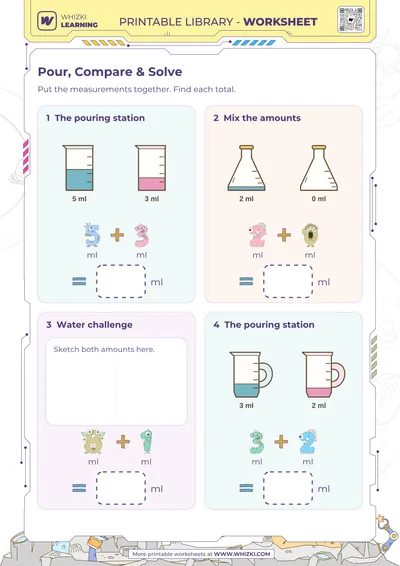
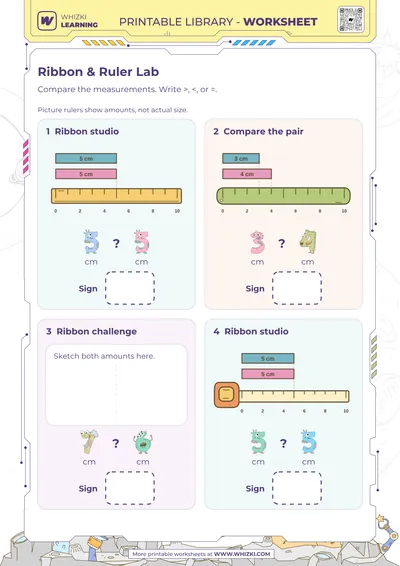
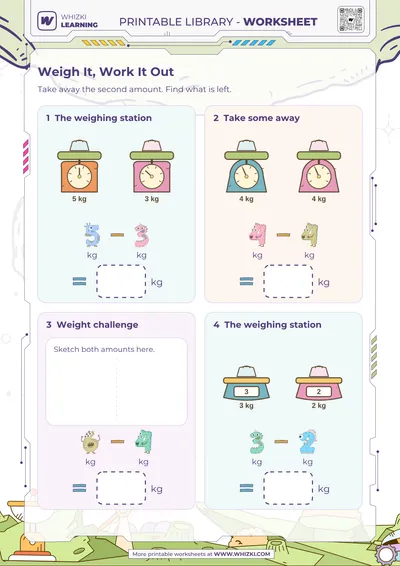
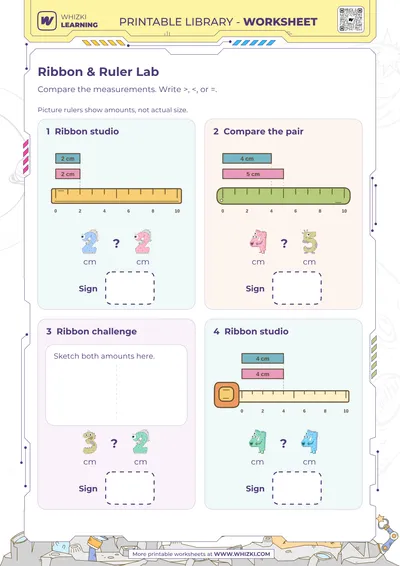
Measurement subtraction can feel fussy because kids have to watch the number and the unit at the same time. This page gives one clear job: solve four subtraction problems labeled pt. The illustrated measurement models match the quantities shown, but they are picture models, not life-size tools for real measuring.
This is a good fit when a kindergartener can count, recognize written numerals, and is starting to understand subtraction as taking away. If the unit label is new, say that pt means pints on this page, then keep the focus on reading the problem, subtracting, and writing the amount left.
Sit side by side for the first problem. Have your child read the starting amount, point to what is being taken away, and say the answer before writing it. A simple prompt like, “What amount is left?” keeps the work on subtracting measured amounts without turning it into a long lesson.
For more practice with the same take-away idea in another unit, try the centimeter subtraction measurement worksheet next. When your child is ready to switch from subtracting to comparing, the kilogram comparison worksheet gives another way to read units and decide how amounts relate.
Boost your child’s skills with our discounted workbooks. Engaging activities for preschool, kindergarten, and grade 1 - now at special sale prices!


Fast shipping
Secure Payment
Licensed Teachers
For the planet
Printed in the USA
Helpful guides for parents and teachers, and tips for making learning at home super fun.

Use one Halloween worksheet in a calm 15-minute flow: preview, try, talk with objects, then stop and store, with age adjustments for preschool and kindergarten.

A simple plan for turning one grandparent memory into a bilingual keepsake page with exact words, a child drawing, and clear privacy boundaries.

A practical guide for inviting family stories about names, language, music, routines, celebrations, and places without putting children on display.

Turn a quick room search into early geometry talk by asking about sides, corners, curves, and shapes inside everyday objects.
Get exclusive activities, expert tips, and inspiration for a more meaningful, offline family life.