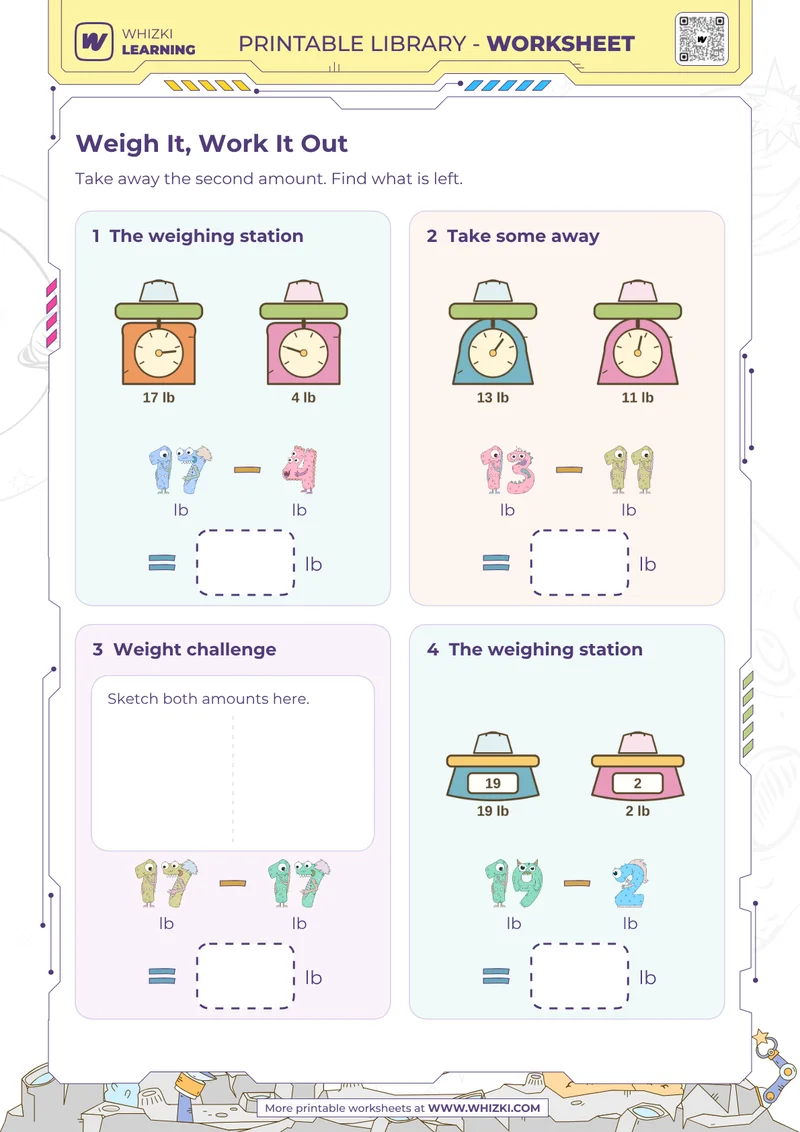


Lb measurement problems → Subtracting labeled quantities → Child writes a difference while keeping the pound unit attached.
Picture models → Reading saved quantities → Child connects the illustrated amount to the subtraction problem before calculating.
Measurement comparisons → Checking the answer → Child sees that a subtraction answer should be less than the starting amount.

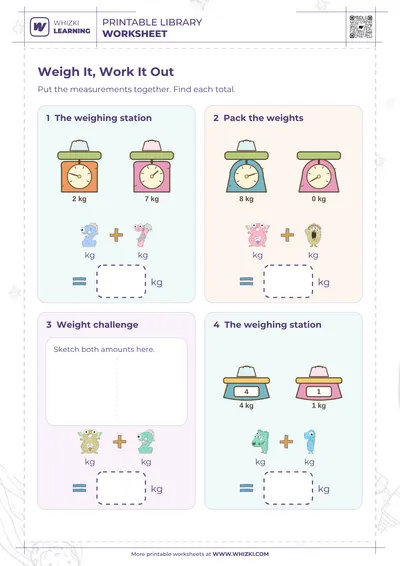
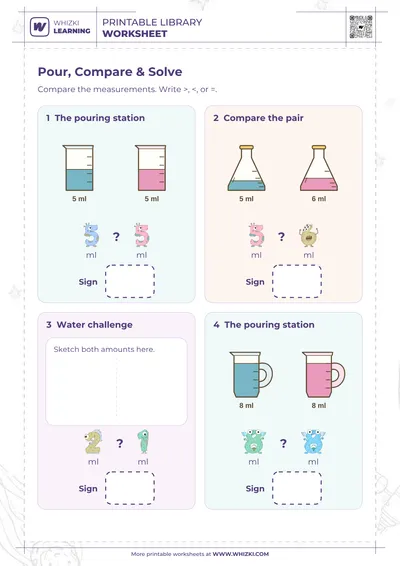
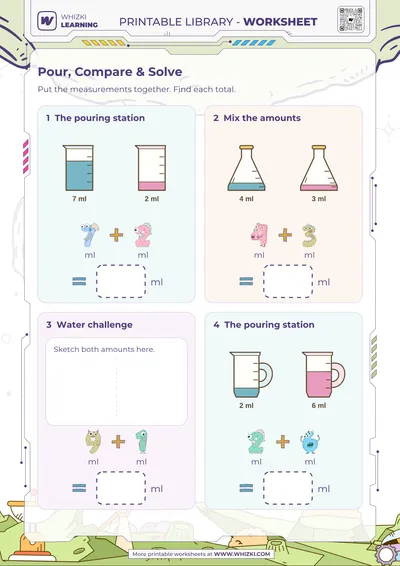
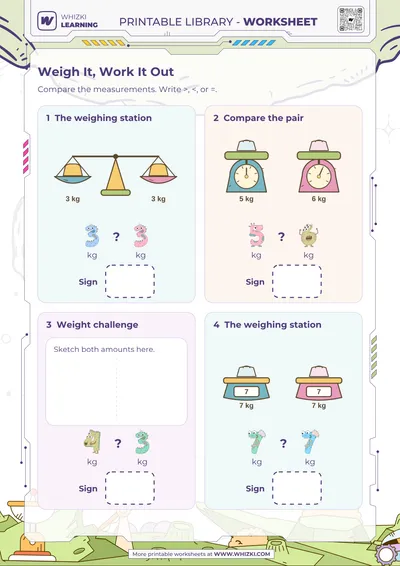
Kids may know how to subtract, then pause when a unit label shows up beside the number. This page gives them four subtraction problems written in lb, with illustrated rulers, scales, or measuring containers that match the saved quantities. The pictures are there as models to read and compare, not as life-size measuring tools.
This is a good fit when a child can read the numbers on the page and is starting to take one amount away from another. If the pound label feels distracting, point to it and say, “lb means pounds,” then solve the number part together. After the answer is written, read the whole measurement aloud so the unit stays connected to the math.
Work left to right and keep the routine simple. Read the first amount, read the amount being taken away, then subtract and write the difference. A quick check helps too: ask, “Should the answer be smaller than the starting amount?” That small comparison step can catch a lot of mix-ups without turning the page into a long lesson.
When this page feels comfortable, move to another measurement operation with the kilogram addition measurement worksheet, which keeps the focus on labeled quantities while switching to addition. For more comparison practice with a liquid unit, the pint comparison measurement worksheet gives a related way to look at amounts and decide which is more or less.
Boost your child’s skills with our discounted workbooks. Engaging activities for preschool, kindergarten, and grade 1 - now at special sale prices!


Fast shipping
Secure Payment
Licensed Teachers
For the planet
Printed in the USA
Helpful guides for parents and teachers, and tips for making learning at home super fun.

Use one familiar snack to build science talk and vocabulary without pressure to taste. This kitchen-table investigation honors allergies, texture needs, and child choice.

Help young children measure with paper clips before a ruler, using equal units, clear endpoints, and quick fixes for gaps, overlaps, and different answers.

Picture labels can build meaning, first-sound attention, or guessing habits. Use this parent-friendly decision tree to know when to cover or reveal the picture.

A vague school screening notice can leave families guessing, so start with seven plain questions about the test, timing, language, evidence, and next steps.
Get exclusive activities, expert tips, and inspiration for a more meaningful, offline family life.