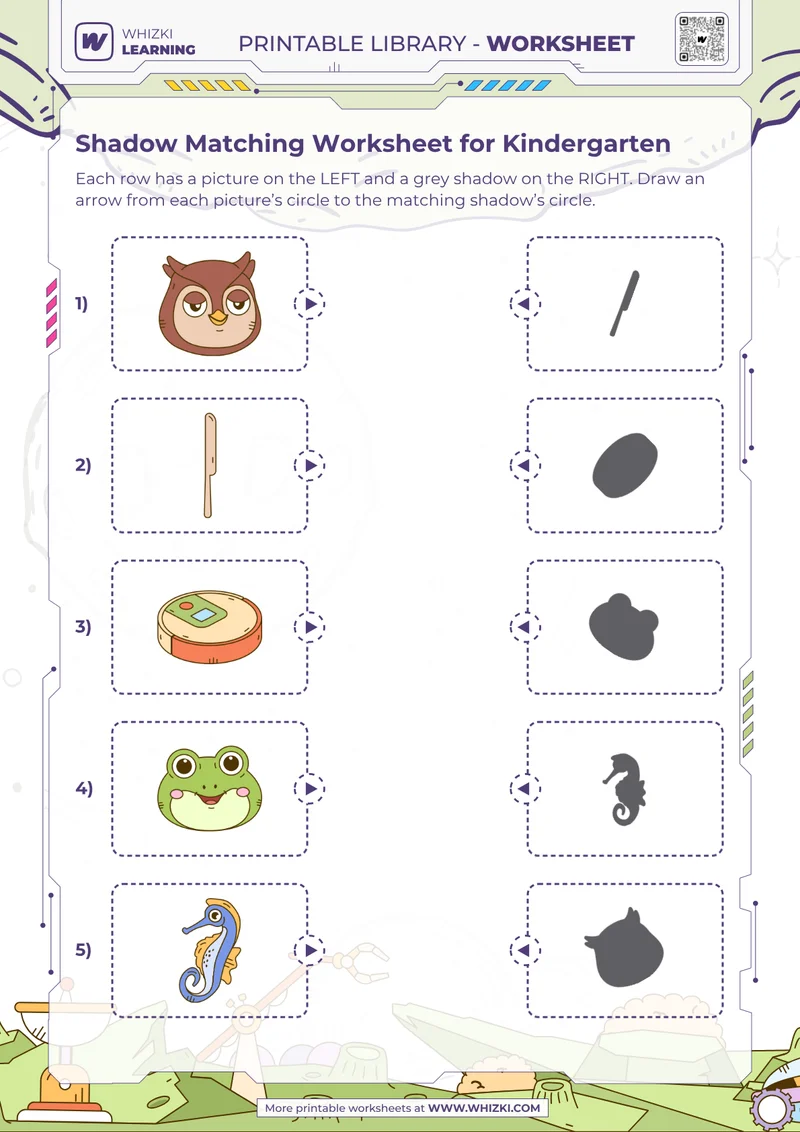
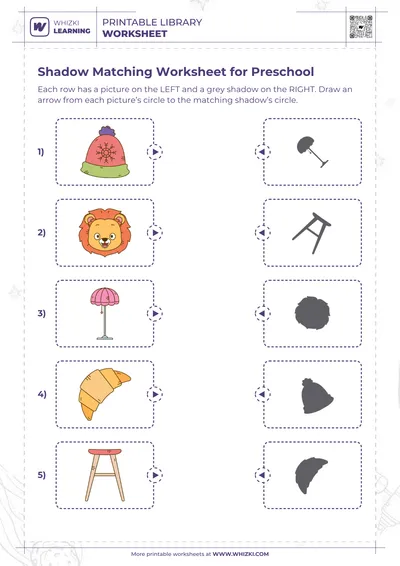
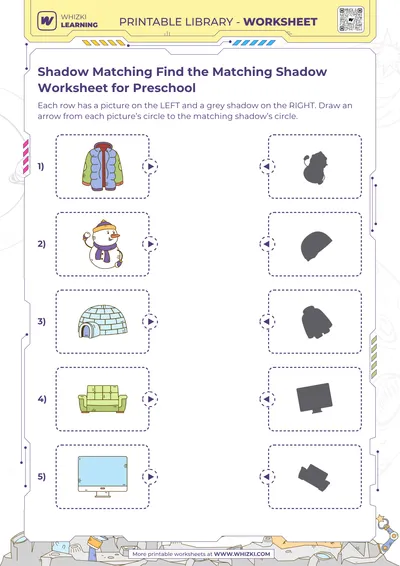
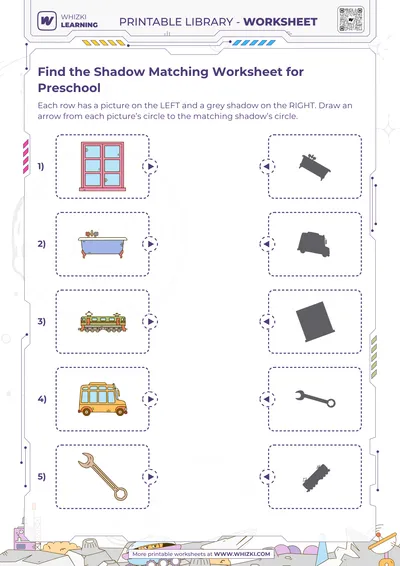
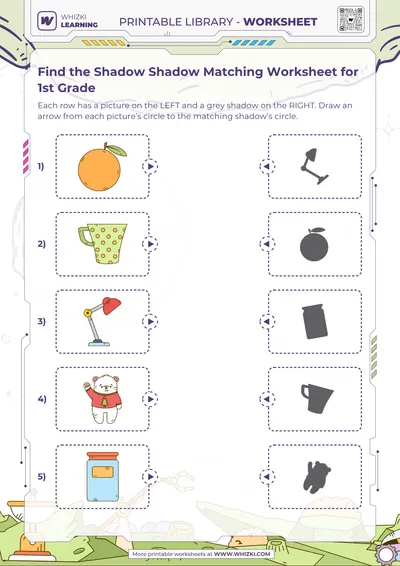
This shadow matching worksheet pairs five pictures with their silhouettes in a different order. The pictures show owl, knife, robot vacuum, frog, seahorse. Draw a line from each picture to the silhouette made from the same outline. The silhouettes may be turned, so compare the full boundary rather than expecting the two pictures to face the same way. Naming an unfamiliar object can help begin the discussion, but reading its name is not part of the printed task.
Start with the owl and look for a distinctive part of its outer edge. Search the opposite column for the same feature, then check the rest of the outline before drawing a line. Repeat with the knife and the remaining pictures. Interior colors and details have been removed from the silhouettes, so use the boundary and proportions to confirm each match rather than relying on color.
Point to a likely pair before marking the page. An adult can demonstrate how to follow one edge with a finger while leaving the final choice to the child. If a turned silhouette is difficult to recognize, rotate the page slightly and compare again. Keep track of the pairs already connected. Each picture has one intended partner, and each silhouette is used once, even when connecting lines cross.
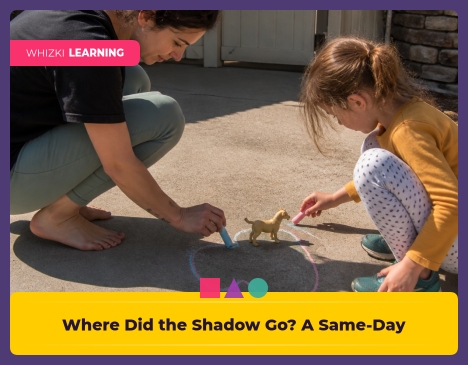
Find more visual comparison in the Picture Sorting and Logic Pack. Plan a suitable follow-up in the Family Learning Planner. After checking the five pairs, choose one picture and explain which edge made it recognizable. As a separate activity, trace the outline of a familiar flat object on paper and compare it with the object. Keep the focus on observing the shape, not finishing quickly.