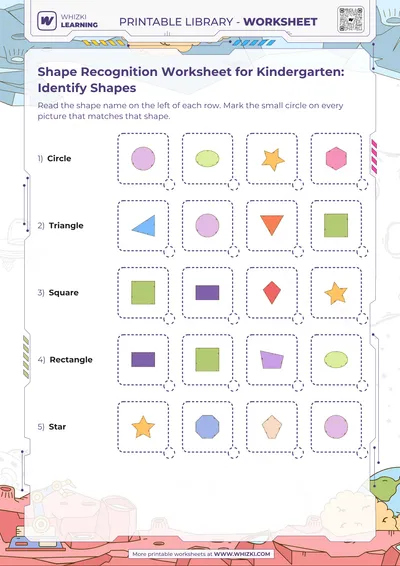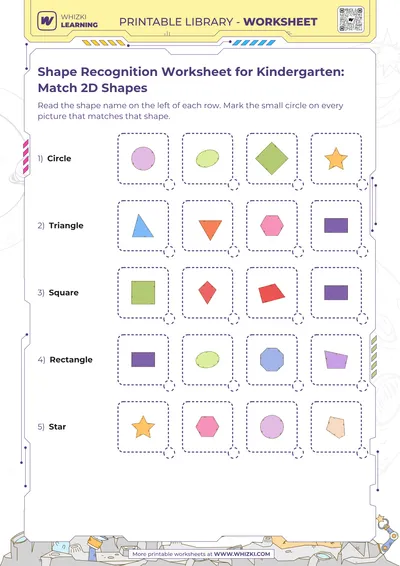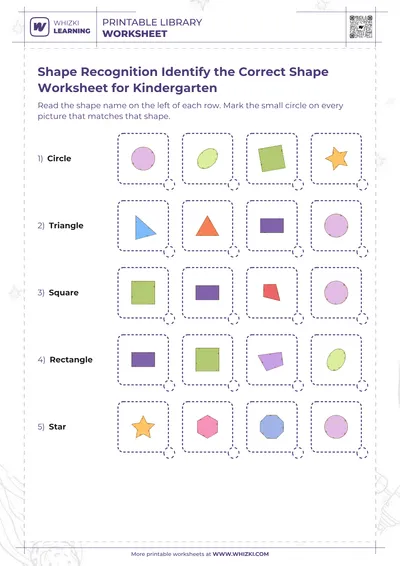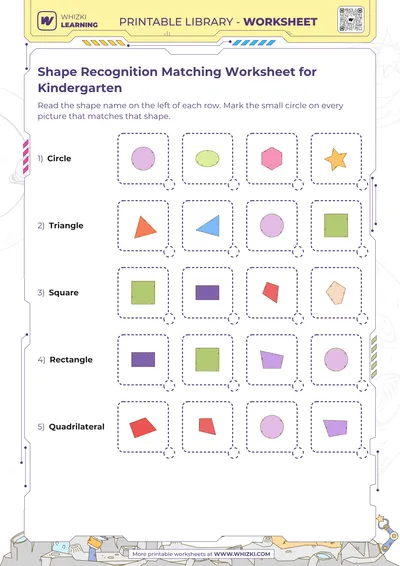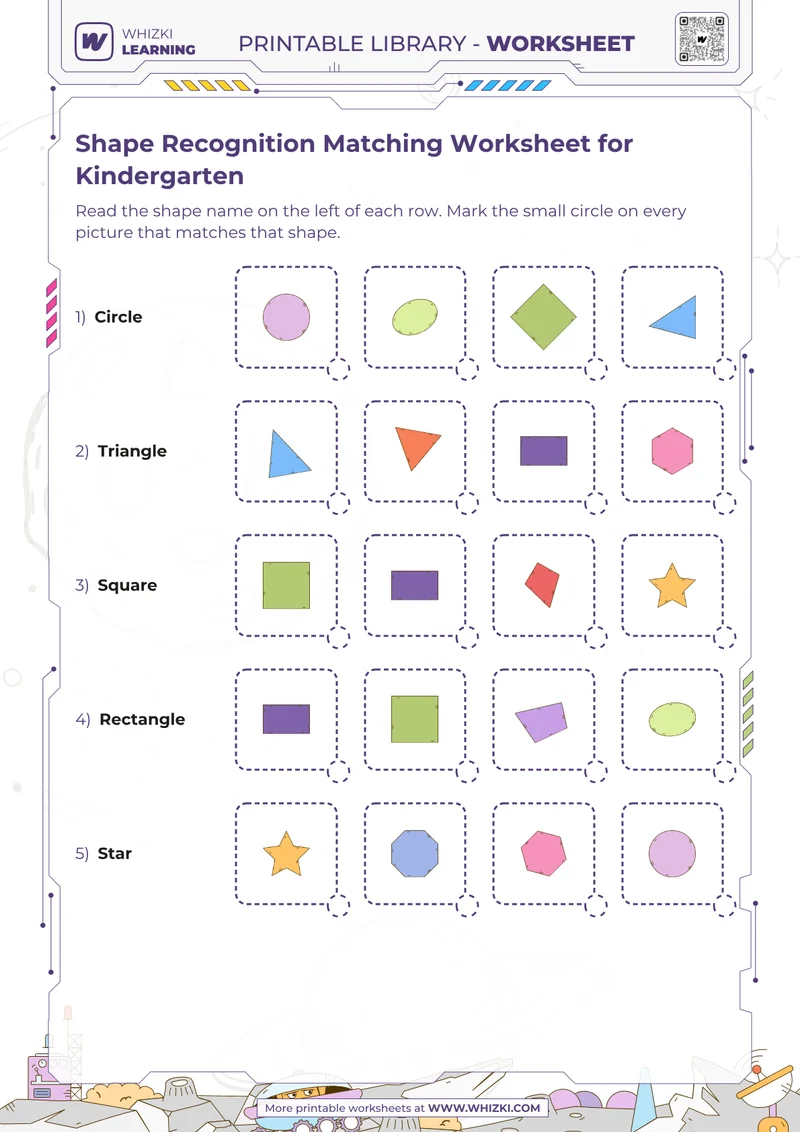


Identify the named shapes circle, triangle, square, rectangle, star among four choices in each row.
Use defining sides and corners to recognize a shape when its orientation changes, marking every qualifying choice.
Recognize overlapping shape groups, including a square’s membership in rectangles, rhombuses, and quadrilaterals.

A shape keeps its identity when it turns. This shape recognition worksheet asks children to read a shape name and mark every matching picture in its row. The 5 target names are circle, triangle, square, rectangle, star, with four choices beside each. Some rows have more than one correct picture. Read unfamiliar names aloud and inspect the shapes together before asking the child to make a selection.
Begin with the circle row. The matching choice is 1, counting from left to right. Point around each outline and compare its defining features with the row’s name. A tilted picture can still be correct, so mentally turn it or rotate the page if that helps. Use the small marker beside every matching picture and check the whole row before moving on.
Shape names can describe overlapping groups. A square has four right angles, so it is a rectangle; its four equal sides also make it a rhombus. Squares and other four-sided polygons are quadrilaterals. Use the row’s rule to decide whether a picture belongs, rather than assuming a shape can have only one name. An adult can model the relevant sides or corners and keep the explanation focused on the choices actually shown.
The guide to naming shapes in different orientations offers context for this kind of observation. Explore the Shapes and Geometry set for related activities. Complete a few rows, review an uncertain choice, and return to the rest later. For a follow-up, turn a paper shape on the table and ask which features stay the same. Use a fresh example to check the idea without repeating the worksheet answer from memory.
Boost your child’s skills with our discounted workbooks. Engaging activities for preschool, kindergarten, and grade 1 - now at special sale prices!


Fast shipping
Secure Payment
Licensed Teachers
For the planet
Printed in the USA
Helpful guides for parents and teachers, and tips for making learning at home super fun.

Use one familiar snack to build science talk and vocabulary without pressure to taste. This kitchen-table investigation honors allergies, texture needs, and child choice.

Help young children measure with paper clips before a ruler, using equal units, clear endpoints, and quick fixes for gaps, overlaps, and different answers.

Picture labels can build meaning, first-sound attention, or guessing habits. Use this parent-friendly decision tree to know when to cover or reveal the picture.

A vague school screening notice can leave families guessing, so start with seven plain questions about the test, timing, language, evidence, and next steps.
Get exclusive activities, expert tips, and inspiration for a more meaningful, offline family life.