Learning Outcomes
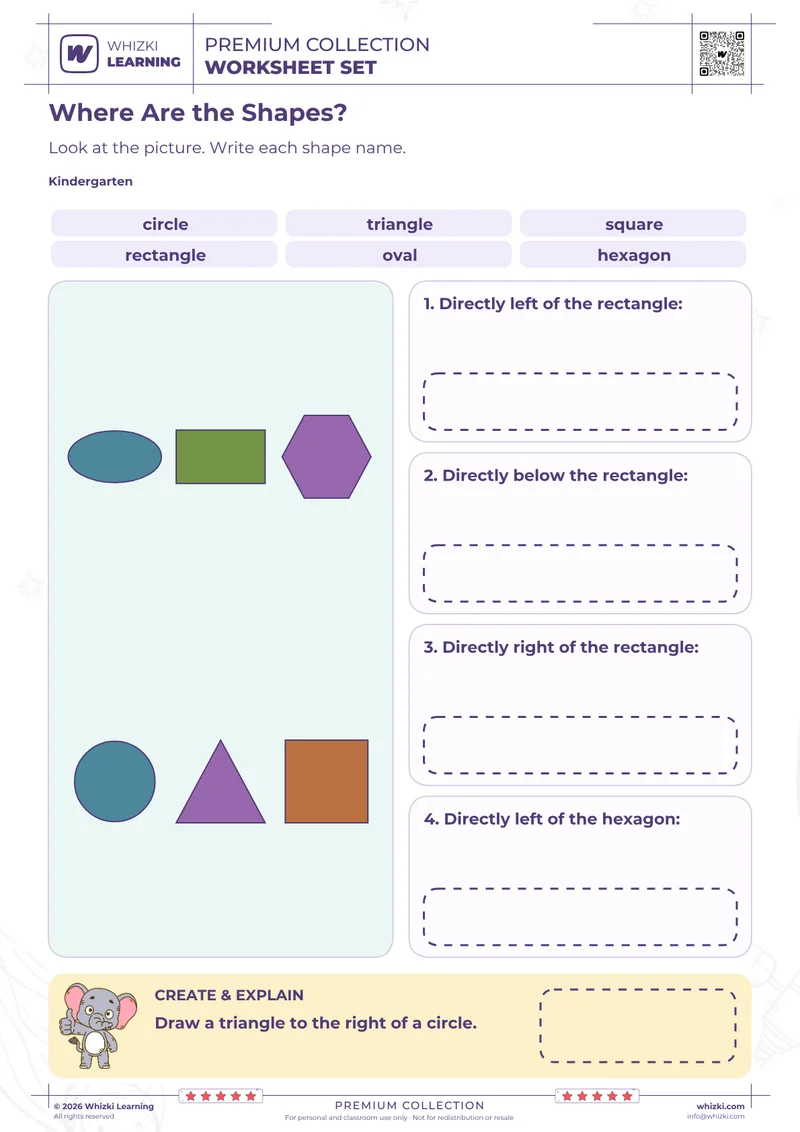
Identify basic shape positions. The child uses left of, right of, and below to locate shapes on a small board.
Follow spatial direction words. The worksheet practices moving attention from a reference shape to the correct nearby shape.
Compare shapes in a visual layout. The child looks across rows and columns to decide which shape matches each prompt.

Shape Positions: Left, Right, and Below
It is easy for position words to get fuzzy during a busy school day or at the kitchen table. A child may know a circle from a square, but still mix up left of, right of, and below when the shapes are lined up on a page.
On this printable worksheet, children look at a small shape board, then complete four side-by-side position prompts. Each row asks them to use a reference shape and choose the shape that is left of, right of, or below it. At the bottom, they extend the practice by drawing a triangle to the right of a circle.
Start by pointing to the reference shape together, then have your child slide a finger in the direction named in the prompt. If reading is still developing, read the sentence aloud and let the child answer by pointing, circling, or saying the shape name before writing or marking the page.
This page belongs to the Whizki Learning Shapes and Geometry Pack, a Whizki Plus set focused on early shape recognition and beginning geometry language. It adds spatial reasoning to the set, helping children see that shapes can be described by where they are, not just what they look like.
Keep the session short and upbeat. Try two prompts, take a quick movement break using words like left, right, above, and below, then return to finish the page with the drawing task.
Limited-time savings
on Whizki workbooks.
Boost your child’s skills with our discounted workbooks. Engaging activities for preschool, kindergarten, and grade 1 - now at special sale prices!


Fast shipping
Secure Payment
Licensed Teachers
For the planet
Printed in the USA
Find fresh ideas
To help your little learners grow!
Helpful guides for parents and teachers, and tips for making learning at home super fun.

A seven-minute apple observation helps children compare color, stem, skin, weight, smell, and a cut surface, then draw what children noticed before any craft begins.

A field note on why Ukrainian-English workbook pages need fresh design choices for letters, examples, space, and language-specific skills.

A fast weather window journal helps ages 3-7 notice sky and temperature feeling with simple symbols, compare a few days, and learn observation versus forecast.

A five-minute snack sort turns crackers, berries, or allergy-friendly objects into early data practice as children sort, count, compare, and clean up.
Join the Screen-Free Movement.
Get exclusive activities, expert tips, and inspiration for a more meaningful, offline family life.