Learning Outcomes
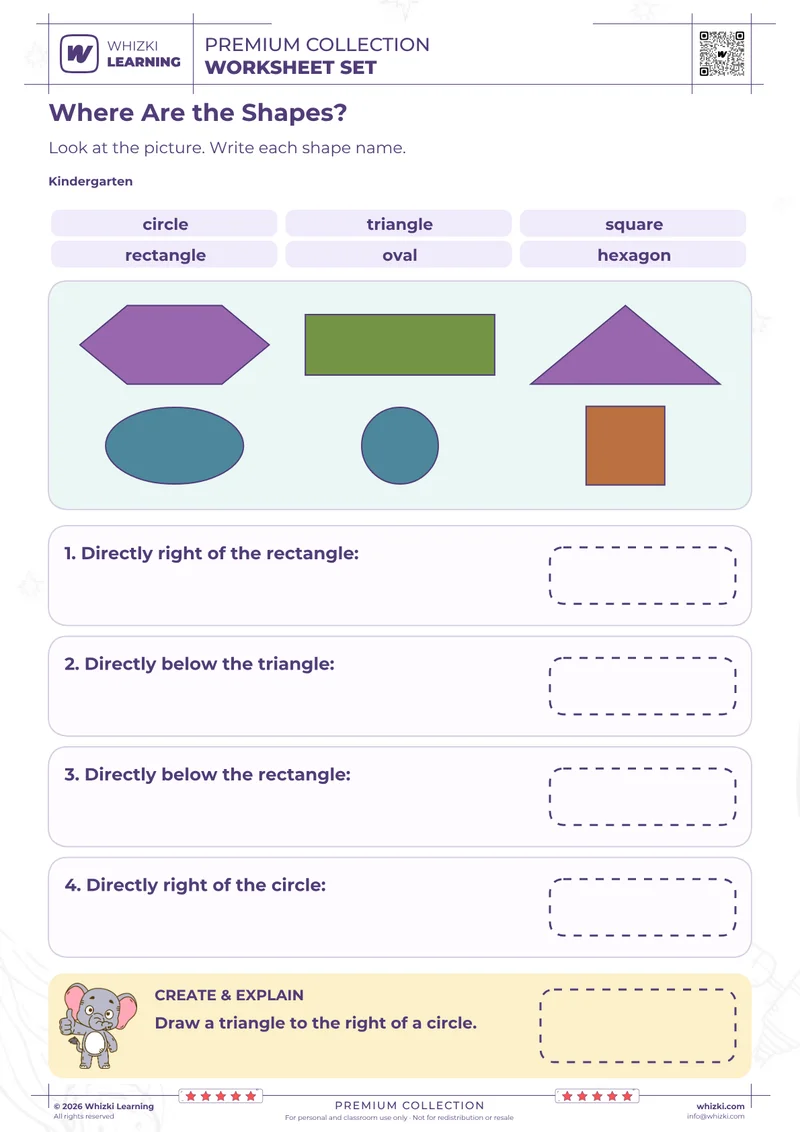
Identifies positional language. The child follows right of and below clues to locate shapes on a shared board.
Matches shapes to spatial clues. The worksheet asks the child to connect each direction clue with the correct shape answer.
Uses visual scanning. The child checks rows and columns carefully before choosing a shape.

Find Shape Positions: Right Of and Below
When a child can name a circle but still points all over the page when you say "below," practice can get noisy fast. This printable gives you a calm, screen-free way to work on position words without setting up blocks, flashcards, or a whole lesson.
On the page, children look at a small shared board of shapes arranged in rows. For each prompt, they use clues such as right of or below to decide which shape matches, then write or mark the answer in the row. The final extension asks them to draw a shape in a named position, which adds fine-motor practice and checks whether the direction language is sticking.
Try the first clue together with your finger. Say the reference shape out loud, move in the direction named, and let your child tell you what shape they found. After that, invite them to complete the remaining rows with a crayon or pencil, pausing only if they need help returning to the board.
This Plus-tier worksheet belongs to the Shapes and Geometry Pack from Whizki Learning, focused on circles, squares, triangles, and other early shape recognition skills. It adds a spatial-reasoning layer, so children do more than name shapes, they learn where shapes are in relation to each other.
Keep the session short and confident. If your child hesitates, reread one clue, trace the direction in the air, and stop after the drawing prompt so the page ends with a clear win.
Limited-time savings
on Whizki workbooks.
Boost your child’s skills with our discounted workbooks. Engaging activities for preschool, kindergarten, and grade 1 - now at special sale prices!


Fast shipping
Secure Payment
Licensed Teachers
For the planet
Printed in the USA
Find fresh ideas
To help your little learners grow!
Helpful guides for parents and teachers, and tips for making learning at home super fun.

A seven-minute apple observation helps children compare color, stem, skin, weight, smell, and a cut surface, then draw what children noticed before any craft begins.

A field note on why Ukrainian-English workbook pages need fresh design choices for letters, examples, space, and language-specific skills.

A fast weather window journal helps ages 3-7 notice sky and temperature feeling with simple symbols, compare a few days, and learn observation versus forecast.

A five-minute snack sort turns crackers, berries, or allergy-friendly objects into early data practice as children sort, count, compare, and clean up.
Join the Screen-Free Movement.
Get exclusive activities, expert tips, and inspiration for a more meaningful, offline family life.