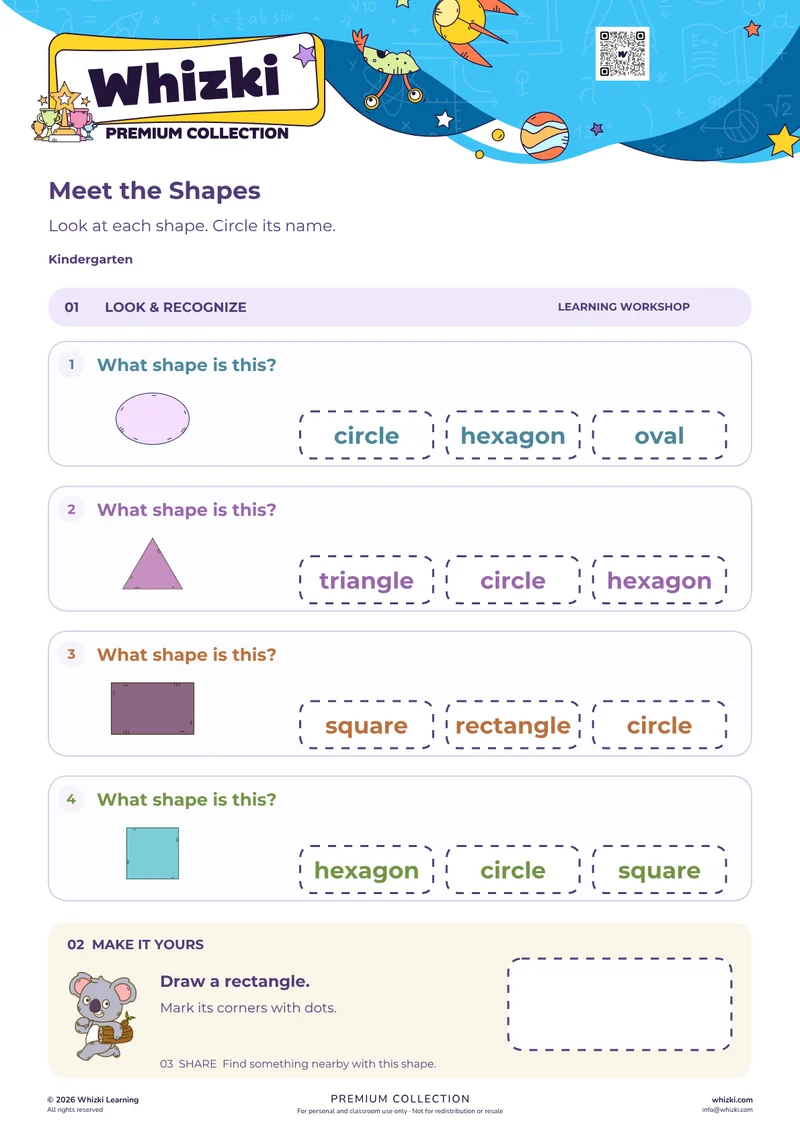
This shape naming worksheet presents four pictures: an oval, triangle, rectangle, and square. Each row offers three names, and children circle the name that matches its picture. An adult can read the choices aloud so the comparison stays accessible to a child who recognizes shapes but is still learning to read their names.
Look at the outline before choosing a word. The oval has a smooth curved boundary, the triangle has three straight sides, and the rectangle and square each have four straight sides. Compare the particular rectangle and square shown on this page, noticing their corners and side lengths. Turning a picture does not change its shape name, so follow the outline instead of relying on its orientation.
Model the first row by naming a visible feature and checking it against the choices. Let your child point before circling, and invite a short explanation such as three sides. The drawing activity asks for a rectangle with dots marking its corners. Draw the outline first, then touch each corner once while adding the dots, without worrying about producing a perfect drawing.
Continue with the Shapes and Geometry Pack for related recognition and property activities. For supported pencil practice, choose an outline from Pre-Writing Warm-Ups. As a separate follow-up, look at the flat face of a familiar object and compare it with one printed shape. Describe the face you are comparing, then return to its name on the page.