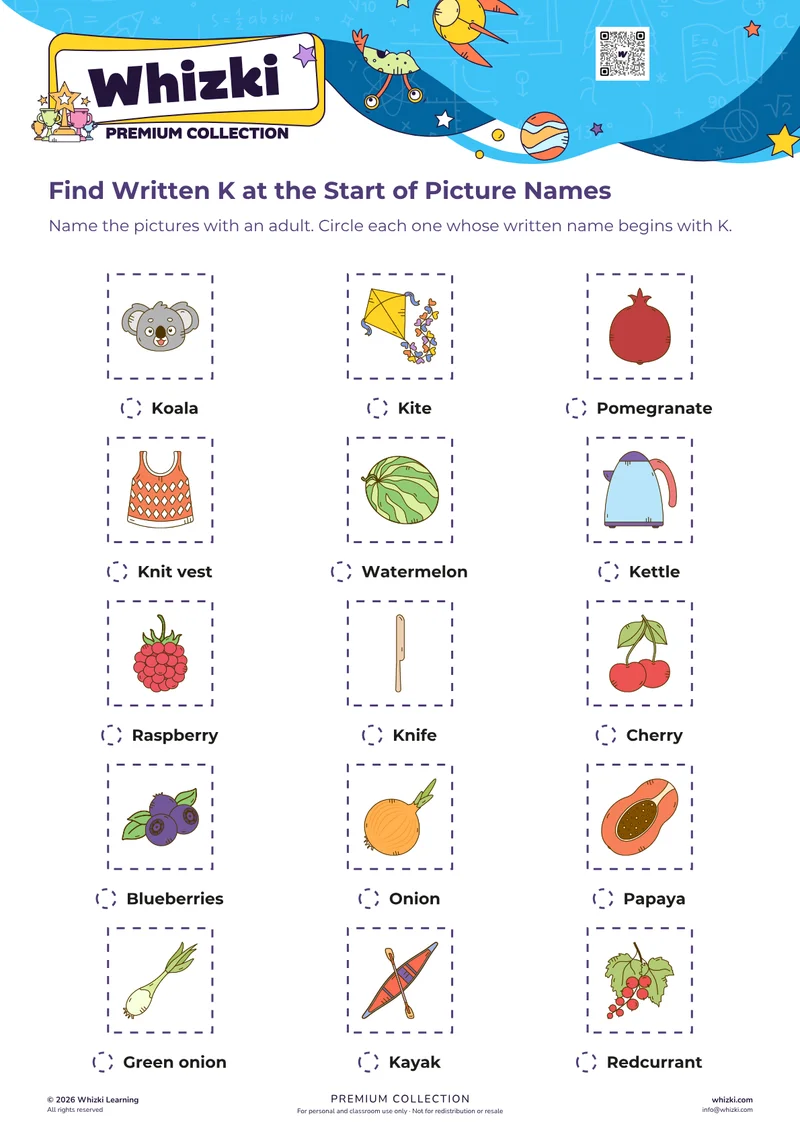


Identify K as the first written letter in the matching labels: koala, kite, knit vest, kettle, knife, and kayak, with adult support reading the names.
Use the complete printed label as the reference, checking its first letter rather than guessing the spelling from the illustration.
Apply a written-letter rule across fifteen picture choices and distinguish that task from listening for a shared first sound.

This letter K picture-name worksheet presents fifteen labeled pictures. Circle the pictures whose printed names begin with K, using the label beneath each illustration as the reference. The matching names are koala, kite, knit vest, kettle, knife, and kayak. Read the names together before starting so vocabulary and spelling are available to a child who is still learning to read independently.
Kite begins with a pronounced /k/, while knife and knit begin with a silent K in their spelling. All fit a written-K search. Read the labels together so the child does not have to infer the spelling from the picture alone.
An adult can name a picture and read its label without choosing the answer. Ask the child to point to the first letter and decide whether it matches the target. Work across the grid in a consistent order and circle each qualifying picture once. For a label containing more than one word, use the first letter of the complete printed phrase, keeping the page’s wording as the rule.
Visit the letter K guide for related letter information. The Phonics and Sounds Pack includes other literacy formats. As a separate follow-up, choose one familiar label, say it aloud, and discuss how its spelling relates to its sounds with adult support. Keep that conversation distinct from the printed search so the child understands which feature each task is asking them to notice.
Boost your child’s skills with our discounted workbooks. Engaging activities for preschool, kindergarten, and grade 1 - now at special sale prices!


Fast shipping
Secure Payment
Licensed Teachers
For the planet
Printed in the USA
Helpful guides for parents and teachers, and tips for making learning at home super fun.

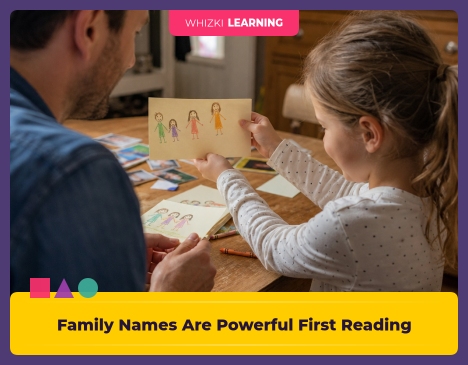
Use place cards, drawings, and photo labels to help children notice letters and sounds in family names while honoring spelling, scripts, and pronunciation.

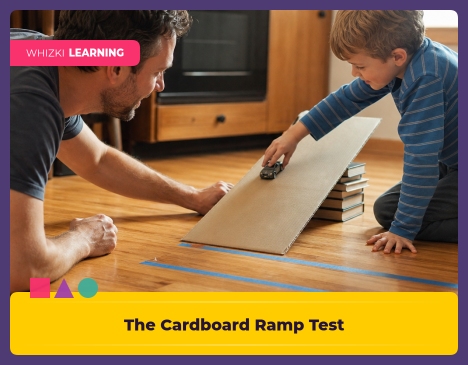
Turn cardboard, tape, and one rolling object into a quick fair-test investigation for ages 3-7 by changing ramp height or surface, one choice at a time.

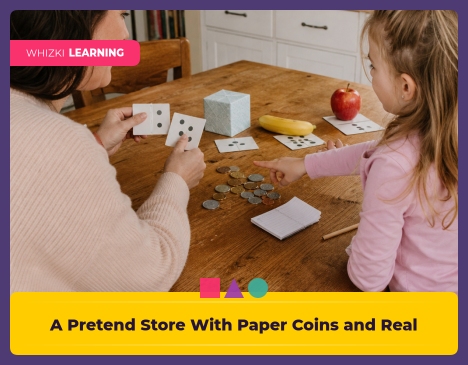
Set up a tiny pretend store with three priced objects, paper coins, and a simple receipt so children ages 3 to 7 can count, compare, and choose.

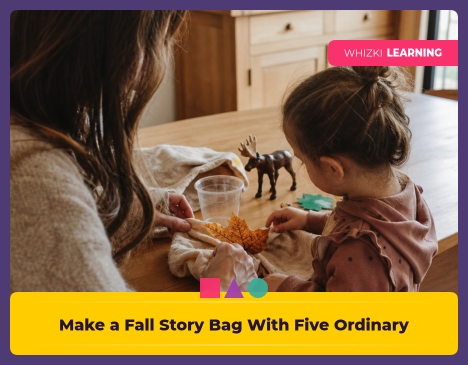
Turn a leaf, scarf, cup, toy, and paper shape into a quick fall storytelling game with age-by-age options for children 3 to 7.
Get exclusive activities, expert tips, and inspiration for a more meaningful, offline family life.