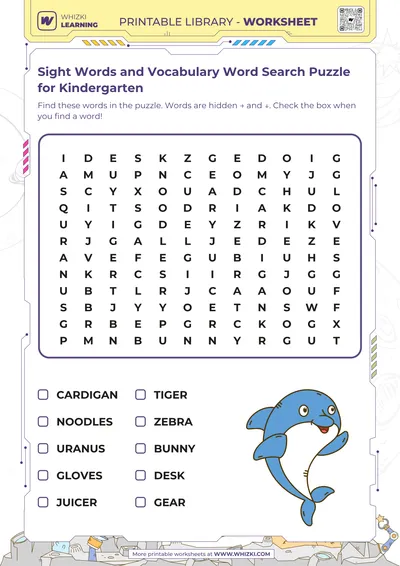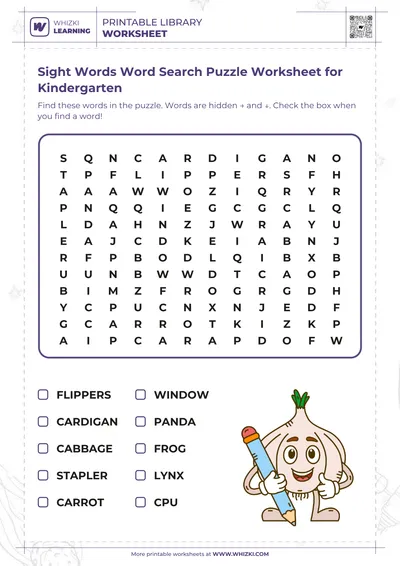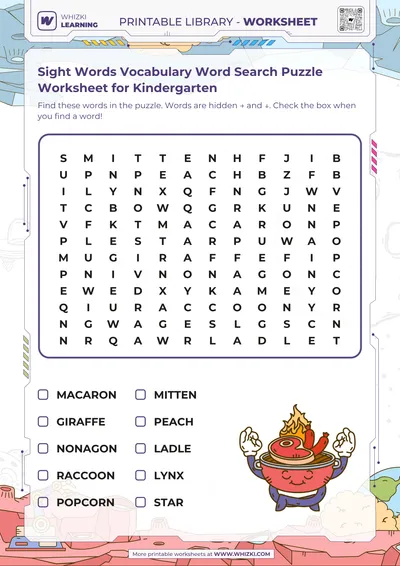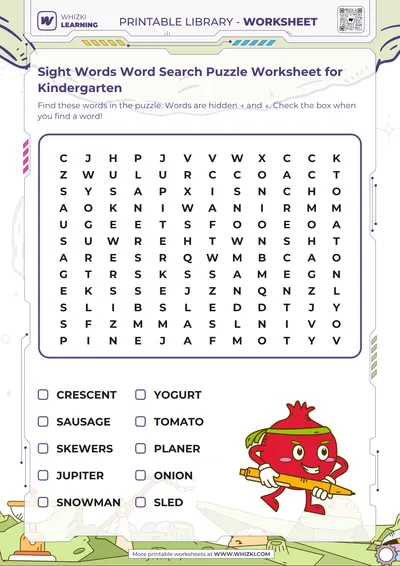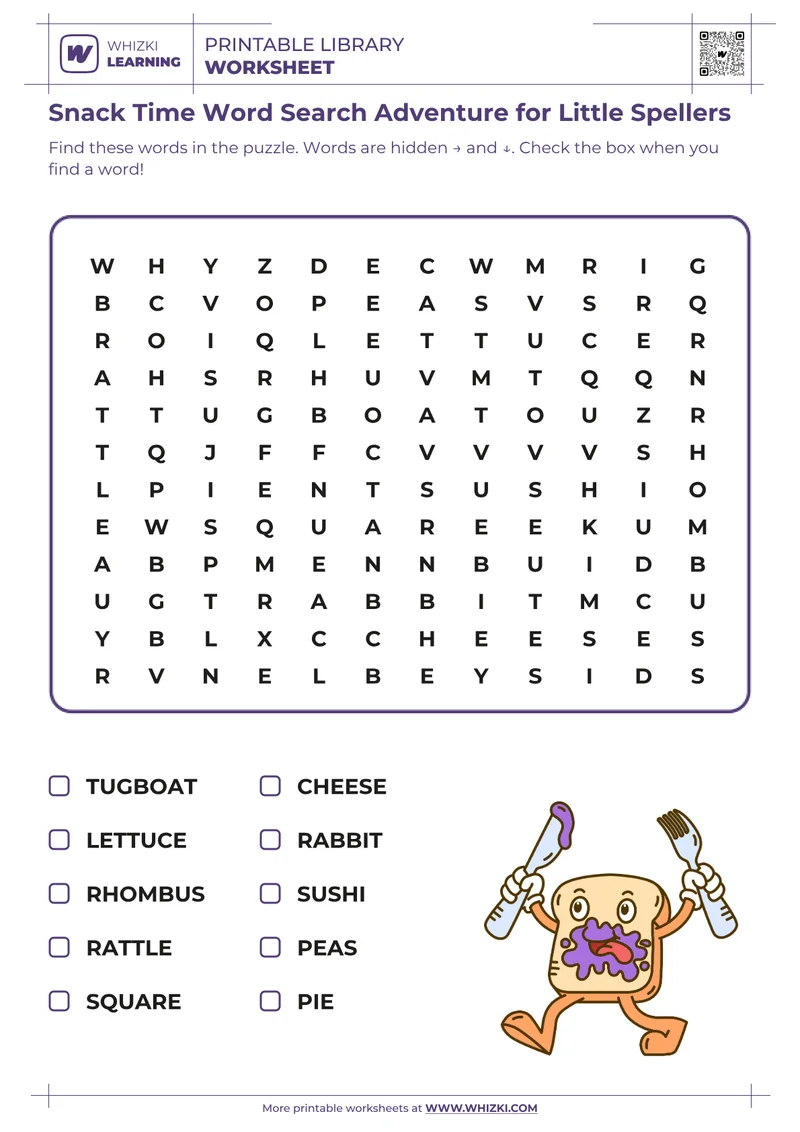


Locate printed words such as rattle, tugboat, and square by comparing their complete letter sequences with the grid.
Follow a consistent search across rows and down columns, checking each found word against the printed list.
Read the selected words with adult support and use a short spoken example to connect unfamiliar vocabulary with meaning.

Start with a word your child recognizes, then look for its letters in order. This word search worksheet uses a letter grid and a printed checklist that includes rattle, tugboat, and square. The full selection is rattle, tugboat, square, pie, cheese, lettuce, sushi, rhombus, peas, and rabbit. Words run across or down, following the arrows in the directions. Use the page for supported reading and spelling practice at home or in a classroom literacy activity.
Read the checklist together before searching. Choose rattle, point to its first letter, and scan one row at a time for a possible start. When that letter appears, compare the next letters with the printed word. A matching first letter is only a starting clue: follow the whole sequence before circling the word and checking its box.
Try tugboat next and talk about how its length changes the search. An adult can cover part of the grid with scrap paper or point to a promising row without tracing the answer. Read an unfamiliar word aloud and explain its meaning in a short sentence. Finding a printed spelling supports attention to letter order; understanding the word comes from the conversation alongside the puzzle.
Choose a few words for one sitting and return to the remaining checklist later. After finding a word, cover the list and try writing it on separate paper, then compare the letters. The Spelling and Word Building set offers another way to work with letter order. Visit the Sight Words Starter set when you want a separate activity with common written words.
Boost your child’s skills with our discounted workbooks. Engaging activities for preschool, kindergarten, and grade 1 - now at special sale prices!


Fast shipping
Secure Payment
Licensed Teachers
For the planet
Printed in the USA
Helpful guides for parents and teachers, and tips for making learning at home super fun.

Use one familiar snack to build science talk and vocabulary without pressure to taste. This kitchen-table investigation honors allergies, texture needs, and child choice.

Help young children measure with paper clips before a ruler, using equal units, clear endpoints, and quick fixes for gaps, overlaps, and different answers.

Picture labels can build meaning, first-sound attention, or guessing habits. Use this parent-friendly decision tree to know when to cover or reveal the picture.

A vague school screening notice can leave families guessing, so start with seven plain questions about the test, timing, language, evidence, and next steps.
Get exclusive activities, expert tips, and inspiration for a more meaningful, offline family life.