Learning Outcomes
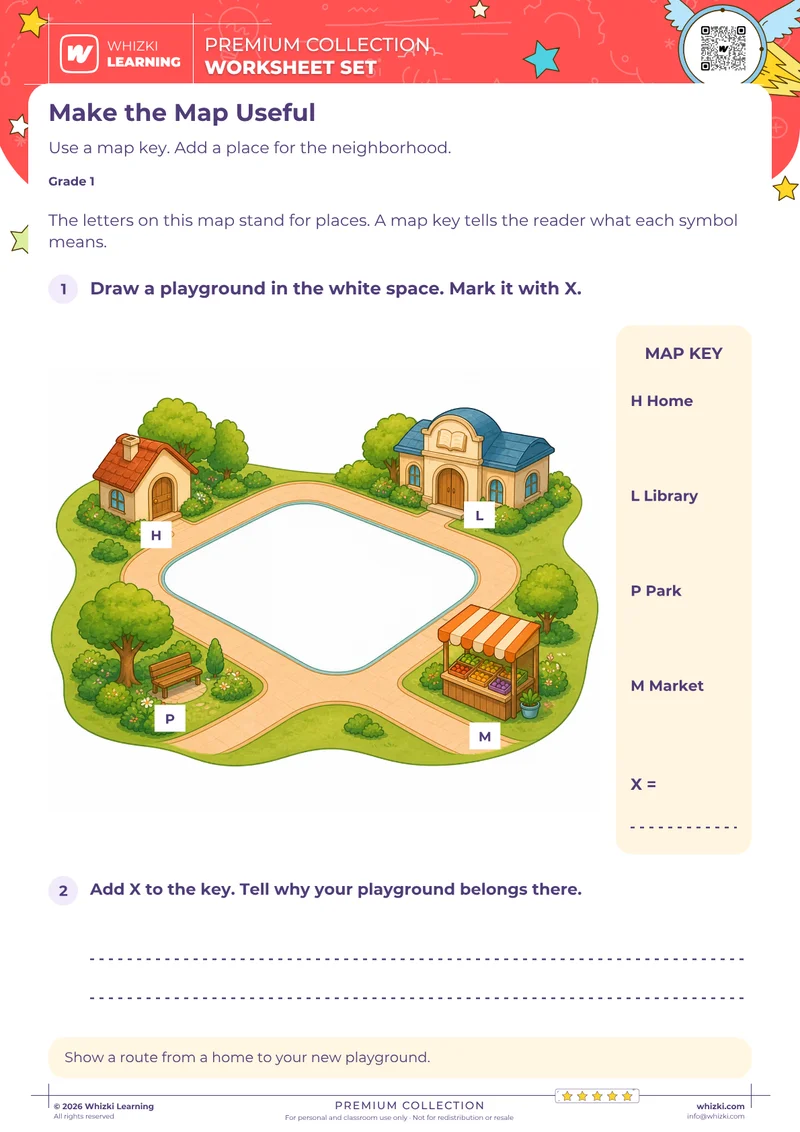
Uses a map key to explain a symbol. The child adds X to the key and connects that symbol to the playground on the map.
Adds a community place to a neighborhood map. The child draws a playground in the white space and marks the location clearly.
Explains a location choice with a simple reason. The child tells or writes why the playground belongs in the chosen spot.

Use a Map Key for a Neighborhood Playground
Map work can get tricky fast when a child sees letters and symbols but does not know what they mean. If your first grader guesses instead of reading the map, start with one concrete job: add a new place and make the key match.
On this printable page, children look at a neighborhood map where letters stand for places. They draw a playground in the white space, mark it with an X, add X to the map key, and write or tell why the playground belongs in that spot. The page practices symbol reading, map keys, location choices, and early geography vocabulary.
Use the worksheet at the table with a pencil and crayon. First, ask your child to name what a map key does. Then let them choose the playground spot, draw it, label it, and explain their thinking. Finish by having them show a route from a home to the new playground.
As a Whizki Plus page in the Grade 1 Social Studies Adventures set, this worksheet turns everyday social studies into a hands-on map workshop. It fits well with lessons about neighborhoods, community places, directions, and how people use simple maps to share information.
Keep the session short and conversational. In 5 to 10 minutes, focus on one clear idea: a useful map needs symbols and a key that helps the reader understand them.
Limited-time savings
on Whizki workbooks.
Boost your child’s skills with our discounted workbooks. Engaging activities for preschool, kindergarten, and grade 1 - now at special sale prices!


Fast shipping
Secure Payment
Licensed Teachers
For the planet
Printed in the USA
Find fresh ideas
To help your little learners grow!
Helpful guides for parents and teachers, and tips for making learning at home super fun.

A field note on the May 2026 move to one shared worksheet generator API, with a simple parent preview for print consistency and handwriting comfort.

A seven-minute apple observation helps children compare color, stem, skin, weight, smell, and a cut surface, then draw what children noticed before any craft begins.

A field note on why Ukrainian-English workbook pages need fresh design choices for letters, examples, space, and language-specific skills.

A fast weather window journal helps ages 3-7 notice sky and temperature feeling with simple symbols, compare a few days, and learn observation versus forecast.
Join the Screen-Free Movement.
Get exclusive activities, expert tips, and inspiration for a more meaningful, offline family life.