
Learning Outcomes
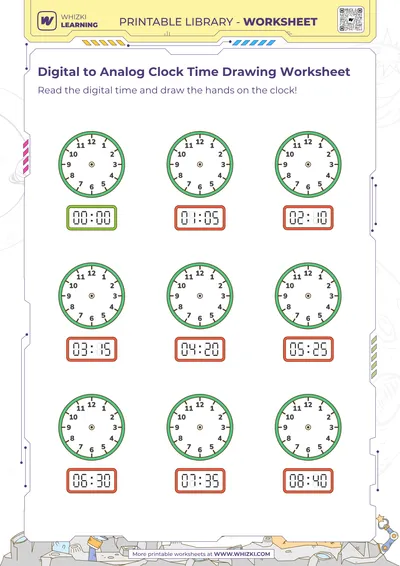
The Whizki Learning time worksheet strengthens number recognition by guiding children to connect analog clock hours 1–12 with matching digital numerals.
The Whizki Learning activity improves visual tracking and attention by asking children to focus on clock hands before writing precise digital time answers.
The Whizki Learning worksheet builds early time-telling understanding by presenting whole hours and half-hours in predictable patterns that support emerging math reasoning.
Numbers & Counting
123
Learn numbers, counting, and early number sense through simple examples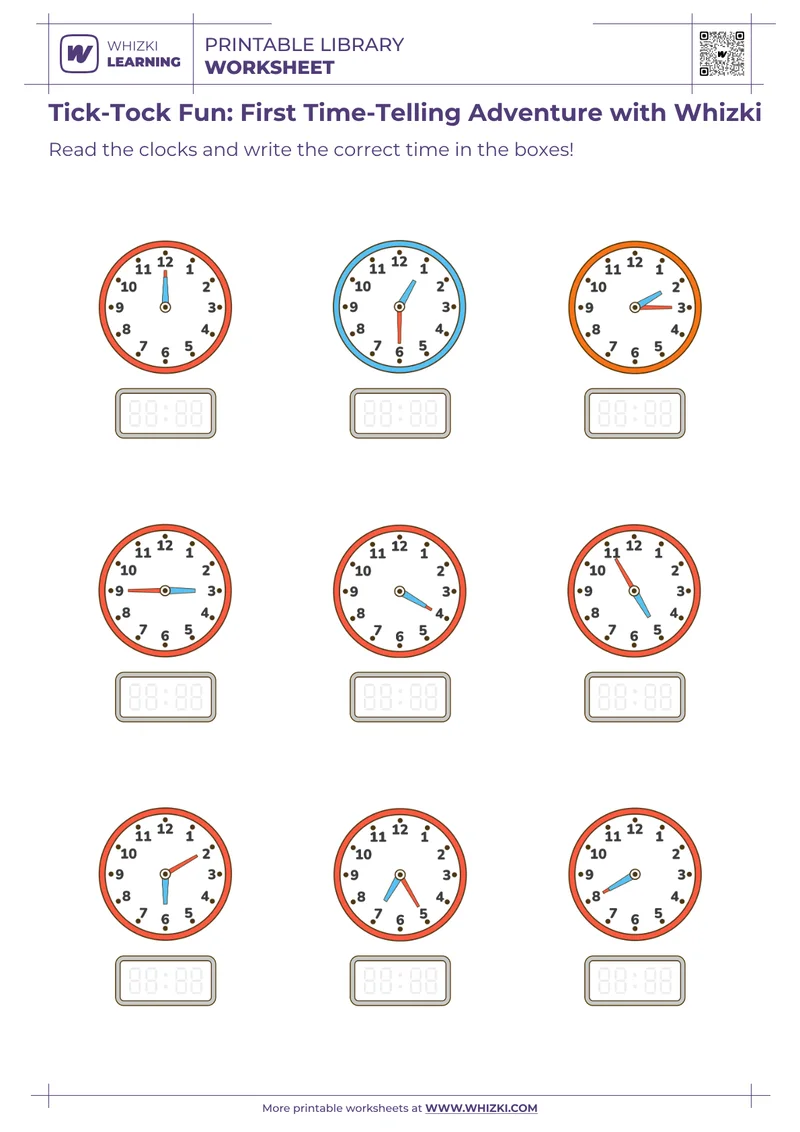
Tick-Tock Fun: First Time-Telling Adventure with Whizki
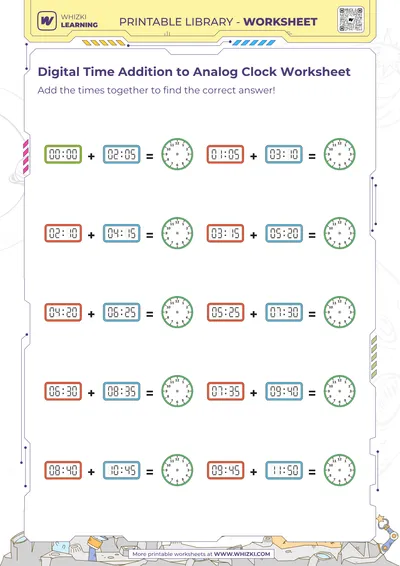
Whizki Learning time practice for first-grade level skills gives a 3-year-old child a playful introduction to clocks and numbers. The Whizki Learning worksheet features friendly analog clock faces that encourage children to look at hour and minute hands while writing matching digital times in large, easy-to-read boxes. Early exposure to time concepts builds comfort with numbers and patterns long before formal time-telling expectations appear in elementary school.
Whizki Learning educators and childhood development specialists designed the time worksheet specifically for young children who enjoy hands-on math exploration. The Whizki Learning resource limits times to simple whole hours and half-hours, reducing frustration and supporting success for emerging learners. Clear visual cues, thick clock outlines, and generous writing spaces help children focus on one small decision at a time, which supports strong cognitive development and early executive-function skills.
Parents and teachers can use the Whizki Learning printable worksheet in homes, preschools, and kindergarten readiness programs to make early math feel like play. Adults can invite the child to say the clock number out loud, trace the matching number in the air, and then write the digital time in the box. Repeating this playful routine across the page helps the child connect spoken numbers, seen numbers, and written numbers, which strengthens overall numeracy foundations.
The Whizki Learning time worksheet reflects evidence-informed best practices and real classroom experience from certified early childhood math educators. The structured yet gentle layout promotes independence because children can predict what to do on each clock without new instructions. High-quality line art reproduces cleanly on home or school printers, allowing families and educators to print fresh copies for extra practice, small-group intervention, or quick warm-up activities that keep time-telling skills growing.

Limited Time Sale
Kids’ Workbooks!
Boost your child’s skills with our discounted workbooks. Engaging activities for preschool, kindergarten, and grade 1 - now at special sale prices!


Fast shipping
Secure Payment
Licensed Teachers
For the planet
Printed in the USA
Find fresh ideas
To help your little learners grow!
Helpful guides for parents and teachers, and tips for making learning at home super fun.
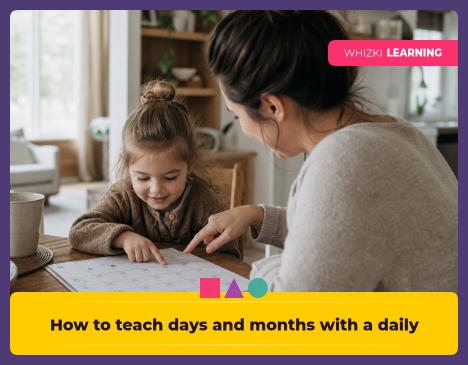
Teach days of the week and months with a calm calendar routine: same time, same questions, songs, birthdays, holidays, and one printable on the wall.
 Sunny Hedge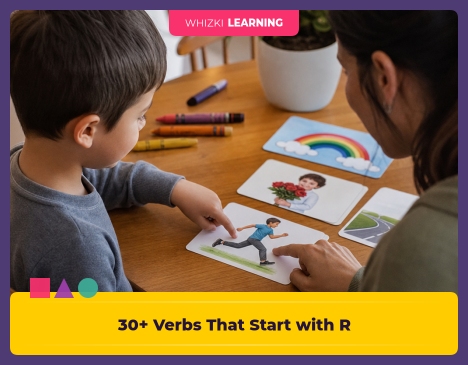
Use 36 kid-friendly R verbs with tiny act-out sentences for body, home, and play routines, plus a charades game and tracing tip.
Sunny Hedge
Refusal to write is often fear of feeling incapable, not defiance. Try smaller asks, calmer scripts, and a 7-day confidence reset.
Sunny Hedge
Teach Q action words with kid-friendly verbs, tiny act-it-out sentences, a wall-ready printable idea, charades, and tracing tips for ages 3-7.
Sunny HedgeJoin the Screen-Free Movement.
Get exclusive activities, expert tips, and inspiration for a more meaningful, offline family life.
