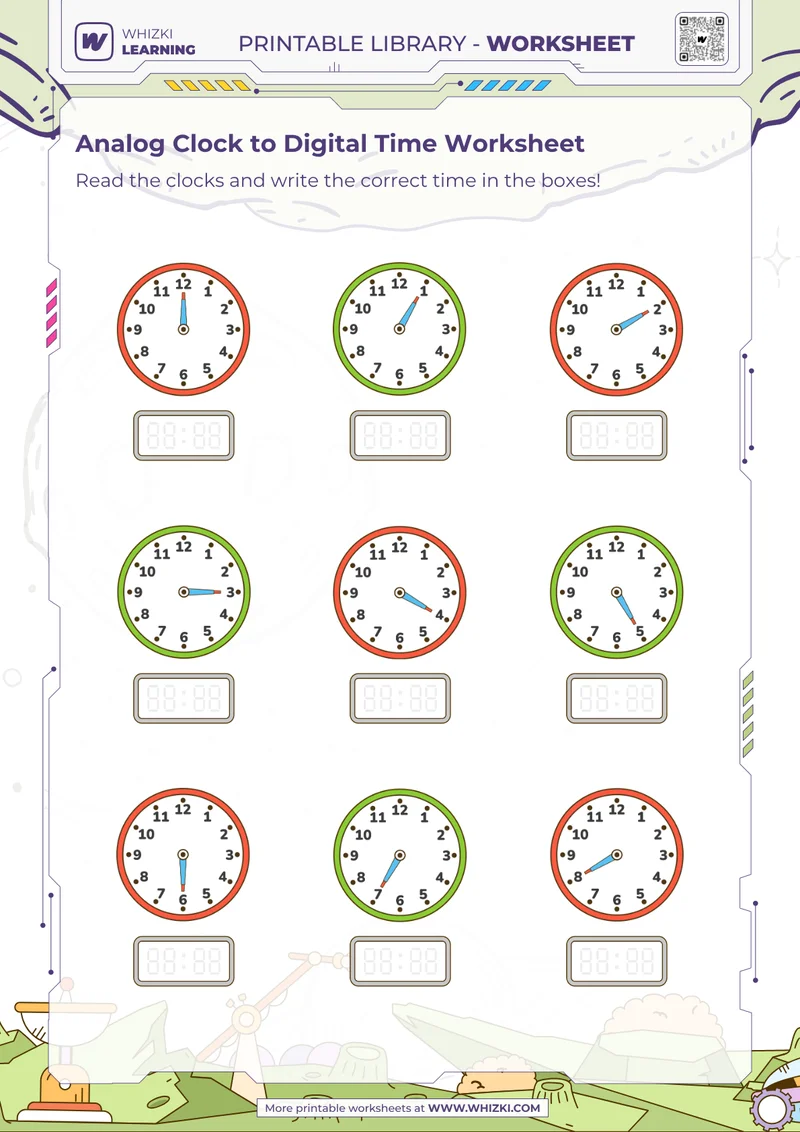
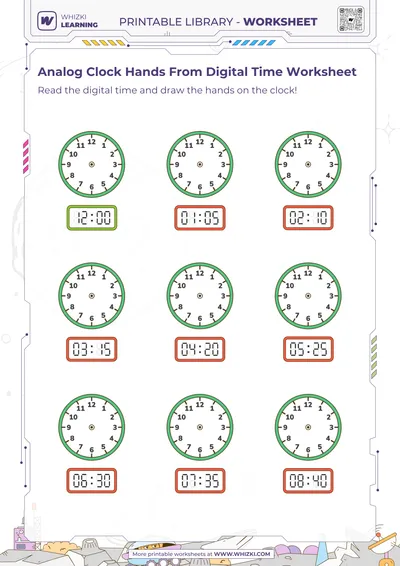
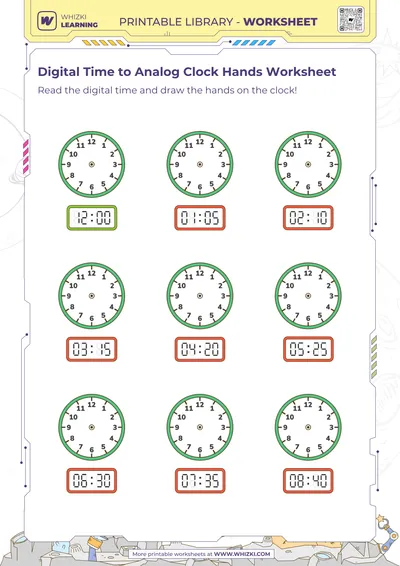
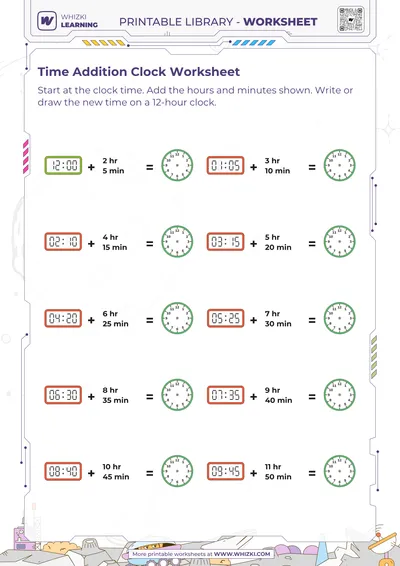
Move between a clock face and a written time with this reading analog clocks worksheet. Its nine prompts include 12:00 and 1:05, with minutes in five-minute steps. Read each analog clock and write the hours and minutes in its digital answer space. Work through a few examples together before inviting an independent attempt.
Begin with 12:00. Read the shorter hour hand and use the longer minute hand to count minutes in fives. Write the hour, a colon, and two minute digits in the answer space. Between whole hours, the hour hand also moves between its numbered positions. Use a teaching clock to show this movement if a static drawing is difficult to interpret.
Compare 1:05 with the first time and ask what changes in the hand positions. Let your child trace the movement with a finger or turn a teaching clock before writing. A minute hand pointing at 12 means zero minutes after the hour; other numbered positions stand for multiples of five. Read the full time aloud after recording it, and check that the hour and minute information agree.
Use the Time and Money set for related clock activities. You can also add a short practice session to the Learning Planner. Complete a small selection and review one uncertain answer together. For an everyday follow-up, notice the time of a familiar routine and show it on a teaching clock. Return to the remaining prompts when reading the hands and recording the time feel manageable.