Learning Outcomes
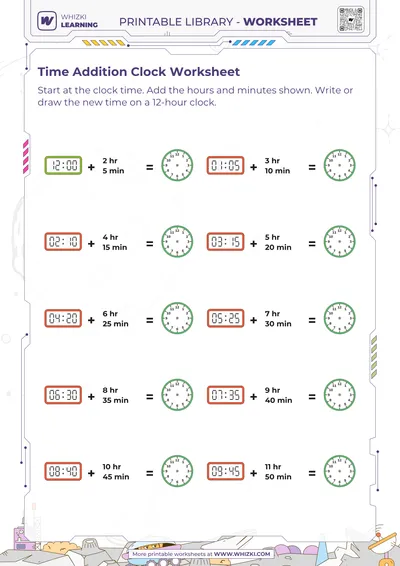
The Whizki Learning time worksheet improves analog clock reading accuracy by guiding six-year-old children through 10 focused matching tasks using clear, uncluttered clock faces.
The worksheet from Whizki Learning strengthens early addition skills by asking children to add minutes or hours to starting times, reinforcing number sequencing and computation.
The Whizki Learning time worksheet introduces future-time reasoning by prompting children to calculate when upcoming activities occur, connecting math practice directly to daily routines.
Numbers & Counting
123
Learn numbers, counting, and early number sense through simple examples
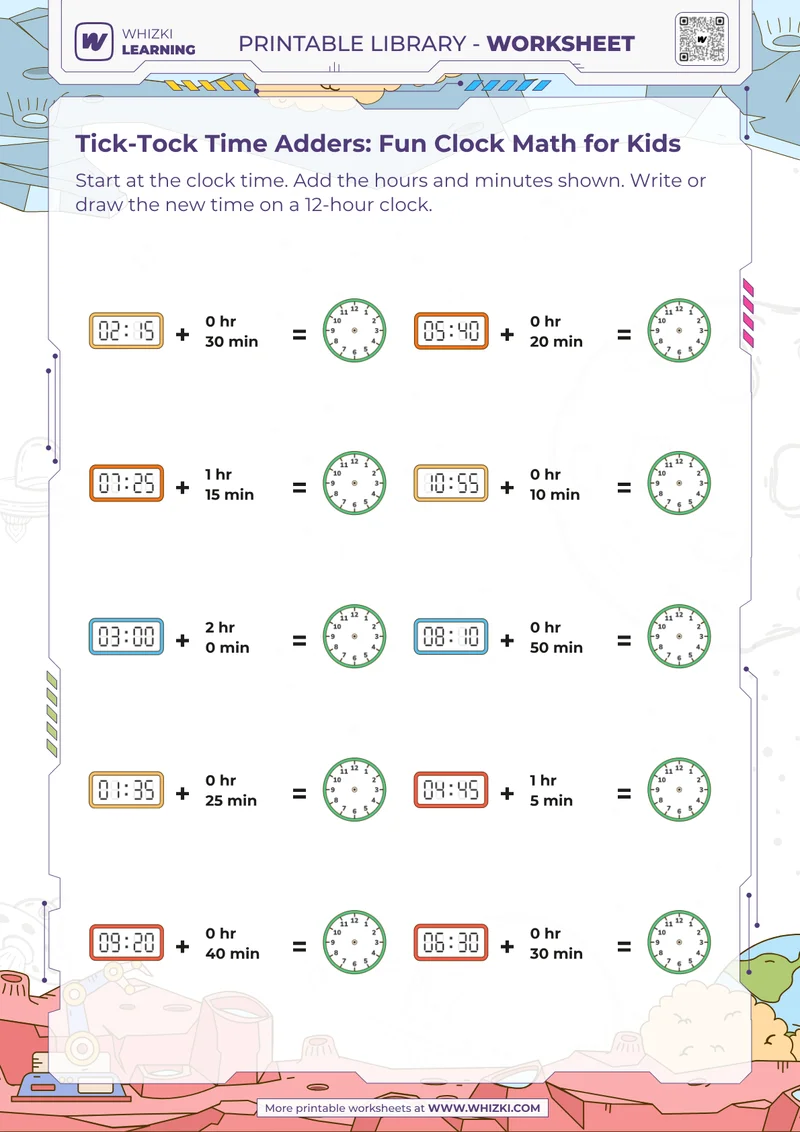
Tick-Tock Time Adders: Fun Clock Math for Kids
The Whizki Learning Tick-Tock Time Adders worksheet introduces six-year-old children to beginner time math by combining playful clocks with simple addition problems. The worksheet focuses on reading hour and minute hands on analog clocks and connecting each time to clear number expressions. Whizki Learning curriculum designers and certified early-childhood educators created the worksheet to match attention spans and fine-motor skills typical for preschool and early primary learners. Parents and teachers can confidently use the worksheet as a gentle, expert-guided first step into structured math around daily routines.
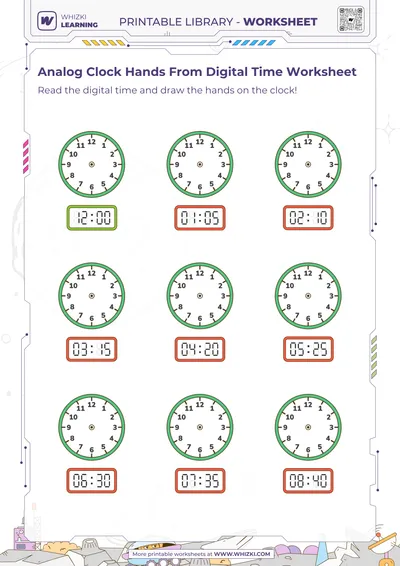
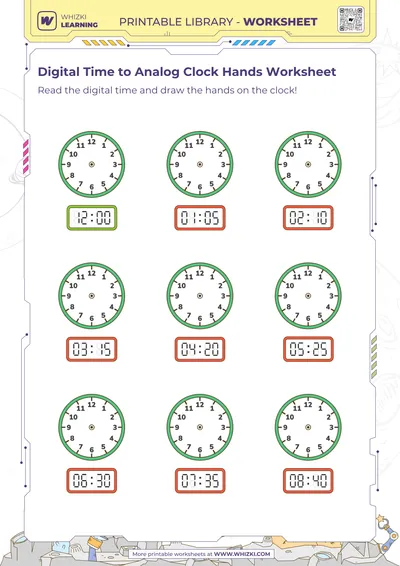
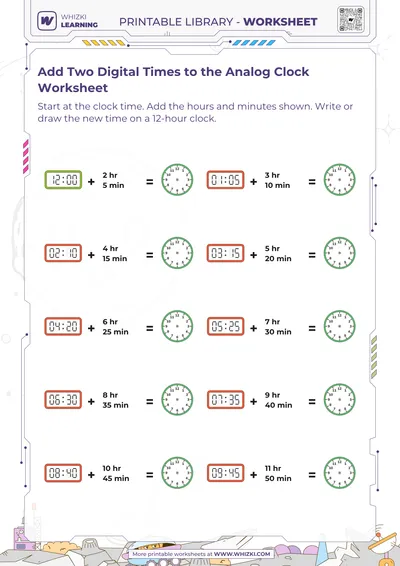
The Whizki Learning time worksheet strengthens analog clock recognition by giving every child repeated chances to match digital times, spoken times, and clock-face visuals. Each activity invites the child to read a starting time, add an extra amount of time in hours or minutes, and imagine a familiar daily event, such as snack time or outdoor play. The carefully chosen time intervals stay within one hour, so young learners experience successful number combinations without overwhelming cognitive load. Through repeated exposure, the child gains confidence in connecting number sequences, clock positions, and real-world schedules.
The Tick-Tock Time Adders worksheet from Whizki Learning also nurtures early addition fluency by embedding number practice inside storytelling questions about a child's day. Problems ask the child to start at a given time, add specified minutes or hours, and discover when a future activity begins. The combination of visual clocks, number sentences, and short scenario prompts encourages children to verbalize reasoning, strengthening both mathematical vocabulary and expressive language. Educator-designed scaffolds, such as consistent five-minute intervals and uncluttered clock faces, support children who benefit from predictable structure.
Every Whizki Learning preschool math worksheet, including Tick-Tock Time Adders, is classroom-tested to align with developmental milestones for six-year-old children. The time activities offer just enough challenge to stretch working memory, attention, and fine-motor coordination while still feeling playful and game-like. Clear icons, friendly clock characters, and thoughtfully sequenced questions help children build independent problem-solving habits. Families and educators seeking screen-free, printable math enrichment can rely on the Whizki Learning time worksheet for repeatable practice across home, classroom, and tutoring settings.
Limited Time Sale
Kids’ Workbooks!
Boost your child’s skills with our discounted workbooks. Engaging activities for preschool, kindergarten, and grade 1 - now at special sale prices!


Fast shipping
Secure Payment
Licensed Teachers
For the planet
Printed in the USA
Find fresh ideas
To help your little learners grow!
Helpful guides for parents and teachers, and tips for making learning at home super fun.

A parent-friendly CVC words list sorted by short a, e, i, o, and u, with word-family groups and simple blending tips for ages 3 to 7.
Sunny Hedge
A calm guide to typical counting at age 4, why reciting numbers is different from understanding quantity, and two easy kitchen games to try today.
Sunny Hedge
A parent-friendly kindergarten sight words list, merged from Dolch and Fry, grouped by teaching order with a simple printable PDF plan.
Sunny Hedge
Most children write a recognizable first name between ages 4 and 5. Learn what comes first, what is normal, and how to begin gently.
Sunny HedgeJoin the Screen-Free Movement.
Get exclusive activities, expert tips, and inspiration for a more meaningful, offline family life.