Learning Outcomes
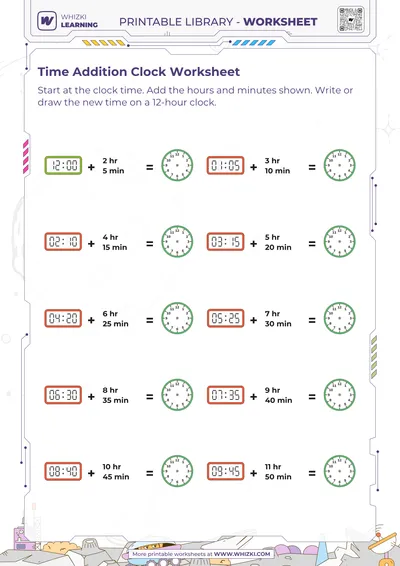
The Whizki Learning time worksheet strengthens clock-reading accuracy by guiding children to match digital times to analog clocks in clear, repeatable practice.
The Whizki Learning resource builds early number sense by encouraging children to notice hour numbers, minute positions, and patterns around the clock face.
The Whizki Learning worksheet introduces time vocabulary by combining digital time formats with visual analog clocks, helping children connect language, symbols, and everyday routines.

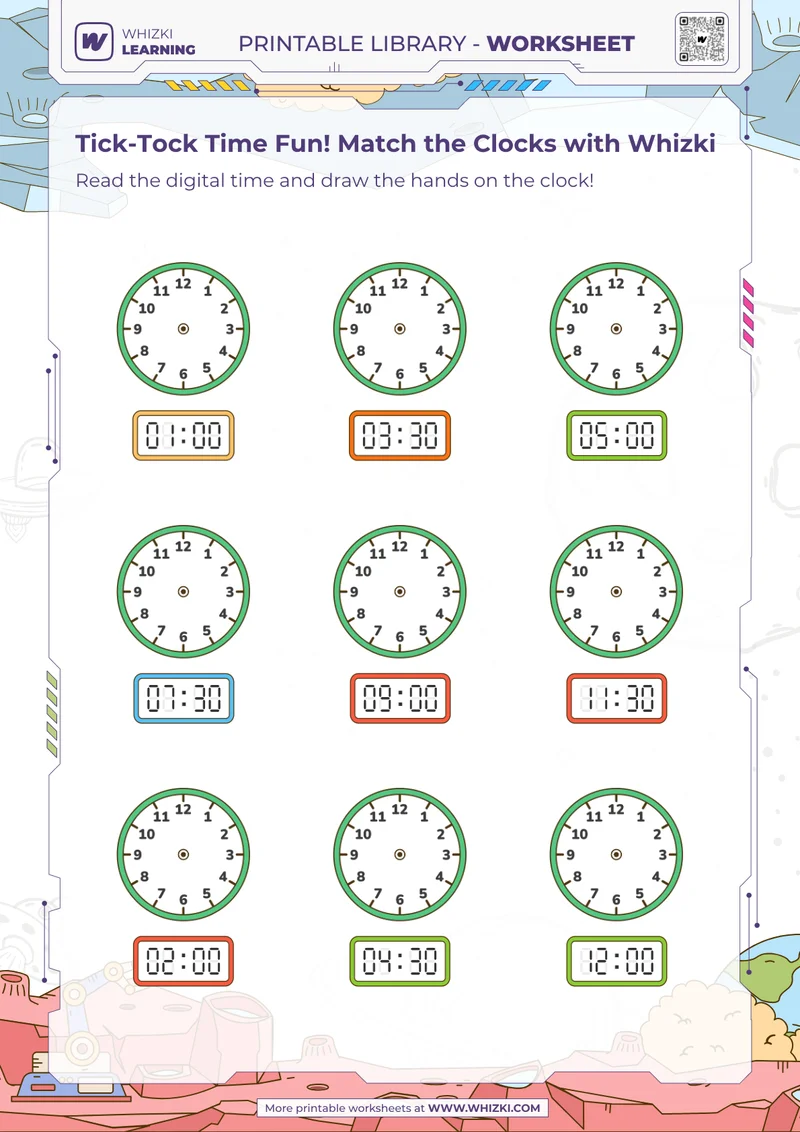
Tick-Tock Time Fun! Match the Clocks with Whizki
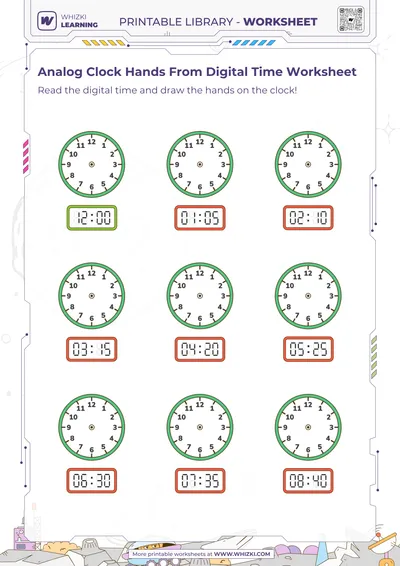
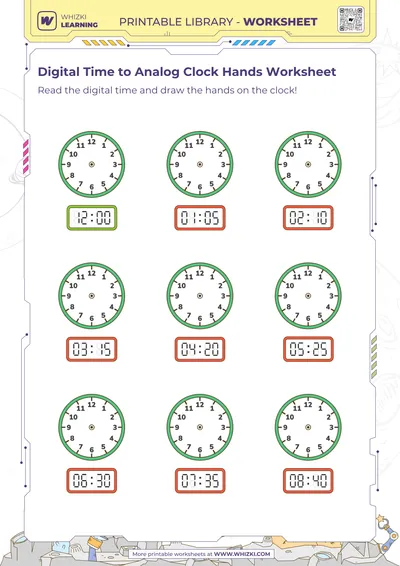
The Whizki Learning Tick-Tock Time Fun worksheet gives 4-year-old children a gentle first experience with clocks. Young learners match simple digital times to large analog clock faces, helping children see how numbers on a screen connect to hands on a clock. The Whizki Learning design team includes experienced early childhood educators, so every activity on the worksheet respects kindergarten attention spans and supports real-world readiness.
This Whizki Learning worksheet focuses on times to the hour and half hour, which suits the developmental stage of most preschoolers and kindergarteners. Children see friendly clock faces with bold hour numbers and clear minute marks, then connect those visuals to matching digital times such as 3:00 or 5:30. The structure of the Whizki Learning tasks helps children build confidence step by step, rather than feeling overwhelmed by too many time formats at once.
Parents and teachers can use the Whizki Learning time worksheet as a hands-on center activity, homework support, or quiet-table practice. The printable format makes the resource easy to reuse in small groups, one-on-one tutoring, or home-school lessons. Because the Whizki Learning worksheet includes consistent layouts and predictable instructions, children quickly understand what to do and can focus attention on recognizing numbers and clock positions.
The Whizki Learning curriculum team created this worksheet to align with foundational math and early numeracy guidelines for young children. Matching digital and analog times supports number identification, visual scanning, and early problem-solving skills in a playful way. Families and educators who choose Whizki Learning resources gain a research-informed, classroom-tested tool that turns everyday clock-reading into an engaging learning milestone for kindergarten-aged children.
Limited Time Sale
Kids’ Workbooks!
Boost your child’s skills with our discounted workbooks. Engaging activities for preschool, kindergarten, and grade 1 - now at special sale prices!


Fast shipping
Secure Payment
Licensed Teachers
For the planet
Printed in the USA
Find fresh ideas
To help your little learners grow!
Helpful guides for parents and teachers, and tips for making learning at home super fun.

Many early childhood reading programs rely on memorizing 'sight words' using flashcards, but this visual memorization strategy often creates fragile readers. This comprehensive guide compares phonics instruction against rote memorization, explaining the neurological mechanisms behind decoding. Learn why teaching letter sounds builds genuine reading confidence and how to foster a growth mindset in young readers.
Sunny Hedge
Teaching a child to read often creates immense anxiety for parents, leading to frustrating flashcard memorization. This comprehensive guide details a proven, Montessori-inspired phonics method that prioritizes letter sounds over letter names. Learn how screen-free, hands-on learning activities build essential phonemic awareness and prepare preschoolers for fluent reading without academic pressure.
Sunny Hedge
When a child cries at the sight of a pencil, parents must completely stop handwriting practice to prevent long-term academic anxiety. This tactical 7-day guide provides a clinical 'Writing Confidence Reset' designed by early childhood experts. Learn how to rebuild a child's fine motor confidence through screen-free sensory play, vertical drawing, and high-quality printed workbooks without any pressure or shame.
Sunny Hedge
Children frequently develop incorrect handwriting habits, such as starting letters from the bottom or applying extreme pencil pressure. This tactical guide outlines the five most common letter formation mistakes and provides occupational therapist-approved, kind fixes for each. Learn how high-quality printed workbooks and specific tactile exercises build permanent, correct muscle memory without frustrating the child.
Sunny HedgeJoin the Screen-Free Movement.
Get exclusive activities, expert tips, and inspiration for a more meaningful, offline family life.