Learning Outcomes
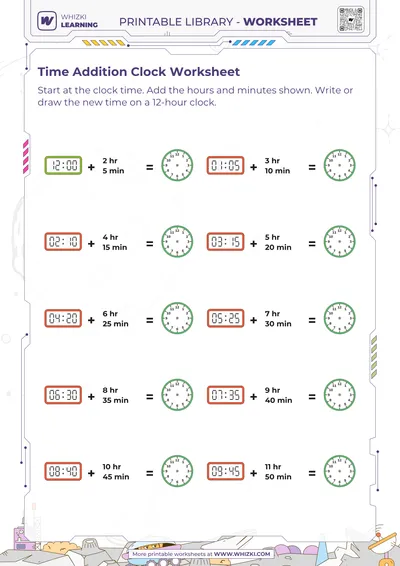
The Whizki Learning worksheet builds preschool clock awareness by matching analog hours to digital numbers, developing accurate number recognition to 12 for age four learners.
The Whizki Learning time worksheet strengthens counting skills by guiding the child to count minutes in steps of five around the clock, reinforcing early skip-counting foundations.
The Whizki Learning printable worksheet develops visual discrimination by having the child compare clock faces that show different times, supporting careful observation and early problem-solving skills.
The Whizki Learning preschool time activity introduces basic daily scheduling concepts by linking specific times to common routines, helping the child understand order and sequence across the day.
The Whizki Learning worksheet encourages math vocabulary growth by prompting discussion of words like hour, minute, early, and late, supporting rich language development alongside quantitative understanding.

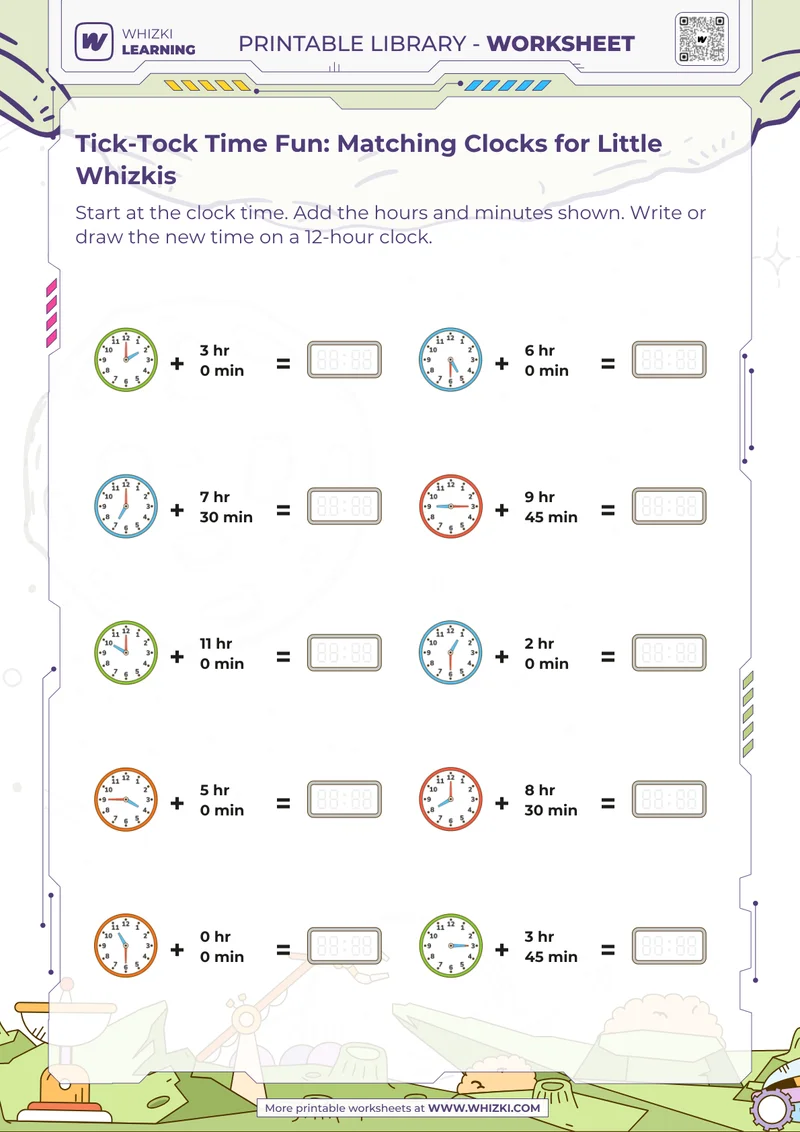
Tick-Tock Time Fun: Matching Clocks for Little Whizkis
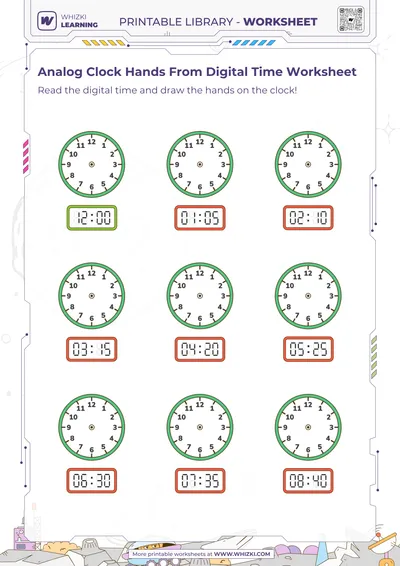
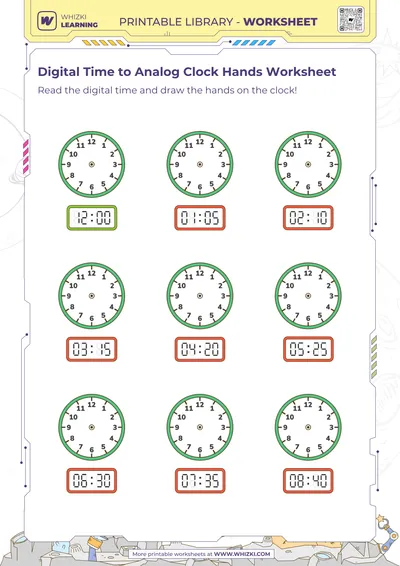
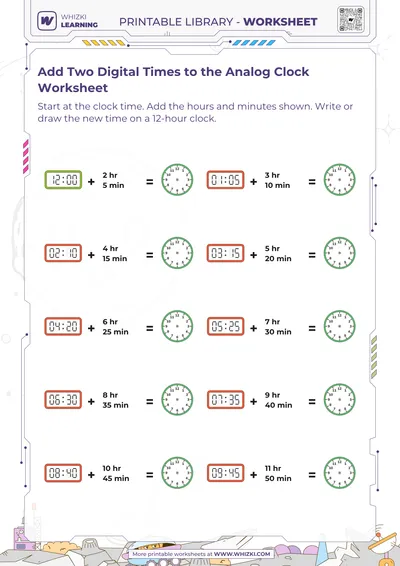
This Whizki Learning preschool time worksheet introduces four-year-olds to simple clock reading through playful visuals, matching games, and easy-to-understand math challenges designed by experienced early childhood educators. The time activity page features bold analog clocks with clear hour and minute hands, paired with friendly digital numbers that help the child start connecting daily routines like breakfast, playtime, and bedtime to specific times. The Whizki Learning worksheet uses short, focused tasks to nurture early math curiosity without overwhelming young learners, making the resource ideal for first experiences with clocks.
Every activity in this Whizki Learning time worksheet supports foundational preschool math skills such as counting, number recognition, and early sequencing through clock-focused practice. The child counts by fives around the clock face, matches clock times like 3:00 and 6:30, and traces or reads numbers that appear on simple digital displays. The educator-created design ensures that every time matching task stays age-appropriate for four-year-olds, building success step by step and fostering a positive mindset toward future math learning.
This Whizki Learning printable worksheet is carefully structured so parents and teachers can introduce time concepts in short, engaging sessions that fit into everyday routines. Caregivers can connect the worksheet clocks to real-life moments such as snack time, outdoor play, or bedtime reading, helping the child understand how clocks organize the day. Clear instructions and uncluttered layouts support independent exploration, while bright, friendly visuals keep preschool attention focused on the math concepts rather than distractions.
Designed by professional educators and reviewed by curriculum specialists, this Whizki Learning time worksheet aligns with early childhood best practices for age 4 math development. The worksheet balances hands-on visual learning with gentle cognitive challenge, encouraging the child to observe clock hands, compare different times, and discuss what usually happens at each time of day. Families and classrooms using this Whizki Learning resource gain a research-informed tool that makes early time awareness, number sense, and routine-building both fun and developmentally appropriate.
Limited Time Sale
Kids’ Workbooks!
Boost your child’s skills with our discounted workbooks. Engaging activities for preschool, kindergarten, and grade 1 - now at special sale prices!


Fast shipping
Secure Payment
Licensed Teachers
For the planet
Printed in the USA
Find fresh ideas
To help your little learners grow!
Helpful guides for parents and teachers, and tips for making learning at home super fun.

Many early childhood reading programs rely on memorizing 'sight words' using flashcards, but this visual memorization strategy often creates fragile readers. This comprehensive guide compares phonics instruction against rote memorization, explaining the neurological mechanisms behind decoding. Learn why teaching letter sounds builds genuine reading confidence and how to foster a growth mindset in young readers.
Sunny Hedge
Teaching a child to read often creates immense anxiety for parents, leading to frustrating flashcard memorization. This comprehensive guide details a proven, Montessori-inspired phonics method that prioritizes letter sounds over letter names. Learn how screen-free, hands-on learning activities build essential phonemic awareness and prepare preschoolers for fluent reading without academic pressure.
Sunny Hedge
When a child cries at the sight of a pencil, parents must completely stop handwriting practice to prevent long-term academic anxiety. This tactical 7-day guide provides a clinical 'Writing Confidence Reset' designed by early childhood experts. Learn how to rebuild a child's fine motor confidence through screen-free sensory play, vertical drawing, and high-quality printed workbooks without any pressure or shame.
Sunny Hedge
Children frequently develop incorrect handwriting habits, such as starting letters from the bottom or applying extreme pencil pressure. This tactical guide outlines the five most common letter formation mistakes and provides occupational therapist-approved, kind fixes for each. Learn how high-quality printed workbooks and specific tactile exercises build permanent, correct muscle memory without frustrating the child.
Sunny HedgeJoin the Screen-Free Movement.
Get exclusive activities, expert tips, and inspiration for a more meaningful, offline family life.