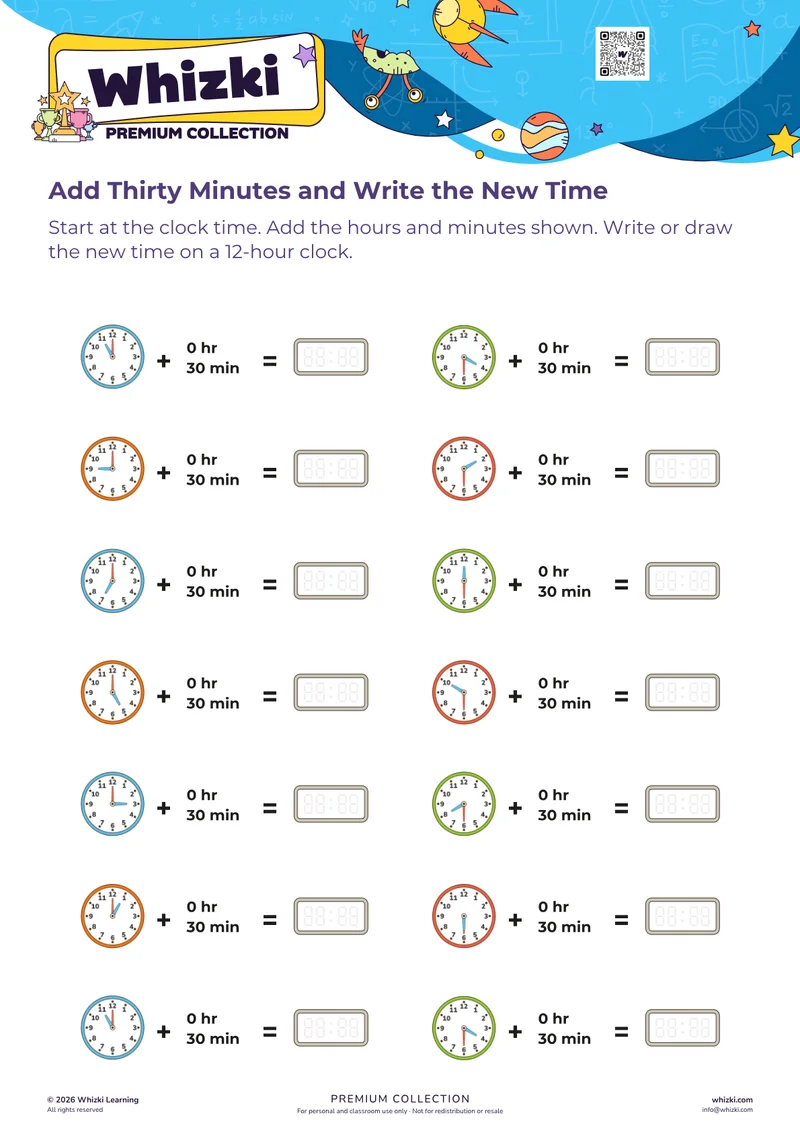
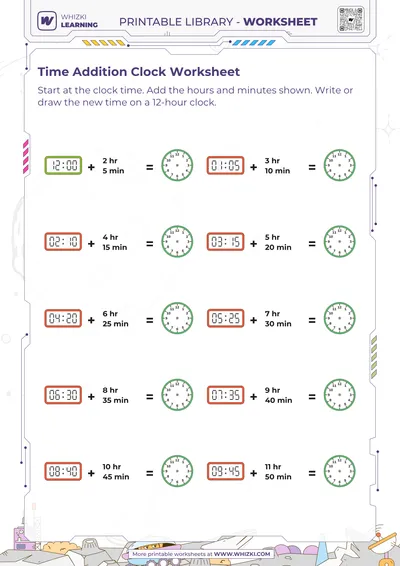
This adding thirty minutes worksheet asks children to add the stated duration to each starting clock time and write in digits the new time. The page contains 14 examples focused on this specific clock skill. Work through one example together before choosing a small group for your child to try, using the printed clock faces and response spaces as the starting point.
Move forward half an hour. When the minutes reach 60, continue at :00 in the next hour. Use a movable teaching clock to model the movement if the relationship between the two hands is unfamiliar. The amount added is a duration, not another time of day to copy. Follow the 12-hour cycle when passing 12; the page does not ask for an a.m. or p.m. label.
Choose this page after your child can read the starting times comfortably. Say the starting time aloud, name the amount being added, and count forward in steps before recording the result. When writing the answer, separate hours and minutes with a colon and use two digits for the minutes. Pause after a few examples to compare the method with the model.
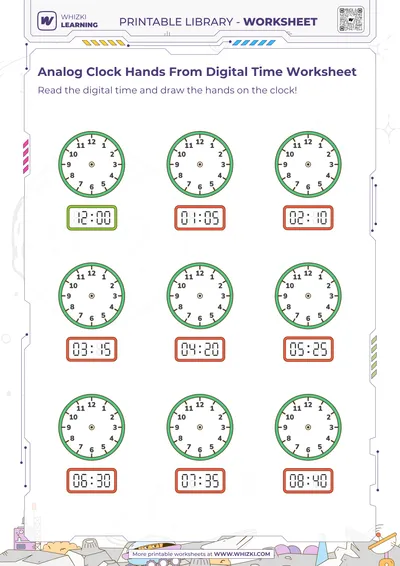
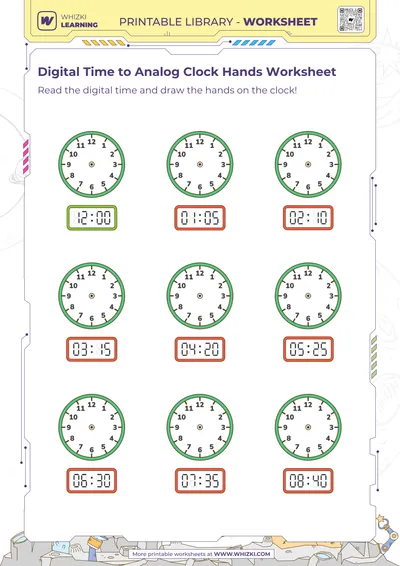
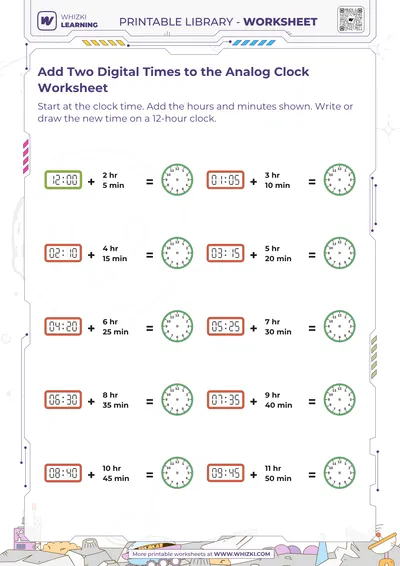
The Telling Time Practice Pack offers other reading, drawing, and elapsed-time activities. If counting steps need more practice, explore Early Math Essentials before returning to clocks. A short check of a real household clock can be a separate follow-up. Match the difficulty to your child's current understanding and leave unused examples for another session.