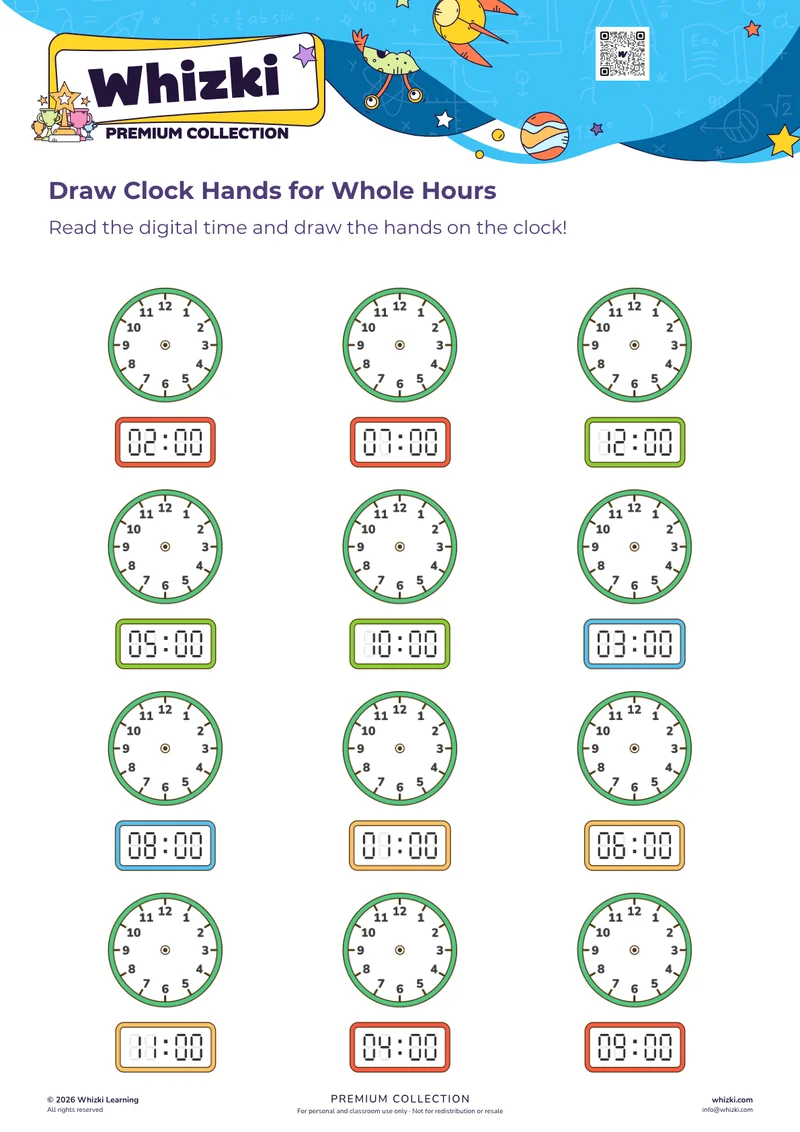
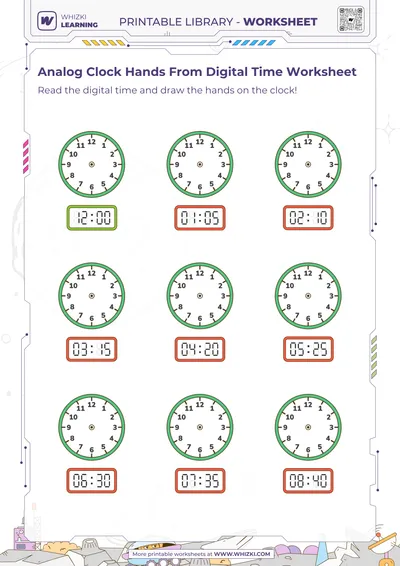
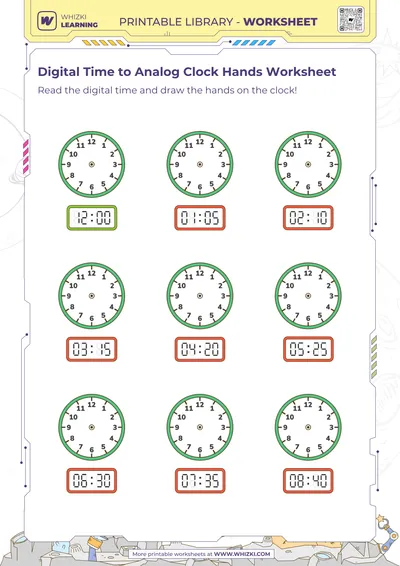
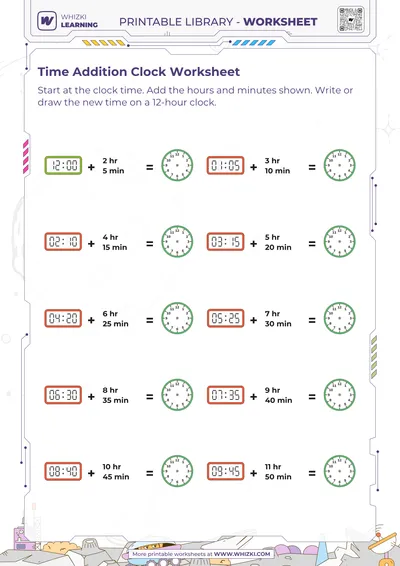
This whole hours worksheet asks children to read each digital time and draw the matching hands on an empty clock face. The page contains 12 examples focused on this specific clock skill. Work through one example together before choosing a small group for your child to try, using the printed clock faces and response spaces as the starting point.
Place the minute hand at 12 and the shorter hour hand at the hour shown in digits. Use a movable teaching clock to model the movement if the relationship between the two hands is unfamiliar. The longer hand shows minutes and the shorter hand shows the hour. Read both together rather than choosing the nearest hour number without checking the minutes.
Choose this page when your child is ready to connect clock hands with written hours and minutes. Name the parts of the clock and model how to check the two hands together. When drawing, make the hour hand shorter and position it according to how far through the hour the time has moved. Pause after a few examples to compare the method with the model.
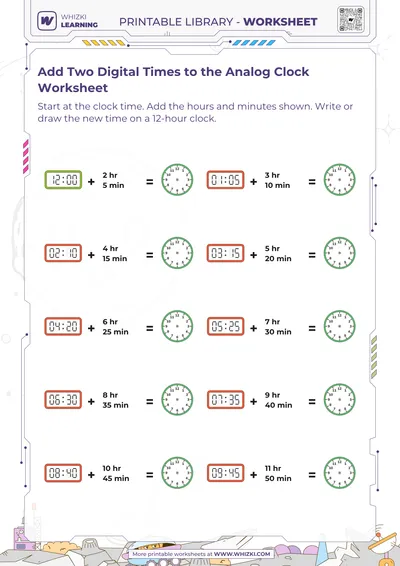
The Telling Time Practice Pack offers other reading, drawing, and elapsed-time activities. If counting steps need more practice, explore Early Math Essentials before returning to clocks. A short check of a real household clock can be a separate follow-up. Match the difficulty to your child's current understanding and leave unused examples for another session.