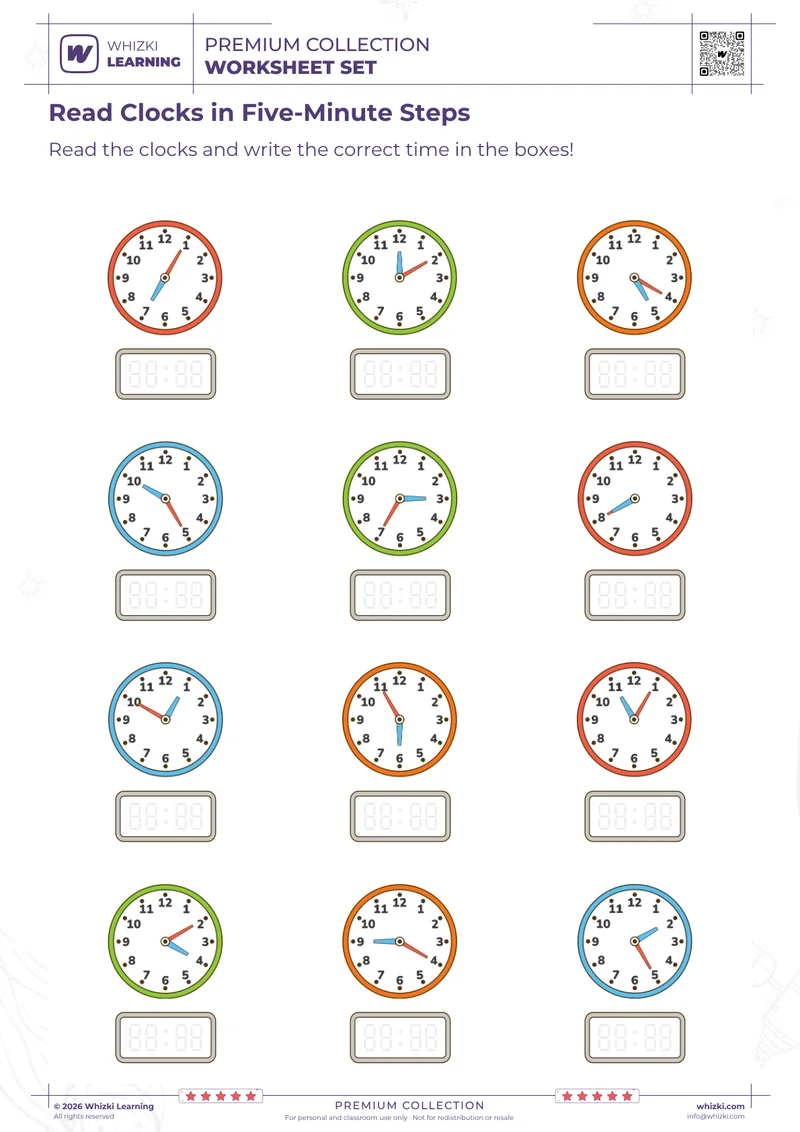
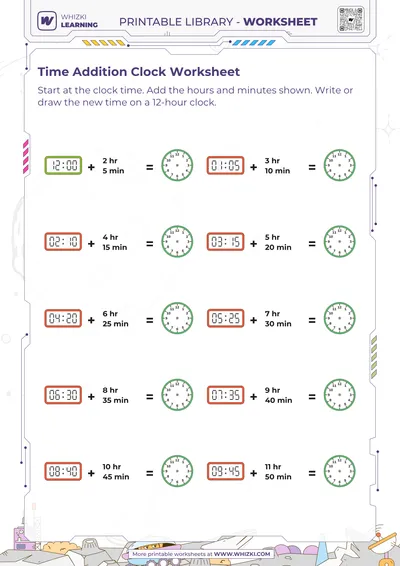
This five-minute times worksheet asks children to read each analog clock and write its time in digits. The page contains 12 examples focused on this specific clock skill. Work through one example together before choosing a small group for your child to try, using the printed clock faces and response spaces as the starting point.
Count around the clock face in fives to read the minutes, then check which hour the shorter hand has passed. Use a movable teaching clock to model the movement if the relationship between the two hands is unfamiliar. The longer hand shows minutes and the shorter hand shows the hour. Read both together rather than choosing the nearest hour number without checking the minutes.
Choose this page when your child is ready to connect clock hands with written hours and minutes. Name the parts of the clock and model how to check the two hands together. When writing the answer, separate hours and minutes with a colon and use two digits for the minutes. Pause after a few examples to compare the method with the model.
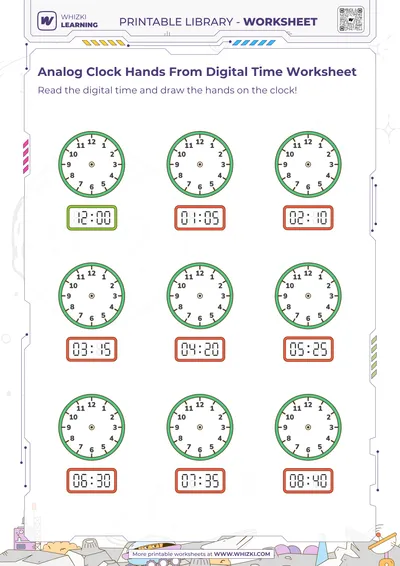
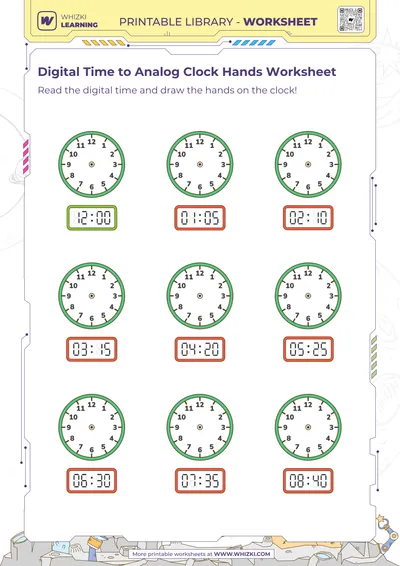
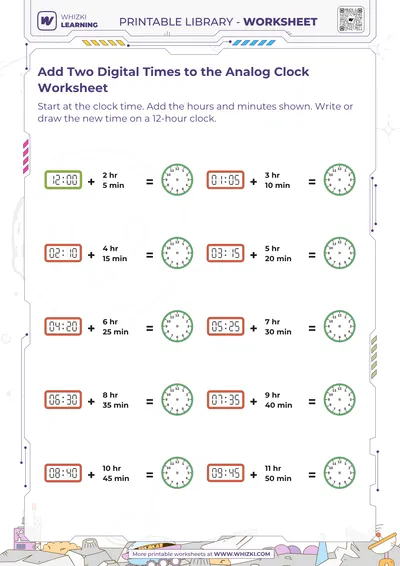
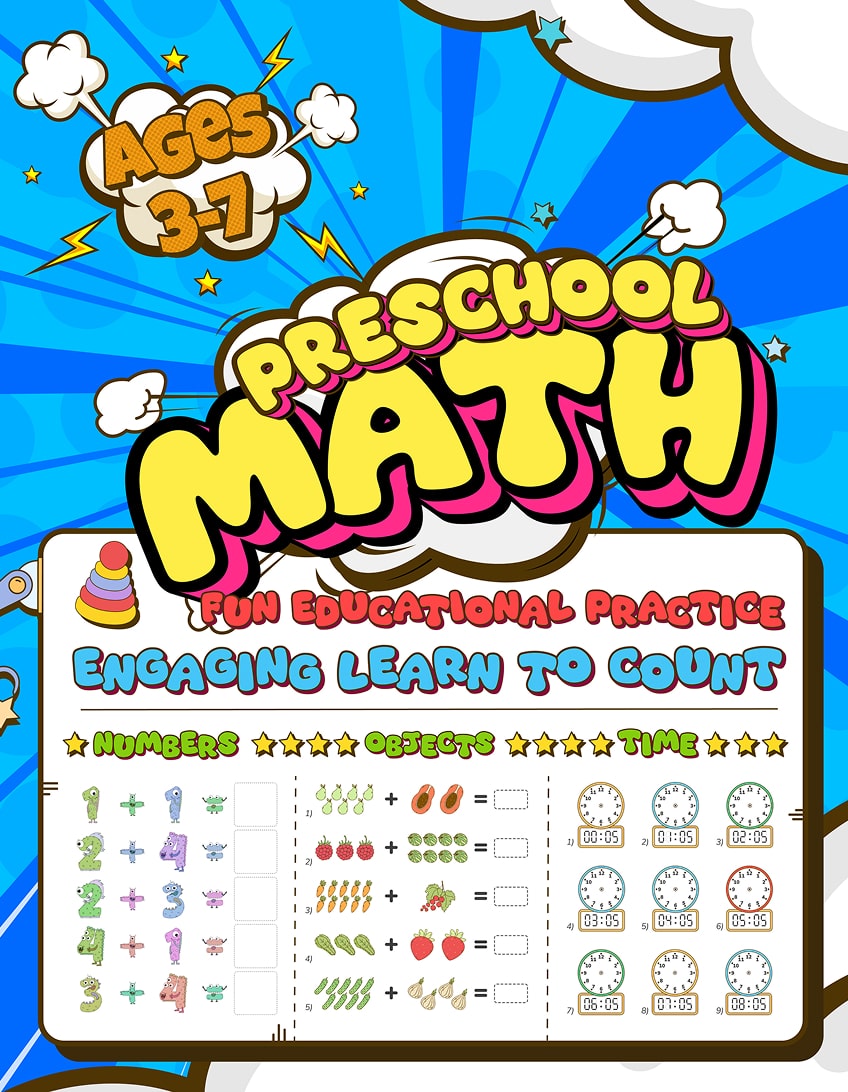
The Telling Time Practice Pack offers other reading, drawing, and elapsed-time activities. If counting steps need more practice, explore Early Math Essentials before returning to clocks. A short check of a real household clock can be a separate follow-up. Match the difficulty to your child's current understanding and leave unused examples for another session.