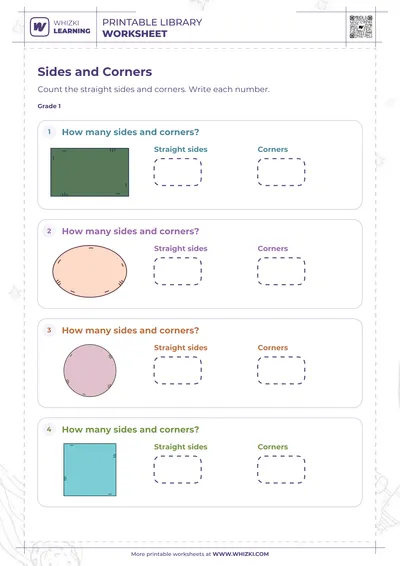
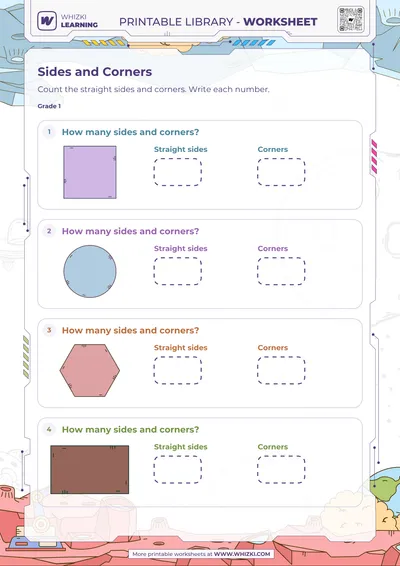
Two-dimensional shapes → Count straight sides → Children describe triangles, rectangles, squares, and other flat shapes with clearer math words.
Flat shape pictures → Count corners → Children check shape names by using visible features instead of guessing from memory.
Kindergarten math vocabulary → Describe shape attributes → Children explain how sides and corners help identify two-dimensional shapes.

The two-dimensional shapes sides and corners worksheet helps kindergarten children practice shape recognition by looking at flat shapes and counting straight sides and corners. The page keeps the task clear, so a child can focus on describing each shape with simple math words.
At age six, many children know shape names but still stall when a triangle is turned sideways or a rectangle looks long and skinny. Counting sides and corners gives a child a steady check, instead of relying only on memory or the way a shape usually looks.
A parent or teacher can sit beside the child and point to one shape at a time. Ask, “How many straight sides can you count?” and then, “How many corners can you touch?” Let the child trace each side with a finger before saying the shape name aloud.
The worksheet is more focused than a generic shape page because the practice centers on the parts that define two-dimensional shapes. The repeated count-and-describe routine gives children a calm way to compare shapes during shared, screen-free learning time.
Boost your child’s skills with our discounted workbooks. Engaging activities for preschool, kindergarten, and grade 1 - now at special sale prices!


Fast shipping
Secure Payment
Licensed Teachers
For the planet
Printed in the USA
Helpful guides for parents and teachers, and tips for making learning at home super fun.

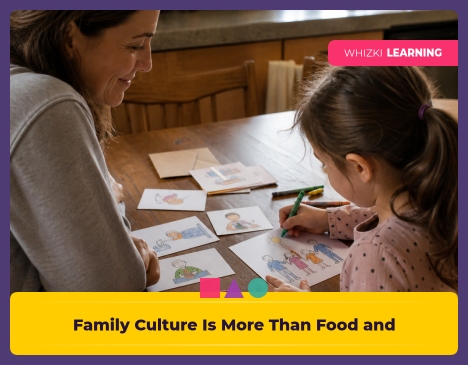
A practical guide for inviting family stories about names, language, music, routines, celebrations, and places without putting children on display.

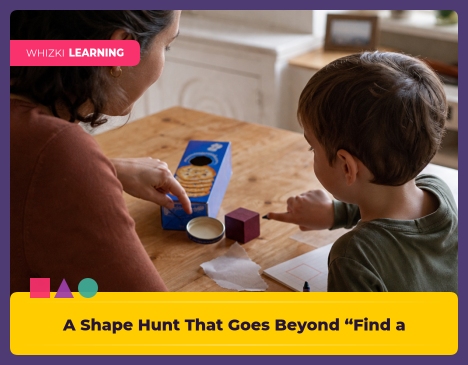
Turn a quick room search into early geometry talk by asking about sides, corners, curves, and shapes inside everyday objects.

Use a child’s own drawing and spoken words to build a first sentence through adult dictation, shared writing, or optional child writing.

Turn one borrowed book into five short learning moments for ages 3 to 7, with choosing, rereading, drawing, counting, memory, and returning.
Get exclusive activities, expert tips, and inspiration for a more meaningful, offline family life.