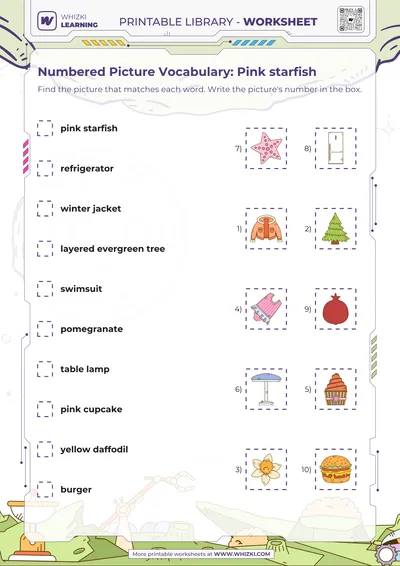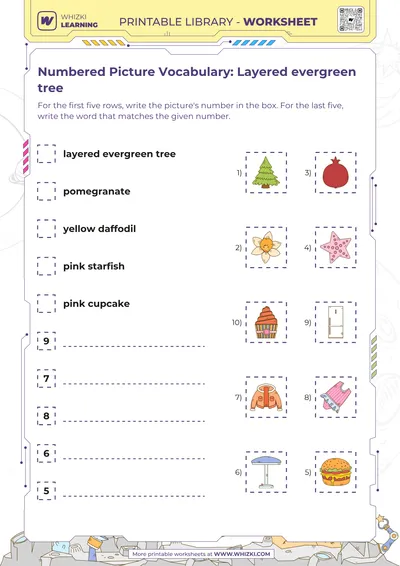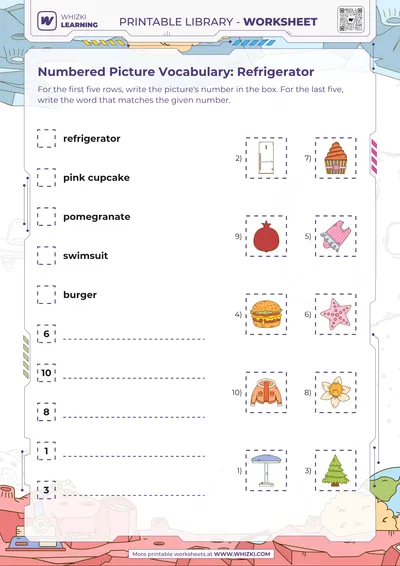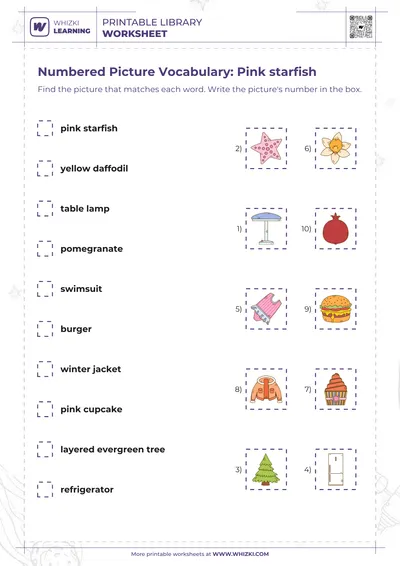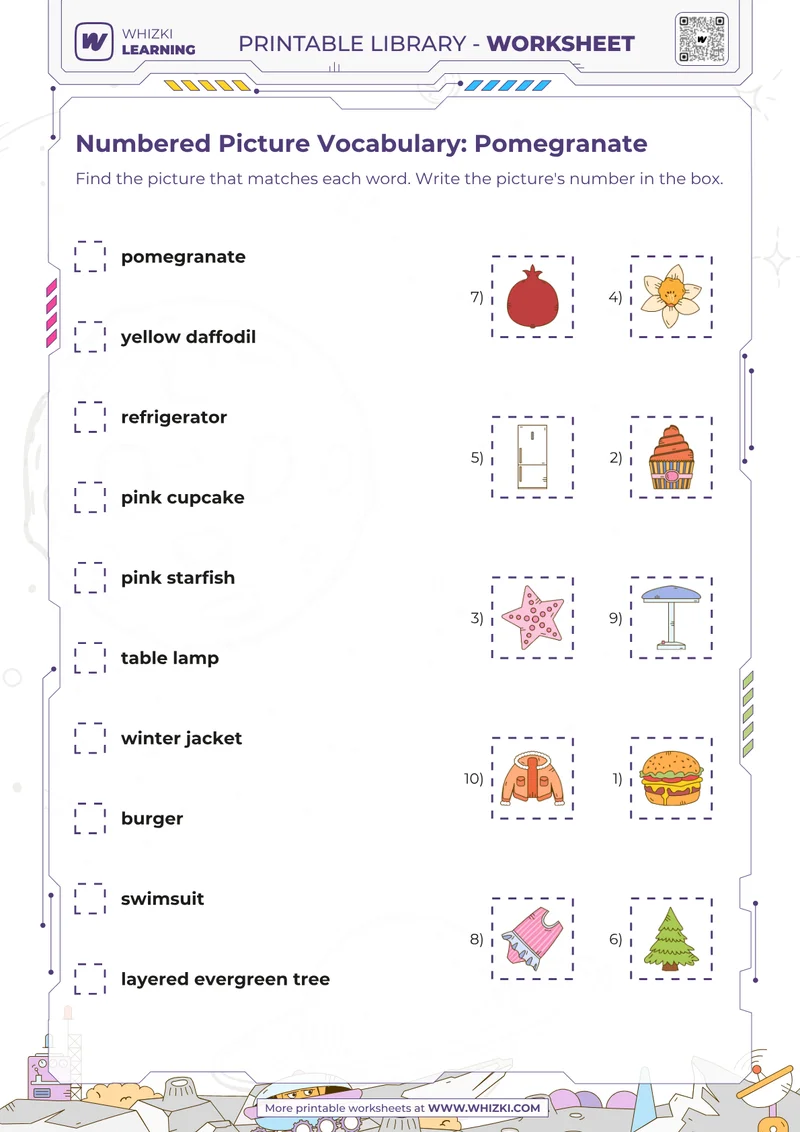


Connect ten illustrated objects with their written names, including pomegranate, yellow daffodil, refrigerator, with adult support for unfamiliar vocabulary.
Use a picture’s identifying numeral to record a match, distinguishing its number label from a quantity of objects.
Read a completed picture label aloud and use it in a short spoken sentence that shows its meaning.

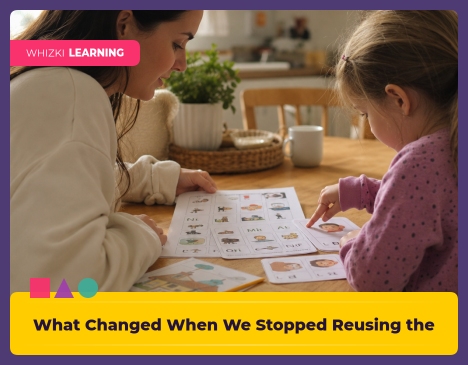
This numbered picture vocabulary worksheet connects ten written names with illustrated objects. Read ten labels and write the matching picture number in each answer box. The selection includes pomegranate, yellow daffodil, refrigerator. Name unfamiliar pictures together before asking the child to read or write their labels. The activity uses concrete picture vocabulary; it is not a designated list of high-frequency sight words.
Begin with “pomegranate” and find its illustration, labeled 7, in the picture column. Write 7 beside the word. The numbers identify pictures rather than counting groups of objects. Continue through the remaining labels, searching the whole picture column each time. A picture’s vertical position beside a word does not establish the match.
Read a label aloud when the spelling is unfamiliar and connect it with something visible in the picture. Let the child make the choice after receiving that vocabulary support. Check the numeral as well as the object: recognizing a picture and copying its identifying number are two separate steps. This work combines print with picture meaning. It should not be described as an oral phonemic-awareness exercise.
Explore the Early Words: Reading and Spelling pack for related supported reading formats. Save a suitable next page in the Family Learning Planner. Begin with a few prompts and return to the rest later if needed. After checking an answer, say a short sentence using that picture’s name. Keep the sentence connected to the object so the written label has a clear everyday meaning.
Boost your child’s skills with our discounted workbooks. Engaging activities for preschool, kindergarten, and grade 1 - now at special sale prices!


Fast shipping
Secure Payment
Licensed Teachers
For the planet
Printed in the USA
Helpful guides for parents and teachers, and tips for making learning at home super fun.

Use one familiar snack to build science talk and vocabulary without pressure to taste. This kitchen-table investigation honors allergies, texture needs, and child choice.

Help young children measure with paper clips before a ruler, using equal units, clear endpoints, and quick fixes for gaps, overlaps, and different answers.

Picture labels can build meaning, first-sound attention, or guessing habits. Use this parent-friendly decision tree to know when to cover or reveal the picture.

A vague school screening notice can leave families guessing, so start with seven plain questions about the test, timing, language, evidence, and next steps.
Get exclusive activities, expert tips, and inspiration for a more meaningful, offline family life.