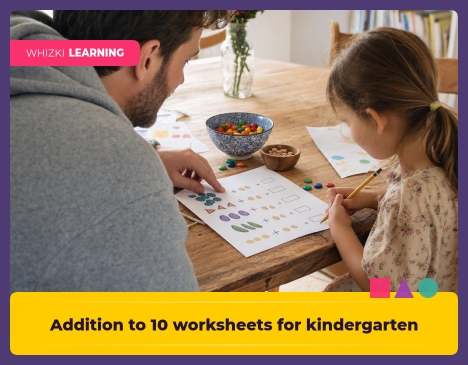
If your kitchen table is turning into a standoff over 3 + 4, put the worksheet away for two minutes and build the problem with crackers, buttons, or toy cars first. Addition worksheets feel less like a test when a child can see, touch, and move the parts before writing a number sentence. The next step is choosing pages within 5, then moving to addition to 10 after the child can count objects with steady one-to-one matching.
Reviewed by Whizki Editorial Team, Early Childhood Education Editors.
Start with picture addition within 5
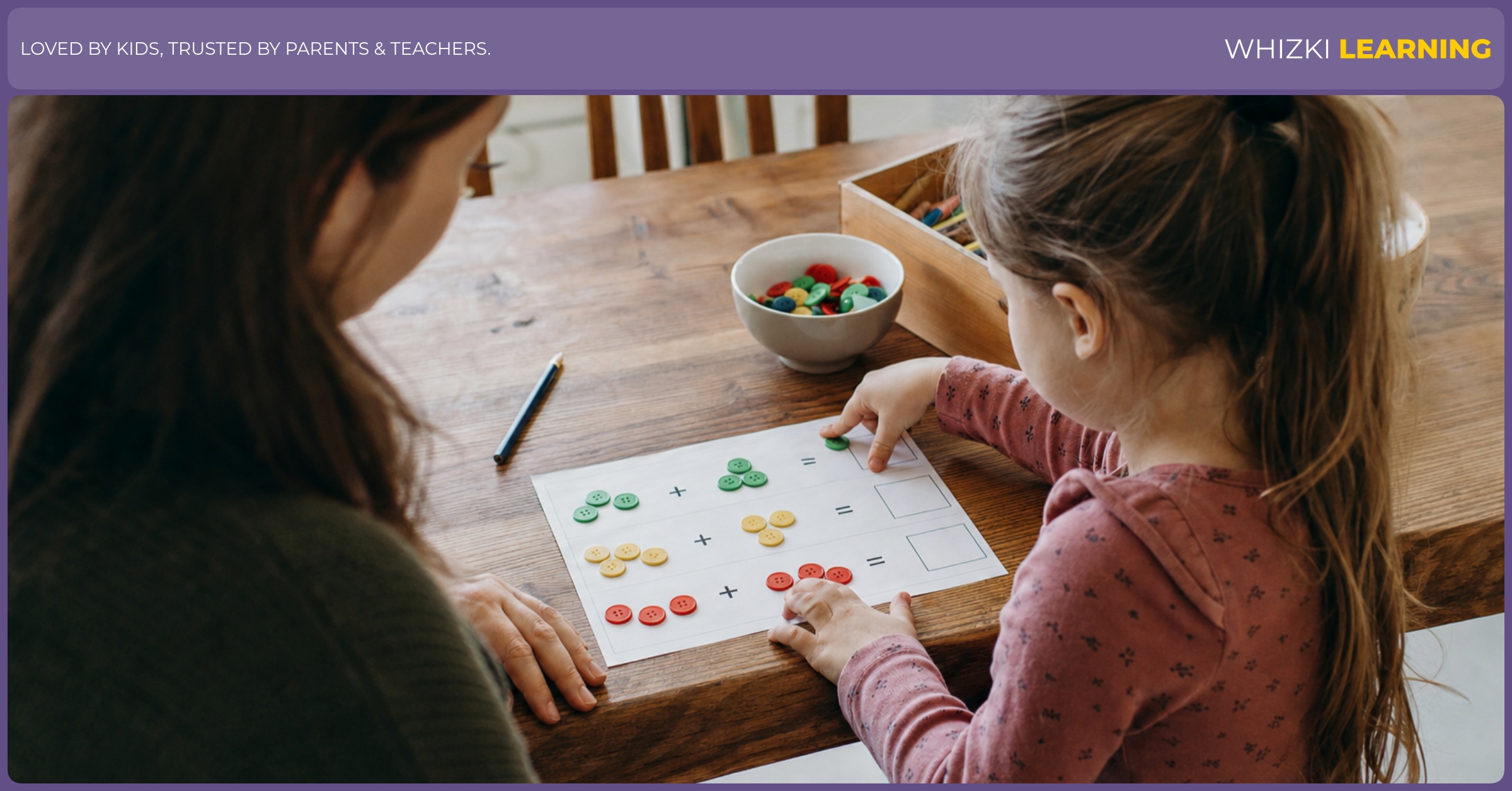
Picture addition worksheets within 5 are the best first paper step for most preschool and kindergarten learners because the child can count real-looking groups before reading symbols. NAEYC guidance for early math keeps young children close to concrete materials, and classroom practice backs that up. A page with three apples and one more apple is kinder to a new learner than a bare 3 + 1.
A good first worksheet shows two small groups, asks the child to count each group, and leaves room to write or trace the total. The child should be able to point to every object without skipping or double-counting. If number recognition is still shaky, pause for short practice in the numbers learning hub before adding more equations.
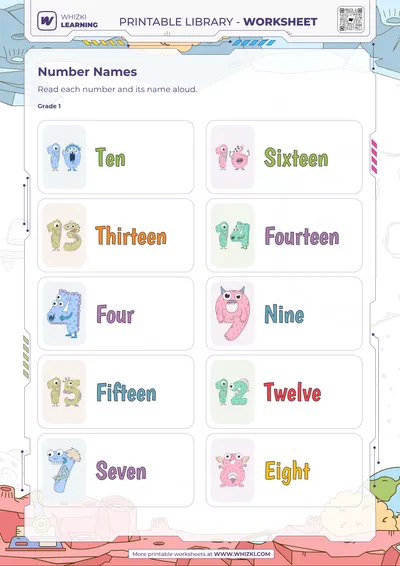
For a child who needs a smaller entry point, number pages can warm up the same skills without the pressure of a full addition page. A quick page for number 1 practice or number 5 practice can settle the hand and the eyes before the addition worksheet begins. The goal is not speed, the goal is accurate counting with calm attention.
Know when a child is ready for addition to 10
A kindergartener is ready for addition to 10 worksheets when counting objects to 10 is mostly accurate, numerals 0 to 10 are familiar, and the child understands that the last number counted tells how many. NAEYC-aligned kindergarten rooms look for that meaning before asking children to finish rows of equations. A child who can count ten blocks but cannot match the numeral 10 yet may need mixed counting and numeral work for a little longer.
The readiness check I use at the table is simple: put out 6 counters, add 2 more, and ask the child to show the total with fingers, words, or a written number. Occupational-therapy basics remind adults to watch the whole task, including eye tracking, pencil grip, posture, and fatigue. A child may understand the math and still need a shorter page, a thicker pencil, or fewer problems.
Number bonds are another readiness clue because a child starts to see how parts make a whole. A playful look at number bonds to 10 helps families connect addition facts to ten-frames, fingers, and small objects. The child does not need every bond memorized before using worksheets, but the child should be curious about combinations like 6 and 4 or 7 and 3.
Teach counting-on before faster facts
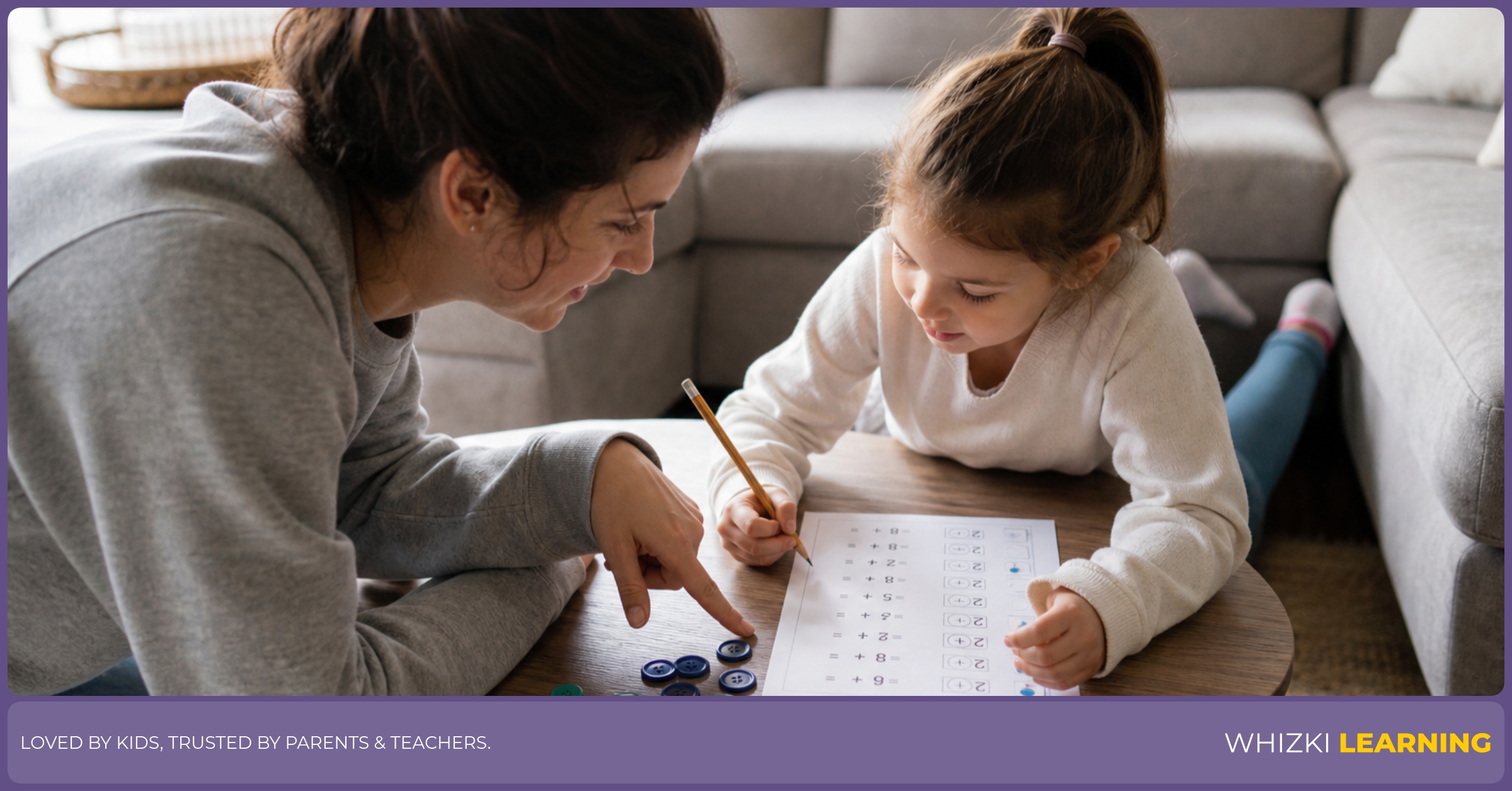
The counting-on strategy means the child starts with the bigger group and counts forward for the added group. In an Orton-Gillingham-style lesson, the adult uses more than one sense, so the child says the start number, taps counters, and writes the answer. The multisensory pattern helps the child connect spoken numbers, movement, and print.
A worksheet problem such as 6 + 2 can become a short script: say six, tap two dots while saying seven and eight, then write 8. The picture addition page should still show objects, because the child may need to check the total by counting all after trying counting-on. Counting all is not a failure, counting all is the bridge that makes counting-on honest.
Counting-on should stay playful and brief for ages 3 to 7. A child who loses track after the start number needs fewer objects, larger spaces between pictures, or a finger path under the row. The adult can model one problem, do one problem together, and let the child try one problem alone before ending the page.
For families who want matching pages ready to print, our worksheet sets include an Addition to 10 Picture-to-Number Pack with object sums, number sentences, and counting-on practice. The complete pack lives in Whizki Plus.
Move from within 5 to within 10
The worksheet sequence should grow in small steps: sums within 5, sums within 8, and then sums within 10. Montessori and Reggio classrooms both value observation before the next material, so the adult watches how the child counts instead of rushing to the next page. A child who uses fingers accurately is showing useful math thinking.
The first set can use matching pictures on both sides of the plus sign, such as bugs plus bugs or stars plus stars. The next set can mix groups, such as apples plus cups, because mixed objects ask the child to focus on quantity rather than appearance. The final set can place the number sentence under the picture so the child connects 4 + 3 with the counted total of 7.
For extra practice, our printable library is useful when a child needs a fresh page without changing the skill. A focused number 10 printable can also support the idea that ten is a complete target in early addition. The best printable is the one the child can finish with accuracy and a little pride.
Keep worksheet time short and useful
A short worksheet routine works better than a long math session for most children ages 3 to 7. Reggio-inspired observation asks the adult to notice interest, attention, and strategy, not just a correct answer. Five good problems can teach more than twenty rushed problems.
The adult script matters because language can make the math clearer. Speech-language practice often uses short, repeatable phrases, and early math benefits from the same idea: count the first group, add the next group, count the total. The child hears the action words while the hands do the matching action.
The stopping point matters as much as the start point. Occupational-therapy heuristics suggest changing the task when the hand gets tired, the body slides off the chair, or the eyes stop tracking the row. The page can end with one circled favorite problem, because a clean ending helps the child come back tomorrow.
Addition to 10 worksheets are most helpful when the worksheet follows the child, not the other way around. Start with pictures within 5, move toward sums within 10, and teach counting-on only after counting objects feels steady.
A parent or teacher does not need a perfect math block to build early addition. A few counters, a calm voice, and the right printable can turn a hard page into a doable next step.