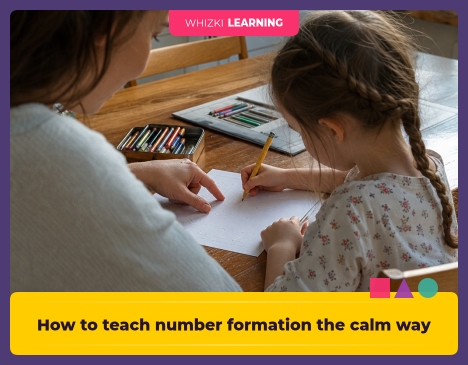
If your child keeps making a backward 3 right after you just modeled a perfect one, start with a big air-trace instead of another pencil correction. Number reversals are common from ages 3 to 7, and a short, repeatable routine usually works better than a longer lecture.
Reviewed by Whizki Editorial Team, Early Childhood Education Editors.
Start with sky-writing before pencil
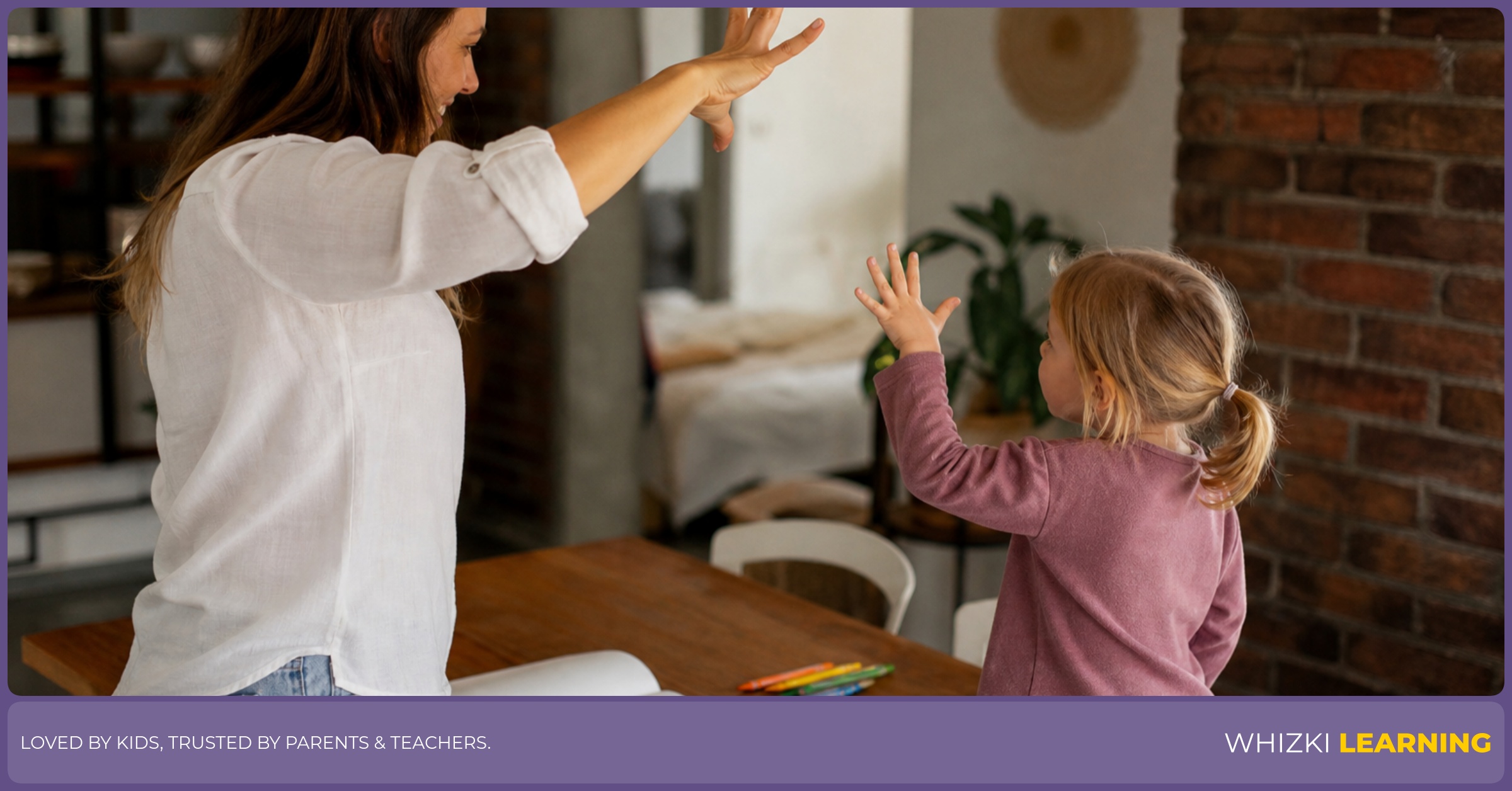
Sky-writing lets the whole arm learn the number path before tiny finger muscles have to control a pencil. In Orton-Gillingham style handwriting lessons, large motor movement often comes before paper because the child can feel the stroke direction from shoulder to fingertip. Say the number rhyme while the child traces in the air, then ask the child to copy the same path on the table with one finger.
Sky-writing also takes pressure off the page, which matters when a child already expects another correction. In a Reggio-inspired classroom, the teacher watches how the child moves before deciding how much help to give, and the same observation works at the kitchen table. If a child writes a number backward during early practice, remember that mirror writing is normal for many young learners.
Teach the top-start rule first
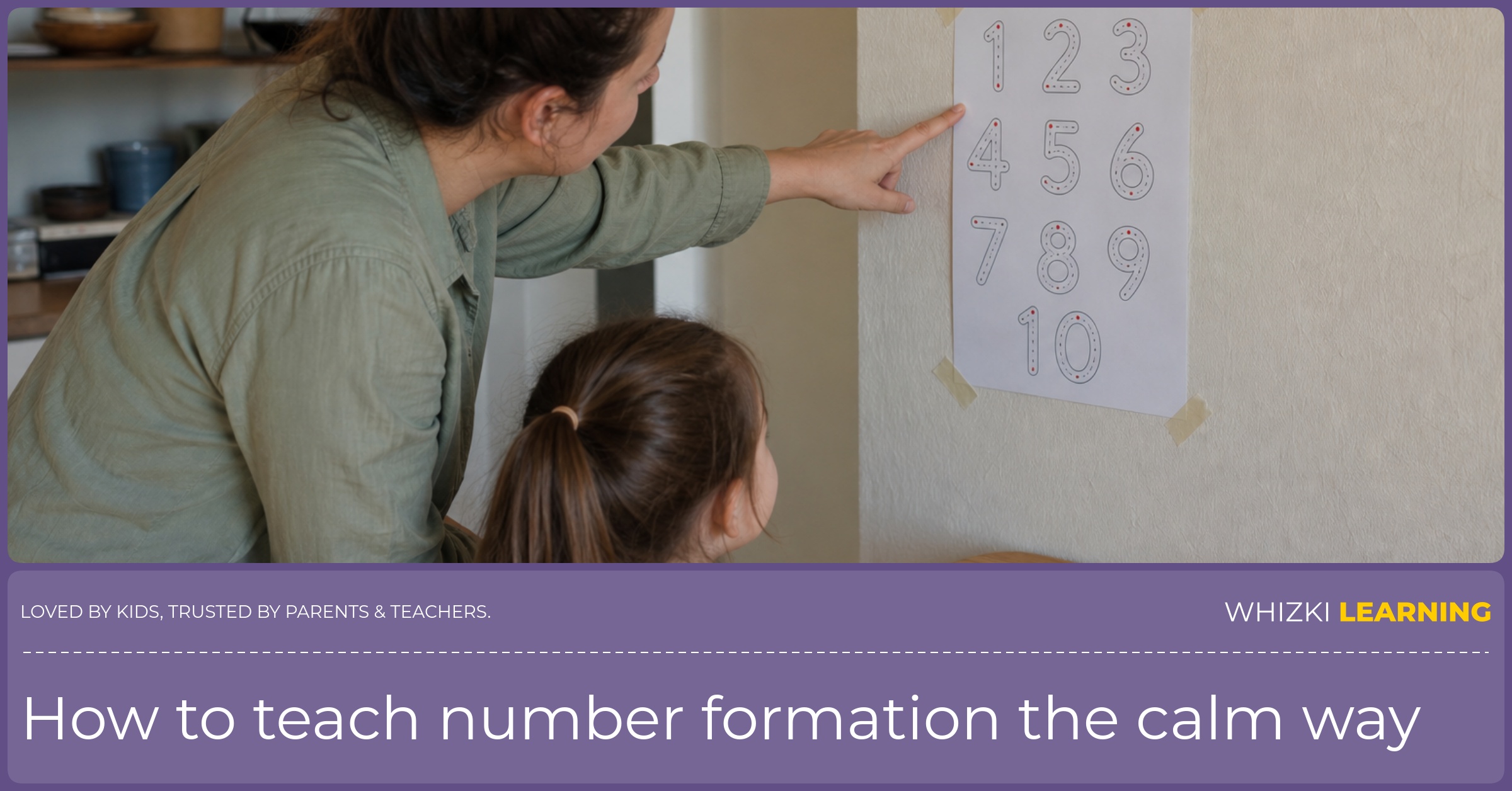
The top-start rule is simple: most printed numbers begin at the top, not the bottom. Occupational therapy handwriting heuristics often use starting dots, arrows, and verbal cues because young hands need a clear motor plan. Put a tiny dot near the top of each practice number, and say, start at the dot before the pencil touches paper.
The top-start rule helps stop many backward 3s because the child learns to move from top curve to bottom curve in the same order every time. A 3 that begins from the bottom often swings the wrong way because the child is trying to draw the shape from memory, not from a practiced path. When the adult repeats the same start cue, the number formation habit becomes more automatic.
Number reversals do not mean a child is lazy or careless. The young brain is still sorting direction, space, and symbol memory, which is why I like to explain why number reversals happen before asking for more worksheets. A calmer adult usually gets better effort because the child hears a cue instead of a complaint.
Use formation rhymes for 0 to 9
Formation rhymes give the child a tiny script for each number path. Orton-Gillingham teaching often pairs speech, movement, and vision, and number rhymes borrow that same multisensory idea. Keep the exact words steady for two weeks before changing any rhyme, because consistency matters more than clever wording.
Try these first five rhymes during finger tracing, then move to marker writing. For 0 say, around and close, zero is a loop; for 1 say, start at the top and down you run, that is how you make a one; for 2 say, curve around, slide to the right, number two sits nice and tight; for 3 say, around the tree, around the tree, that is how we make a three; for 4 say, down, over, down some more, that is how we make a four.
Use the same pattern for the second set of numbers, with one rhyme per number. For 5 say, down, around, hat on high, number five is standing by; for 6 say, curve down low, loop to mix, hello, hello, number six; for 7 say, slide across, slant down from heaven, that is how we make a seven; for 8 say, make an S and close the gate, that is how we make an eight; for 9 say, make a loop and pull a line, that is how we make a nine.
Montessori sandpaper-style tracing is a useful next step after sky-writing because the fingertip gets tactile feedback without pencil strain. Put the number card under the child’s finger, guide once if needed, then let the child trace alone while saying the rhyme. The rhyme should sound like a helper, not a performance test.
Print a number formation wall card from the numbers learning hub and tape the page where your child practices. The printable gives the adult the same starting dots and rhymes every day, so practice feels familiar instead of like a pop quiz.
Drill numbers in a smart order
Smart drill order keeps practice short and gives the child early success. NAEYC guidance favors playful, developmentally appropriate practice for young children, so a three-minute routine is usually better than a full page of repeated numbers. Begin with a few easy motor paths before asking the hand to manage confusing curves.
Practice 1 and 0 first because the movement pattern is simple and confidence comes quickly. Add 7 and 4 next because straight lines make the top-start rule easy to see. Move to 2, 3, and 5 after the child can start at the top without reminders, because curved numbers demand more direction control.
Save 6, 9, and 8 for later in the week because loops ask the child to manage size, crossing, and closure. The order can change when a kindergarten teacher has a school sequence, but the adult should still keep practice brief. A good routine is two sky-writes, two finger traces, and three pencil tries.
Fine motor practice should feel like a warm-up, not a punishment. I often stop while the child is still doing well because the last attempt shapes the next day’s attitude. If the child begs for more, add a number hunt around the room instead of adding another writing row.
Fix backward 3s with one routine
A backward 3 usually needs one clean routine, not ten different reminders. The routine I use is big arm 3, finger 3, marker 3, pencil 3. Occupational therapy basics support that sequence because the movement moves from large muscles to small muscles.
Start the routine by drawing a giant 3 in the air while saying, around the tree, around the tree. Next, have the child trace a 3 on the table with a finger, then trace a large printed 3 with a marker, and last write one pencil 3 on paper. Circle the best 3 and stop before fatigue turns practice into guessing.
A kindergarten teacher can use the same routine during morning work without calling attention to the mistake in front of classmates. NAEYC-aligned classroom practice protects dignity while still teaching the skill directly. A quiet starting dot and a whispered rhyme often work better than erasing every backward number.
Ask for an occupational therapy or school evaluation when number writing stays extremely effortful, painful, or unreadable after steady practice over time. Also ask for help if the child avoids all drawing, grips the pencil with strong discomfort, or cannot copy simple lines and curves. Extra support can be practical and kind, especially when handwriting is getting in the way of showing what the child knows.
Backward numbers fade fastest when practice feels short, physical, and predictable. Keep the top-start rule, one steady rhyme, and one small win at the center of the routine.
The goal is readable number formation, not a perfect worksheet from a tired child. When the adult teaches the path before the pencil, many backward 3s start to disappear during ordinary practice.