
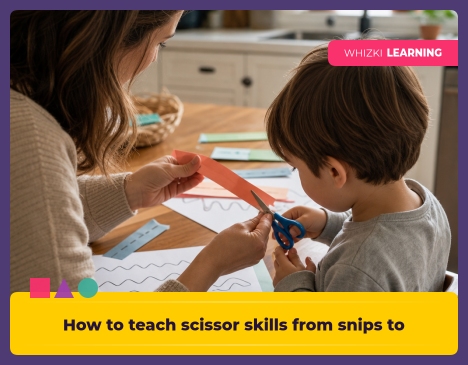
If scissor practice at the kitchen table turns into paper confetti, tight shoulders, or a child saying “I can’t,” start today with thick paper strips and one calm goal: open, close, stop. Scissor skills grow in small steps, and most children need many playful tries before lines and shapes look tidy. A parent or teacher can make the next attempt easier by choosing the right paper, the right scissors, and a task the child can finish in one sitting.
Reviewed by Emily Chen, MA, OTR/L, Pediatric Occupational Therapist.
Start with readiness, not a perfect age
Scissor readiness depends on hand strength, attention, safety awareness, and interest, not a birthday alone. NAEYC guidance reminds early-childhood teachers to match fine-motor work to the child in front of the table, so a three-year-old may be ready for snips while a five-year-old may still need chunky strips and hand-over-hand modeling.
A child who touched scissors at age 2 may still need beginner strips at age 4, and a child who never used scissors may move quickly once the hand knows the motion. For a fuller age-by-age picture, the guide to scissor readiness by age can help a parent choose safe first steps without turning practice into a comparison chart.
The first readiness check is simple: the child can sit with feet supported, look at the paper, and follow a safety rule such as “scissors rest on the table when the hand is not cutting.” Occupational therapy practice often starts with body position because a steady trunk gives little fingers a better chance to work.
Follow the scissor skills progression
The scissor skills progression starts before scissors touch the table. Tearing paper builds the same pinch, pull, and two-hand teamwork that cutting needs, and Reggio-inspired classrooms often keep torn-paper collage near the art shelf because children can explore texture, force, and direction without a correct final product.
The next step is snipping. A parent can hold a one-inch strip of sturdy paper while the child makes single cuts across the strip, because short strips let the blades finish the job before the hand gets tired. A child who can snip across a strip is ready for fringe, where the scissors stop before cutting all the way through the paper.
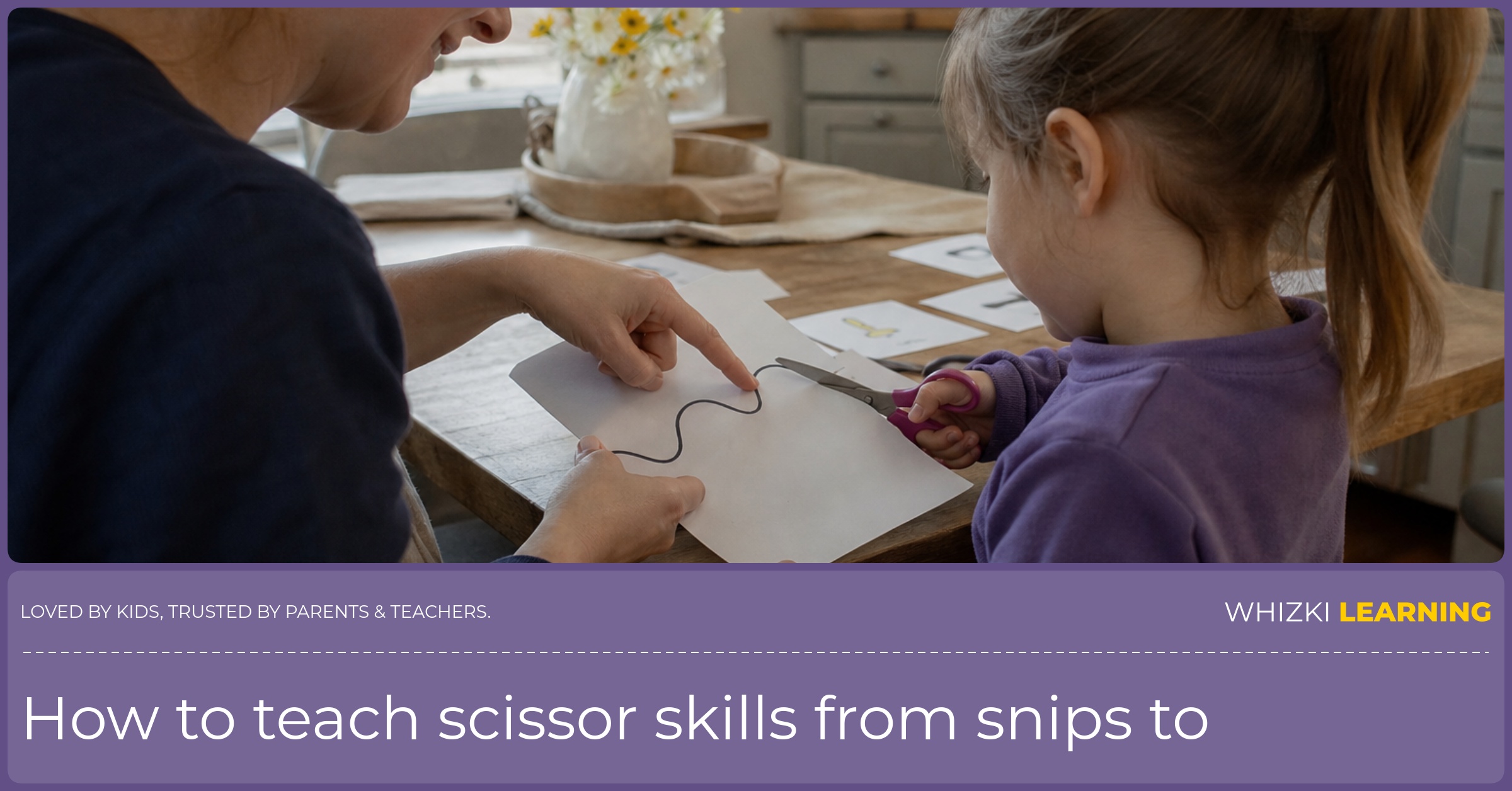
After fringe, straight lines come next because the paper path stays predictable. Wide roads are kinder than skinny lines, and a thick marker line gives the eyes a target. Curves come after straight lines because the helper hand must turn the paper while the scissor hand keeps opening and closing.
Shapes come last in the beginner sequence. Squares are easier than circles because the child can stop at a corner, turn the paper, and begin again. A circle asks the two hands to move together for longer, so a round shape often needs extra practice even after a child can cut a rectangle.
Use simple grip coaching words
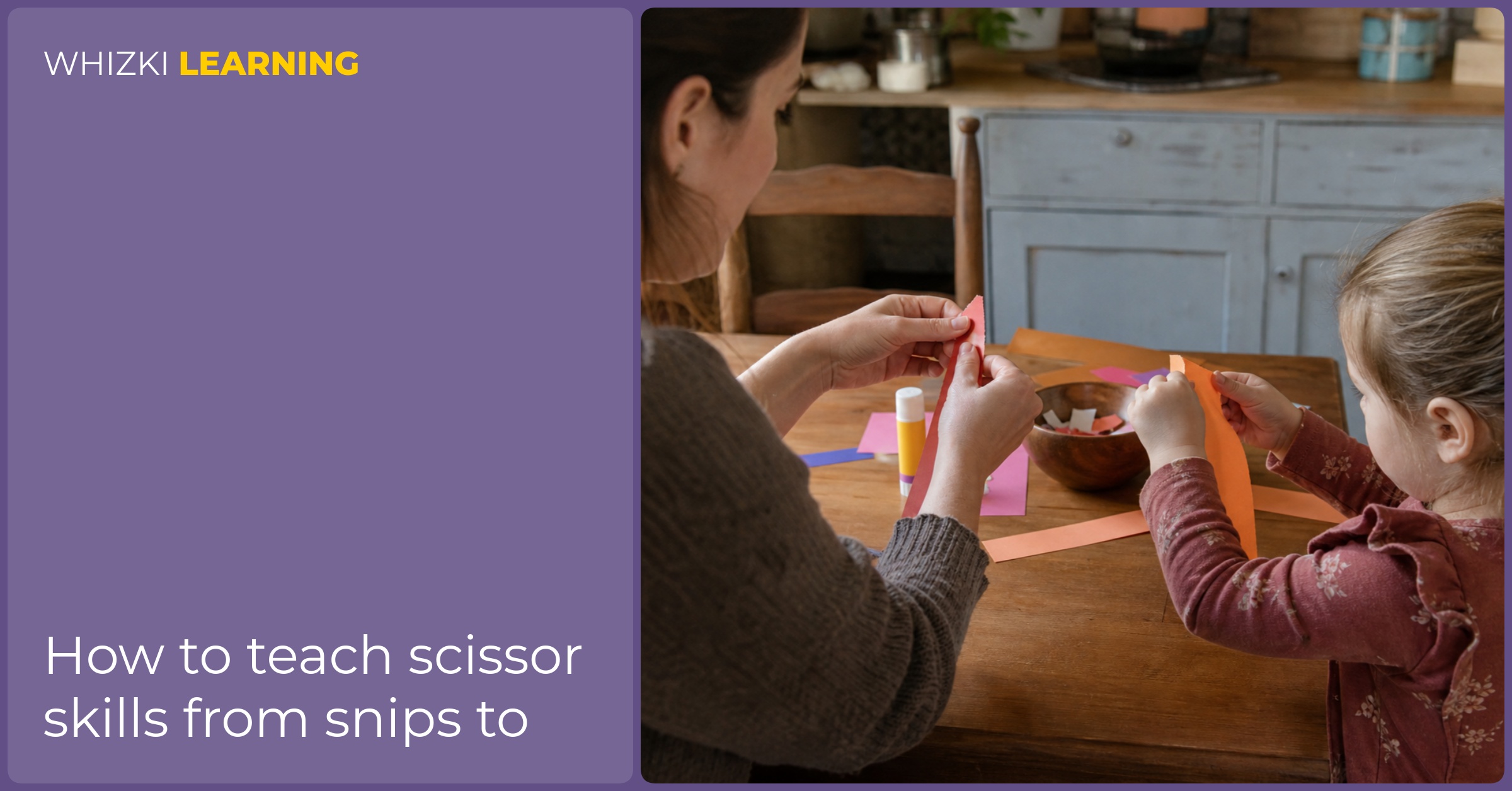
Grip coaching works best when the adult uses the same few words every time. Occupational therapy language for preschoolers often centers on function, so “thumb to the sky,” “helper hand holds paper,” “open wide,” and “close slow” give the child a job without a lecture.
The scissor hand should usually hold scissors with the thumb in the small top hole and fingers in the larger bottom hole. The wrist can stay straighter when the thumb points up, and the elbow can rest near the child’s side instead of flying out like a wing. A child who flips the wrist over may be trying to see the line, so raise the paper slightly rather than scolding the hand.
The helper hand matters as much as the scissor hand. Montessori practical-life work treats two-handed tasks as daily preparation for writing, and cutting follows the same idea: one hand cuts while the other hand turns the paper. The coaching phrase “paper turns, scissors chomp” keeps the child from twisting the whole arm around the page.
A left-handed child needs left-handed scissors when possible, because true lefty blades let the child see the cutting line and use natural pressure. A left-handed child also benefits from sitting with the cutting arm on the outside corner of the table, away from a right-handed adult’s elbow. A right-handed adult can model from across the table or slightly beside the child so the left-handed motion stays visible.
Choose paper that helps the hand succeed
The best first paper is sturdy enough to stand up in the scissors. Start with 65 lb card stock, index cards, or firm construction paper cut into narrow strips, because floppy copy paper bends and slides away from beginner blades. Occupational therapy heuristics favor materials that give clear feedback, and thick paper tells the hand when the blades have fully closed.
Paper size matters as much as paper weight. A long sheet asks the child to manage too much paper at once, while a short strip gives the child a fast finish and a real sense of control. The first strip can be about one inch wide and four to six inches long, then wider strips can appear when the snipping motion looks steady.
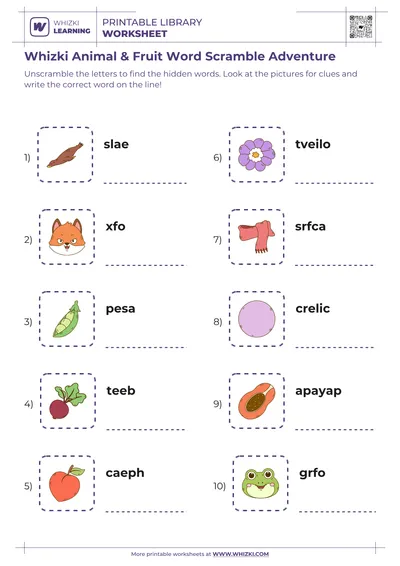
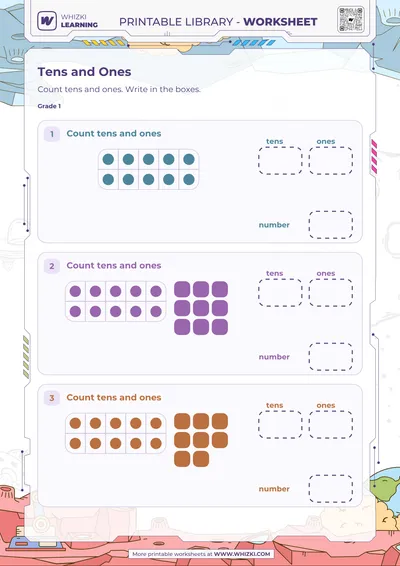
Mid-routine, hand the child one matching page instead of a whole stack. Print one of the cutting practice worksheets, tape the page to the wall near the art spot, and point to the next path after warm-up snips. Orton-Gillingham teaching keeps practice explicit and stepwise, and cutting practice benefits from the same “one clear target at a time” rhythm.
For a ready page that matches the snip, line, curve, and shape sequence, Whizki Learning keeps printable fine-motor pages in our printable library. Choose one page, place only that page on the table, and save the rest for another day so practice stays short and successful.
Practice in short, playful rounds
A good scissor practice routine takes five to eight minutes for many preschool and kindergarten children. NAEYC-aligned practice protects play time and keeps fine-motor work from becoming a worksheet battle. A child can do three warm-up tears, five snips, one short line, and then stop while the body still feels organized.
The adult’s job is to watch for effort signs before frustration takes over. Occupational therapy basics use fatigue clues such as shoulder lifting, tongue pressing, wrist flipping, or paper crushing. When those signs appear, the next best teaching move is a break with play dough, tongs, clothespins, or stickers.
Scissor safety can stay calm and firm. The rule can be “scissors cut paper, scissors rest on the table, scissors travel closed in a grown-up hand.” A child who runs, waves scissors, or cuts clothing needs the scissors put away for that session, followed by another try on a calmer day.
Progress may look uneven for a while. A child might cut a straight road on Monday and then chew the edge of the paper with the blades on Wednesday. Real fine-motor learning has bumpy days, and a parent can return to strips or fringe without calling the earlier work a failure.
Scissor skills are built through many small, ordinary tries: tear, snip, fringe, line, curve, shape. The most useful adult move is to lower the difficulty before raising the demand, because a confident hand learns faster than a rushed hand.
Keep one pair of safe scissors, one small pile of sturdy strips, and one printable page near the art supplies. The simple setup makes practice easy to repeat, and repetition is the quiet part of fine-motor growth that parents rarely see in the finished craft.