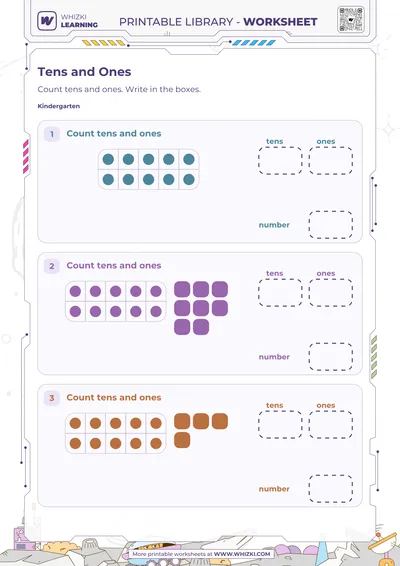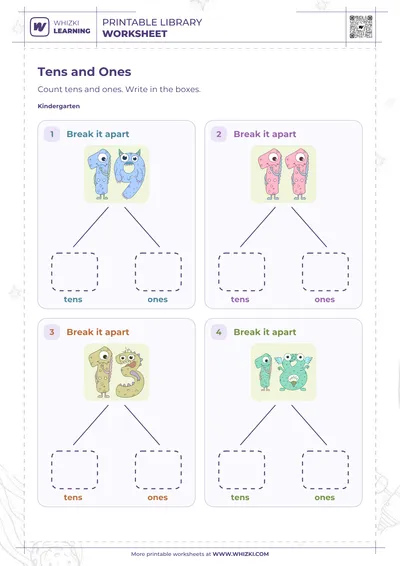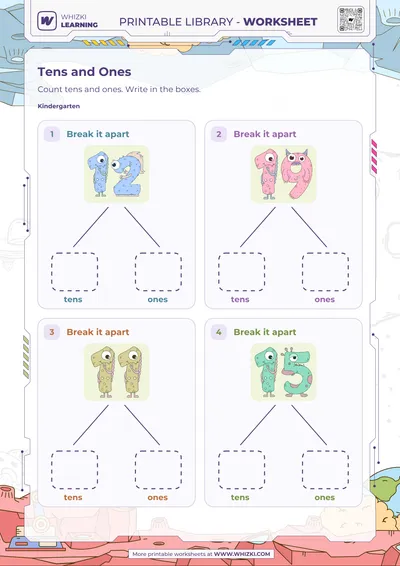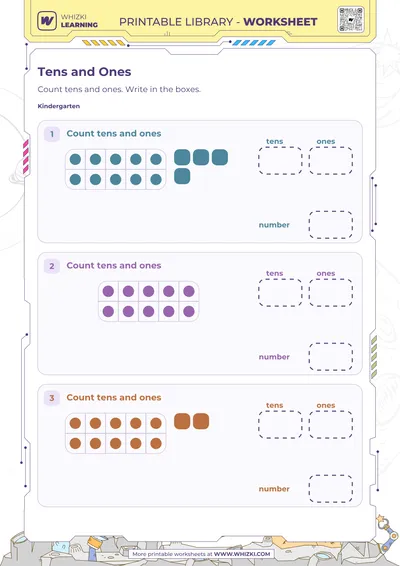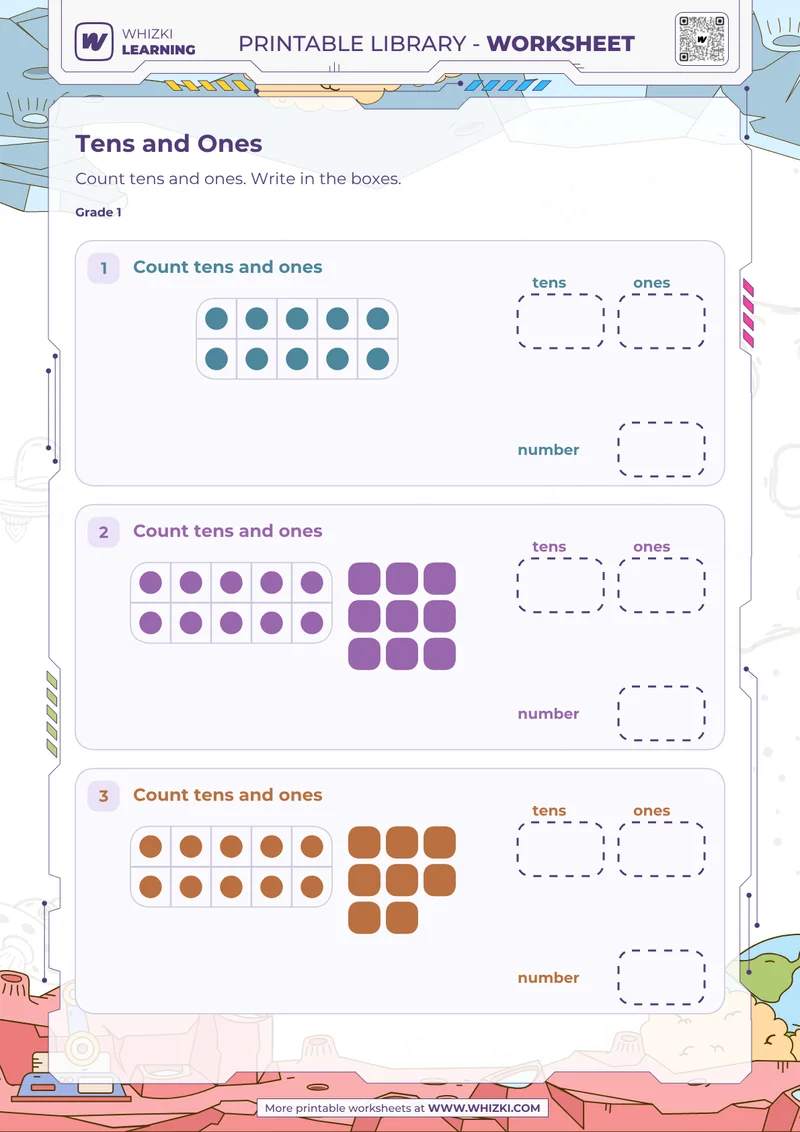


Represent numbers including 10, 19, 18 as groups of ten and remaining ones.
Distinguish the count of tens from the number of individual objects those tens represent.
Record tens and ones in their labeled spaces and explain how the two parts form the whole number.

A two-digit number becomes easier to discuss when ten objects are treated as one group. This tens and ones worksheet works with 10, 19, 18 in 3 practice panels. Count the filled ten-frames and separate ones, then record the tens, ones, and whole number. Use a short adult-guided session to connect the visible number with the groups it represents.
Begin with 10: it contains 1 ten and 0 ones. Point to each full ten-frame and name it as a group of ten before counting the separate ones. Say the full number again and check both answer boxes. The tens count names groups of ten; it is different from the number of individual objects inside those groups.
Try the next panel with less help, asking your child to show where each part of the number comes from. Keep a complete group of ten together while moving the ones. If a number has no extra ones, write zero in the ones box. A child can count a full group once to confirm that it contains ten, then use that established group when explaining the larger number. Return to separate counters if the grouping is still unfamiliar.
Visit the number 10 guide for related number information. The Early Math Essentials set offers more ways to connect numbers, quantities, and parts. Complete one or two panels, then check a model together before continuing. As a separate follow-up, build another number with a full group of ten and some ones, and ask your child to describe both parts aloud.
Boost your child’s skills with our discounted workbooks. Engaging activities for preschool, kindergarten, and grade 1 - now at special sale prices!


Fast shipping
Secure Payment
Licensed Teachers
For the planet
Printed in the USA
Helpful guides for parents and teachers, and tips for making learning at home super fun.

Turn one borrowed book into five short learning moments for ages 3 to 7, with choosing, rereading, drawing, counting, memory, and returning.

A practical field note on reviewing a 12-page Halloween activity pack for counting, patterns, tracing, vocabulary, handwriting, print choices, and age fit.

Turn pumpkin scooping into a hands-on counting investigation: estimate seeds, group in friendly piles, compare the count, and clean up safely.

Turn two familiar German picture words into one compound word with a playful, hands-on activity for ages 3-7 at home or in the classroom.
Get exclusive activities, expert tips, and inspiration for a more meaningful, offline family life.