If math talk at the kitchen table turns into pencil pushing, guessing, or “I don’t know,” use the checklist below to spot the next tiny skill and practice for five minutes with coins, crayons, or snack pieces. Kindergarten math grows best through short, hands-on practice, and a child who needs repetition is still learning in a very normal way.
Reviewed by Dr. Anna Klein, EdD, Early Childhood Curriculum Specialist.
Kindergarten math year-end skills
Kindergarten math usually means a child can count forward, connect numerals to amounts, compare small sets, break small numbers apart, and name common shapes by the end of the school year. NAEYC guidance reminds teachers and families that young children learn math through talk, play, movement, and real objects before paper practice feels steady.
Kindergarten standards can sound heavier than the daily work actually feels, so I point families to Common Core math without the panic when school language starts to feel confusing. The parent version is simple: a child should understand what numbers mean, not just chant numbers from memory.
Kindergarten readiness has a wide range, especially for children ages 3 to 7 who are still building language, attention, and hand strength. A teacher will look for steady growth across the year, because a child may count beautifully during snack and still reverse numerals during writing time.
Printable kindergarten math checklist
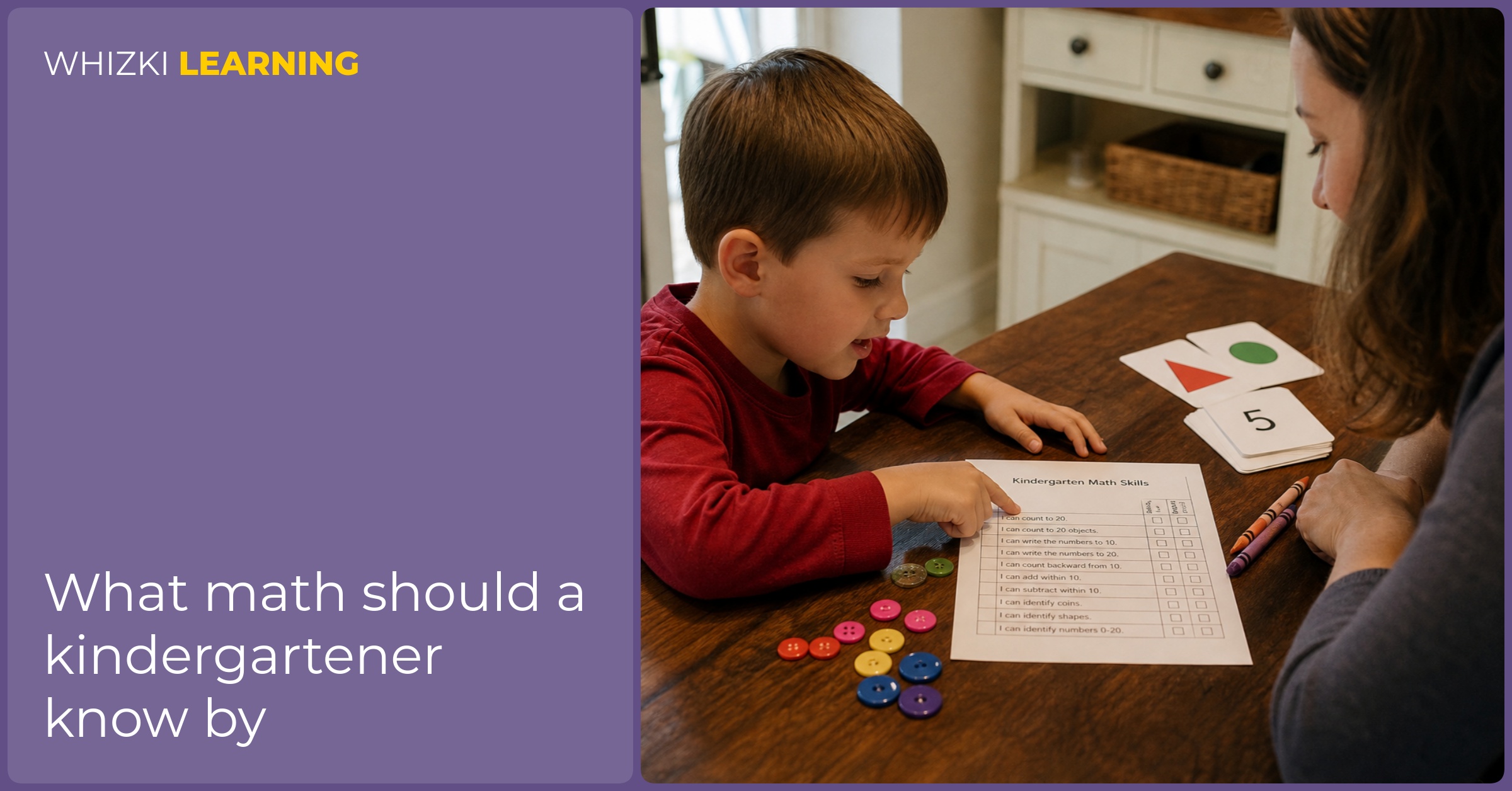
The kindergarten math checklist works best when a grown-up marks skills as “not yet,” “with help,” or “independent” instead of pass or fail. Reggio-inspired observation uses the same idea, watch the child, record the attempt, then plan the next invitation, and our printable library gives families paper pages for that kind of low-pressure practice.
Count to 100 by ones and tens: A year-end kindergartener is often expected to count 1, 2, 3 up to 100 and count 10, 20, 30 up to 100. Practice with a sidewalk chalk number path, then have the child hop and say each number out loud. Read and write 0 to 20: A child should recognize and form numerals 0 through 20 with growing control. Practice by letting the child write a daily “number of the day” on paper, in shaving cream, or with a finger on a tray of salt.
Count objects with one-to-one matching: A child should touch or move one object for each number word, up to about 20 in many kindergarten rooms. Practice by counting crackers, buttons, blocks, or toy cars into a cup, with the adult slowing the hand if the voice gets ahead. Compare numbers and groups: A child should tell which group has more, fewer, or the same amount, and begin to compare written numbers. Practice by building two small snack piles and asking, “Which pile has more, and how can the eyes check?”
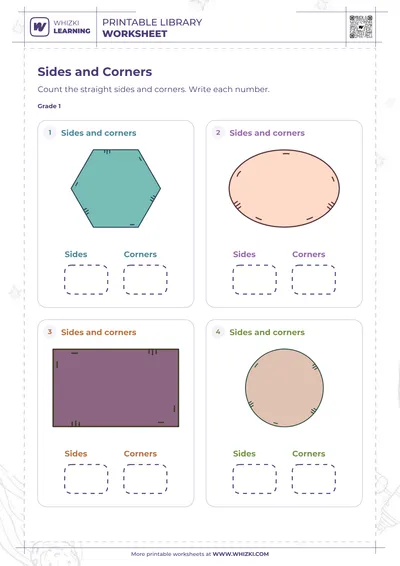
Make number bonds within 5: A child should know that 5 can be 4 and 1, 3 and 2, 5 and 0, and similar small combinations. Practice by hiding some of five pennies under a cup and asking the child to figure out the missing part. Name basic shapes: A child should identify circles, squares, rectangles, triangles, and simple solid shapes in the room. Practice by going on a shape hunt and sorting objects by flat sides, curved edges, corners, and faces.
How to practice kindergarten math at home
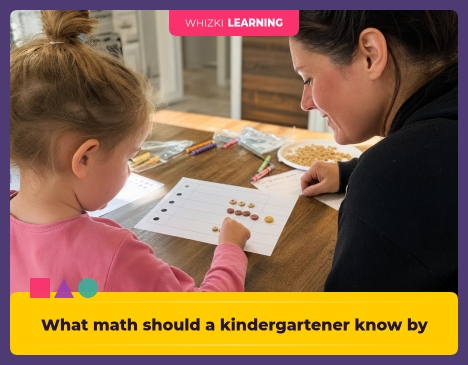
Kindergarten math practice should feel short, concrete, and repeatable. Montessori math work starts with objects a child can move, so a bowl of buttons often teaches more than a full worksheet when a child is still learning what each number means.
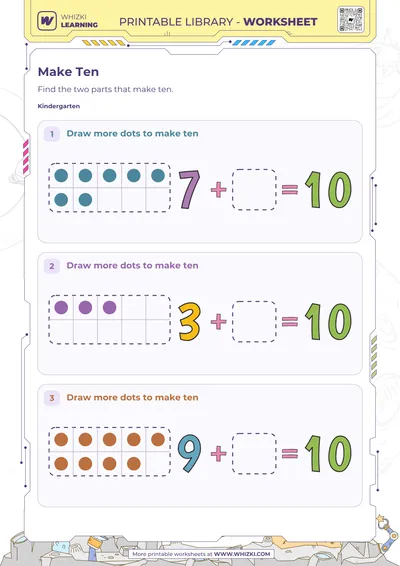
The numbers learning hub is a good place to choose one numeral, one counting page, or one ten-frame activity rather than pulling a stack of mixed pages. A five-minute routine might be trace the number, build the amount, say the number, then find that amount somewhere in the room.
Occupational-therapy basics matter during math writing, because a tired hand can make a child look less ready than the child really is. The pencil should be short enough to control, the paper should stay still, and the child can build numerals with play dough before writing the same numerals with a crayon.
Orton-Gillingham teaching is often known for reading, but the same multisensory pattern helps with number learning: say the number, see the number, trace the number, and build the number. A child who reverses 2 or 5 needs calm, consistent practice, not scolding, because the brain is still mapping direction and shape.
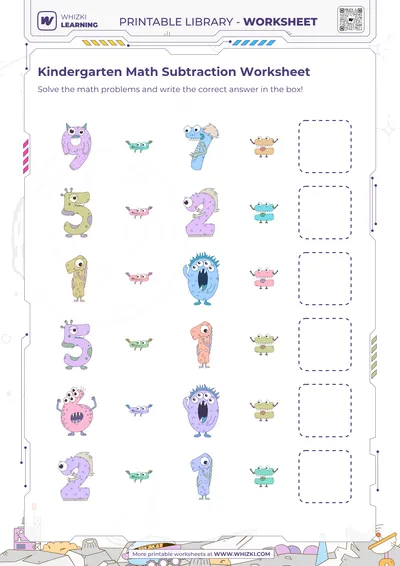
The Kindergarten Number Sense Premium Worksheet Set in our worksheet sets pairs numeral tracing, ten-frame counting, number bonds within 5, and shape review in a simple paper routine. The complete pack lives in Whizki Plus for families who want the full set in one place.
How to know when a child needs more help
Kindergarten math concerns are worth noticing when a child cannot count small groups accurately after many hands-on tries, avoids all number work, or cannot connect a written numeral like 4 with four real objects. NAEYC-aligned practice asks adults to look at the whole learning picture, including language, fine-motor control, attention, and access to playful practice.
A speech-language pathology lens can help when math trouble is really word trouble. A child may understand three blocks but get stuck on words like more, fewer, before, after, same, first, and last, so daily conversation during cleanup and snack can build the language behind the math.
A teacher or pediatrician should be part of the conversation when a child seems confused by very small quantities, loses counting order every time, or becomes upset before any number task begins. Early support is most helpful when the adult brings specific notes, such as “counts three crackers correctly but says random numbers after five” or “recognizes 1 and 2 but not 3 after several weeks.”
Simple five-minute kindergarten math routine
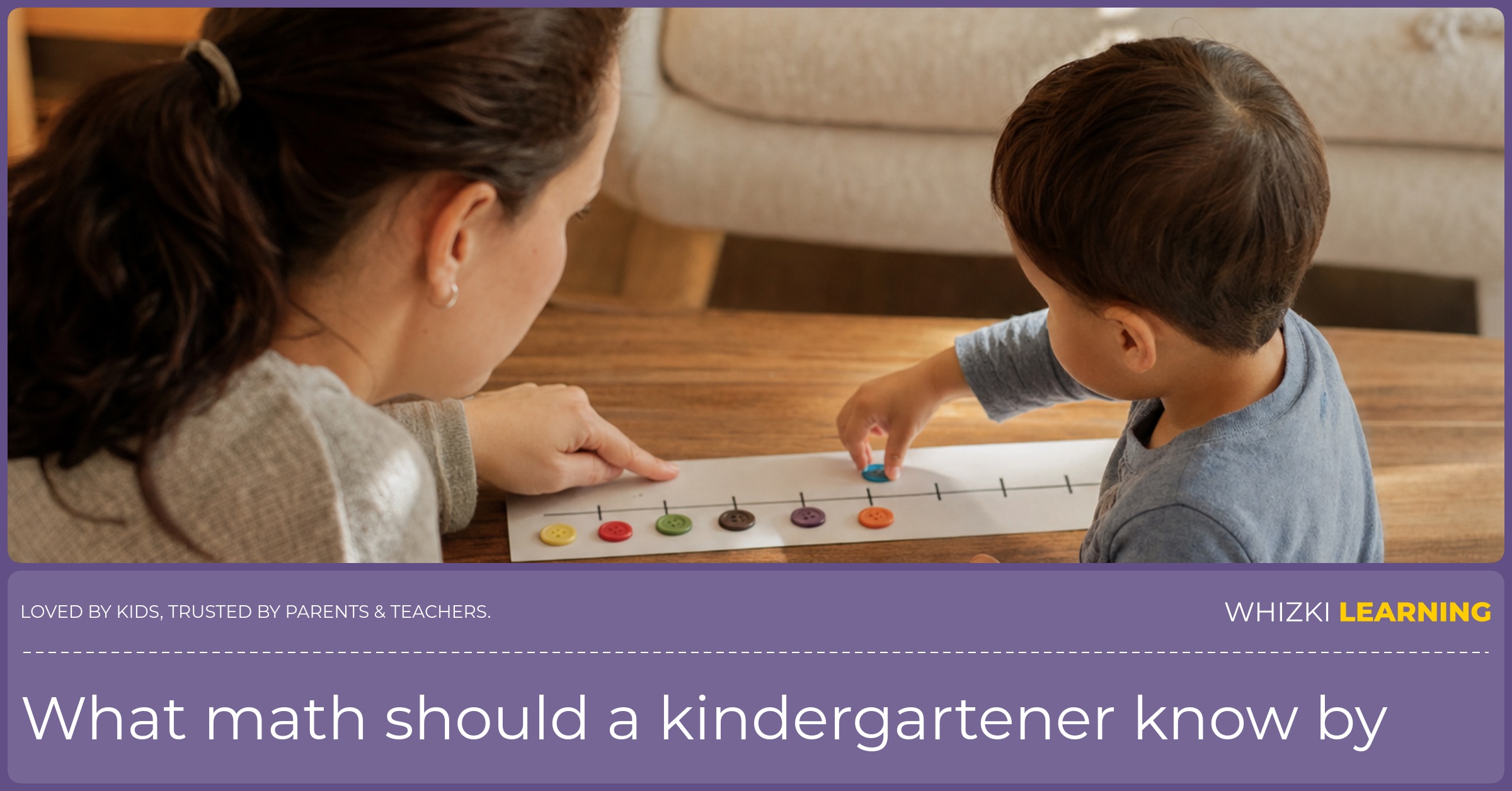
A five-minute kindergarten math routine can cover more ground than a long workbook session. A practical routine is count something real, write one numeral, compare two tiny groups, and make one number bond with fingers or counters.
The routine should end while the child still has a little energy left. In my classroom and parent coaching, ending on a small success protects the next practice time because the child remembers, “I can do math with you.”
A homeschooler, classroom teacher, or caregiver can repeat the same routine three or four days a week and change only the objects. Consistency helps children ages 3 to 7 feel safe enough to try, make a mistake, fix the count, and try again.
Kindergarten math does not need to become a nightly battle. Pick one checklist item, use real objects first, add paper practice after the idea makes sense, and celebrate the child’s next small step.