
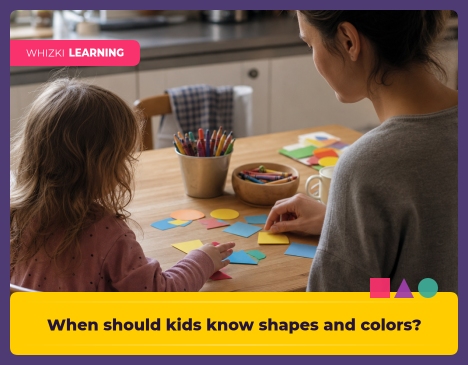
If your child keeps calling every color blue or turns a square into that box, the next step is simple: sort three red objects and three blue objects during snack, say each name once, and stop before the game turns into a power struggle. Shape and color language grows unevenly from ages 3 to 7, especially when a child is tired, busy building, or more interested in movement than naming. In preschool classrooms, I look for steady noticing over time, not perfect answers on demand.
Reviewed by Whizki Editorial Team, Early Childhood Education Editors.
Typical age windows for colors and shapes
Color naming usually becomes more reliable between ages 3 and 4. A 3-year-old may match red blocks to red paper long before the same child can answer, What color is that? on the spot. NAEYC guidance reminds teachers to watch real use across play, art, books, and cleanup rather than treating one missed answer like a verdict.
Basic shape names often settle around age 4, especially circle, square, triangle, and rectangle. A child may understand shape before speaking the exact word, so a direction like put the cracker on the circle can show more knowledge than a naming quiz. Montessori and Reggio classrooms lean on this kind of observation because hands-on choices often reveal what a young child truly knows.
Harder shape names, such as oval, diamond, hexagon, and cube, often become steadier around ages 5 and 6. Shape learning also depends on seeing shapes in different sizes, colors, and positions, because a triangle can point up, down, or sideways and still be a triangle. When paper practice is useful, simple 2D shapes worksheets can give children repeated examples without turning practice into a lecture.
Check color vision before you worry
Color vision should be considered before a parent assumes a child is being stubborn, careless, or behind. Red-green color differences can be hard for some children, and family history can matter, especially for boys. A pediatrician or pediatric eye doctor can guide a simple color vision check when color confusion stays consistent across home, school, books, and toys.
Occupational therapy basics also help parents separate color knowledge from visual clutter. Good light, a plain background, and only two choices at a time make the color task fairer for a young child. A child who can sort red socks from blue socks under clear conditions may simply need more language practice, not a bigger concern.
Speech-language practice gives another useful clue: receptive language often comes before expressive language. A child may point to green when asked, find the triangle in a book, or hand over the yellow cup before being able to say green, triangle, or yellow clearly. When naming is the only hard part, a teacher, pediatrician, or speech-language pathologist can help decide whether speech sounds, word retrieval, hearing, or practice time should be checked.
Two sorting games that teach both at once
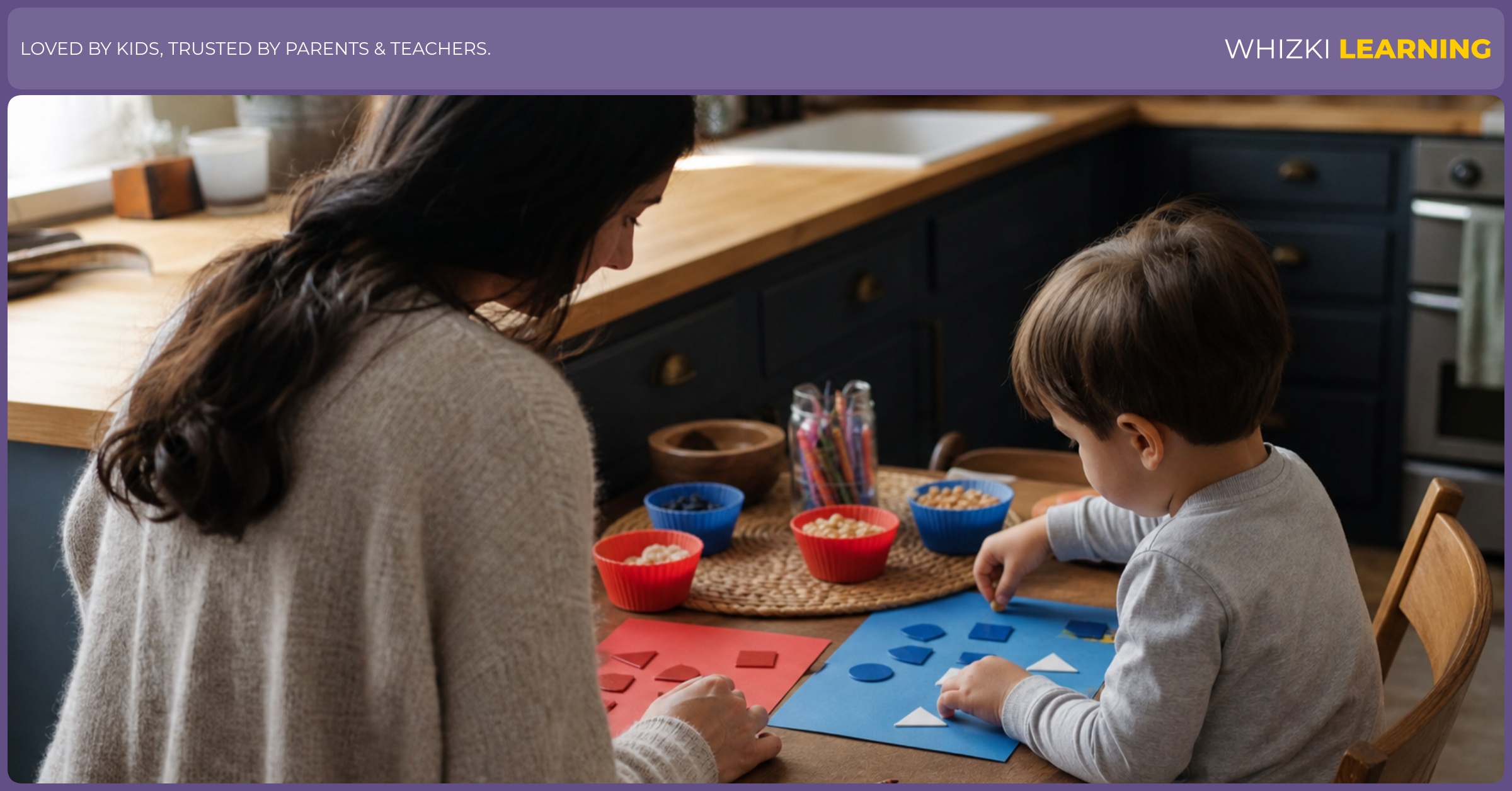
The first sorting game is a kitchen shape-and-color hunt. Draw a red circle, a blue square, a yellow triangle, and a green rectangle on four pieces of paper, then invite the child to place one matching household object on each paper. The Reggio habit of using real materials fits beautifully here because the child sees that math language belongs in the kitchen, the playroom, and the grocery bag.
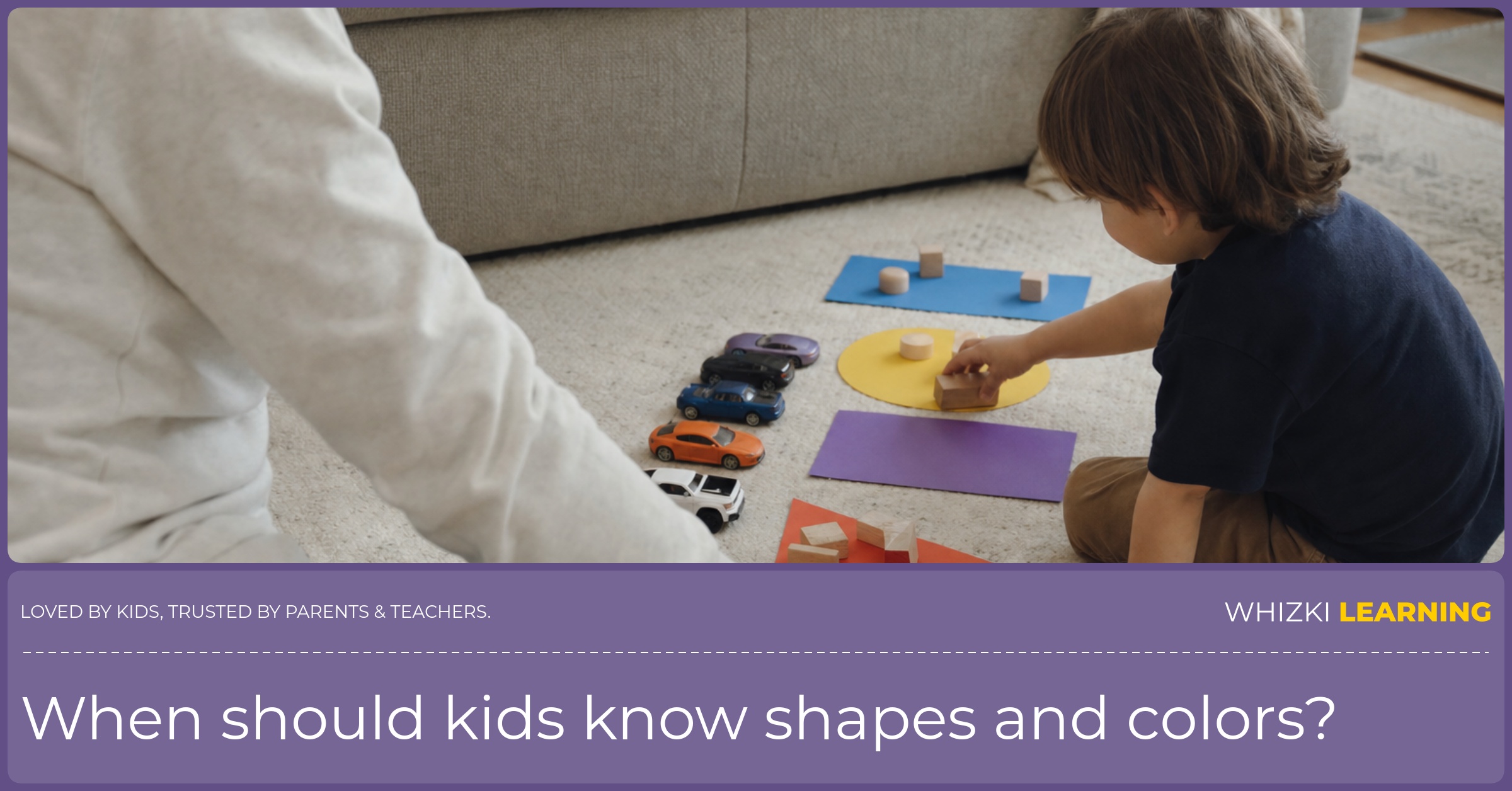
The second sorting game is a parking lot sort with toy cars, blocks, or large buttons used only with close adult supervision. Tape colored paper to a muffin tin or egg carton, add a drawn shape in each space, and ask the child to park the red car in the circle space or the blue block in the square space. The game teaches color, shape, position words, and one-step directions at the same time.
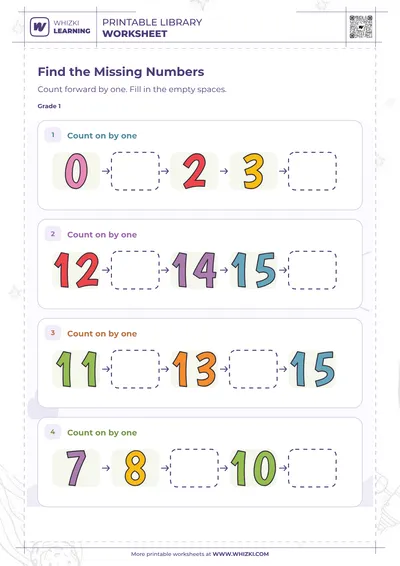
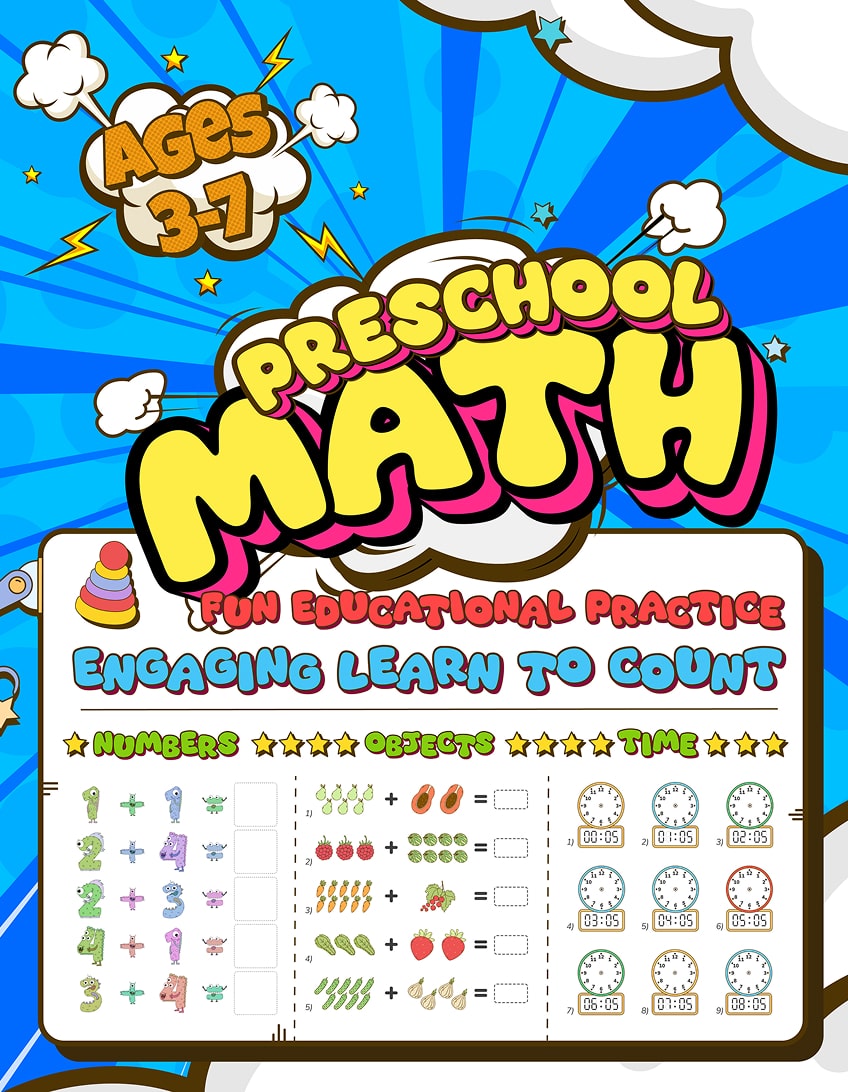
Counting can be added after sorting, especially for children who already know a few color and shape words. Ask how many yellow triangles landed in the tray, then touch each object while counting aloud. For a gentle bridge into counting practice, the numbers learning hub gives families simple number work that fits the same hands-on style.
When practice should feel like play
Shape and color practice should feel short, concrete, and friendly for children ages 3 to 7. The Orton-Gillingham approach is often discussed for reading, but the same multisensory idea helps here: a child says the word, touches the object, sees the shape, and sometimes traces the outline. More senses give the brain more ways to connect the label with the idea.
Occupational therapy heuristics also remind adults to watch the body during table work. A child who is sliding off the chair, pressing too hard with a crayon, or switching hands constantly may need a movement break before more naming practice. A calmer body often makes a calmer answer possible.
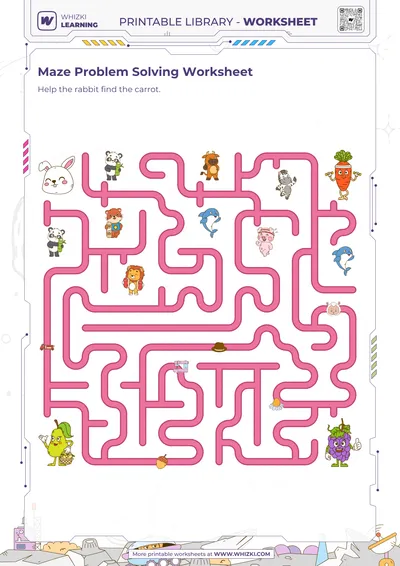
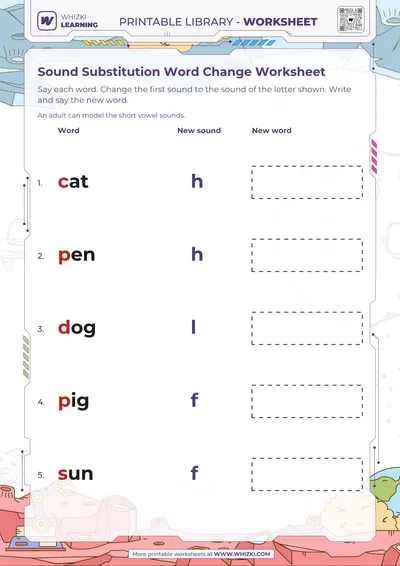
Worksheets are most helpful after a child has handled real objects first. A page can review circle, square, triangle, rectangle, red, blue, yellow, and green, but a page should not be the first or only teacher. In my classroom, paper practice works best after blocks, snacks, socks, crayons, and toy animals have already done the heavy lifting.
When a printable helps keep practice clear, choose one simple page from our printable library and use only the colors or shapes your child is ready to try. One calm page after hands-on sorting is usually better than a stack of pages at bedtime.
Shapes and colors do not need to become a nightly quiz; young children learn the labels best through naming, touching, sorting, and seeing the same ideas in real places. Join the weekly newsletter for one gentle preschool idea you can use before the coffee gets cold.