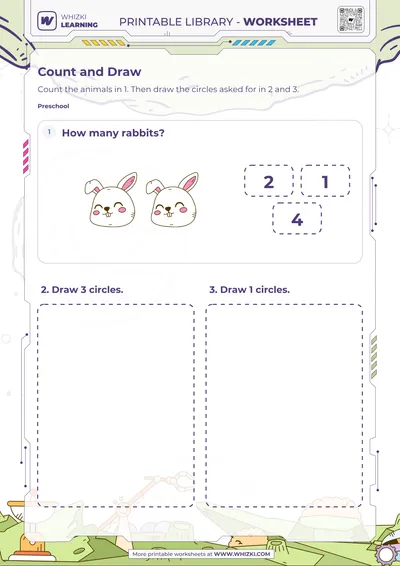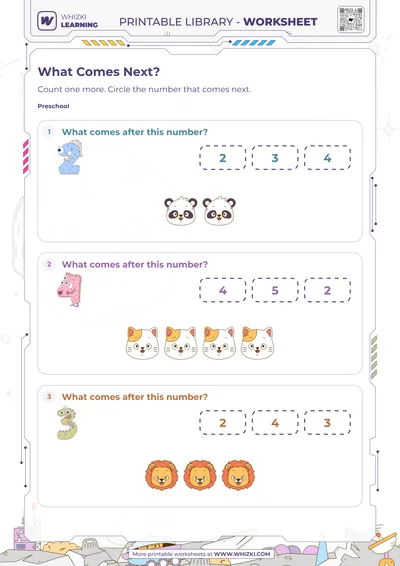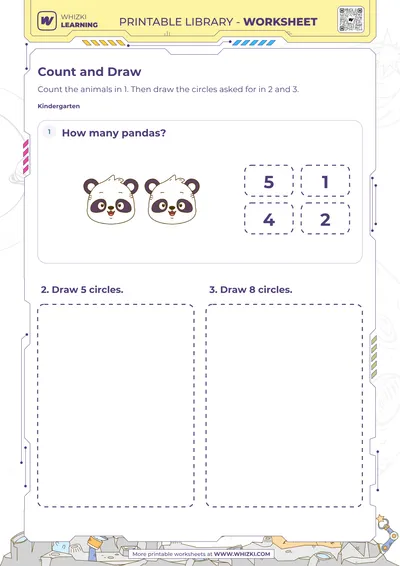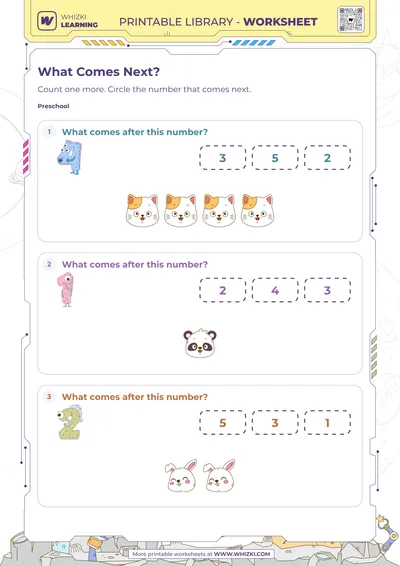
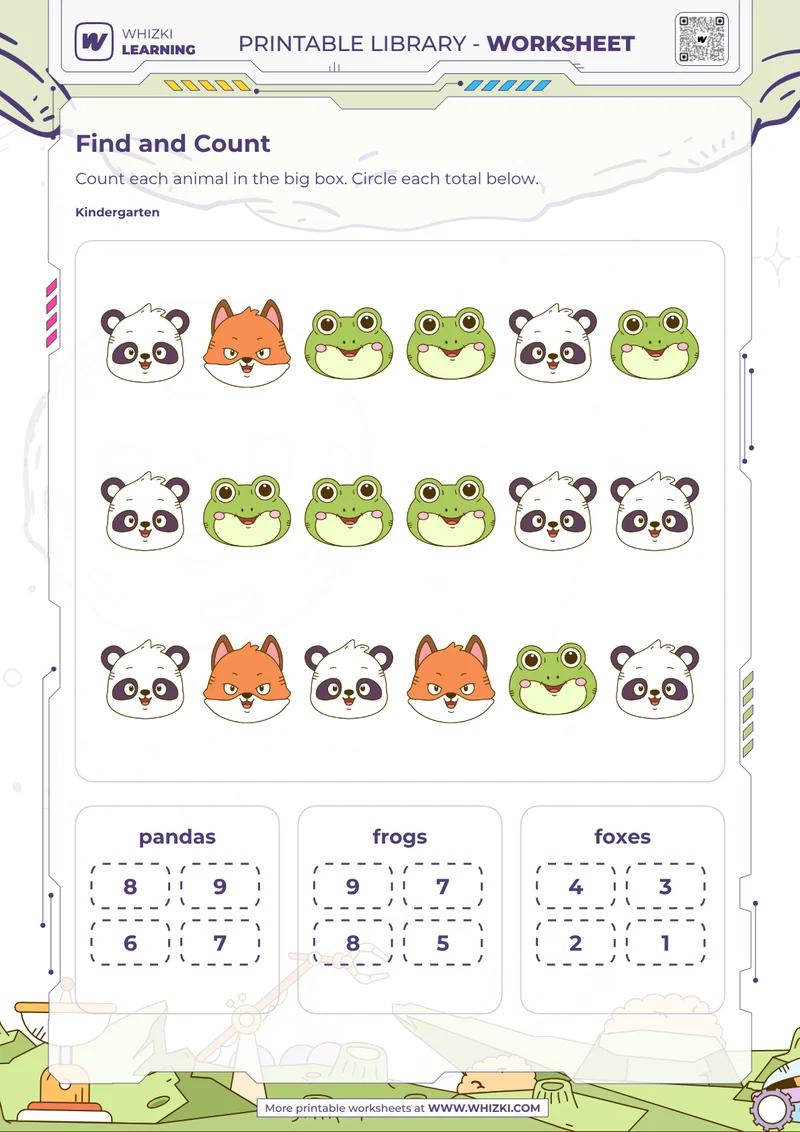


Animal groups → Count with one-to-one matching → Child points to each animal once and chooses the matching total.
Mixed picture field → Sort by kind while counting → Child focuses on one animal type instead of counting every picture together.
Circled totals → Record counted sets → Child connects a final spoken count to a written number choice up to ten.

Five-year-olds often count fast, skip an animal, or count the same one twice. In this animal count and circle page, they look across one mixed picture field, find each kind of animal, count that group, and circle the matching total, with no group going over 10.
It fits a kindergartener who can say numbers in order to 10 and is beginning to connect one spoken number to one item. The page keeps the math concrete: eyes scan the picture, fingers touch each animal, and the circled number records the total counted.
Sit nearby for the first round and ask, "Which animal are we counting now?" Have them point or lightly mark each animal as they count so the set stays organized. If they hesitate, count one group together, then let them try the next group before you check the circle.
When the page is done, invite a quick recount of one animal group to see whether the total matches the circle. For more number order practice, the missing numbers worksheet helps children notice gaps in a sequence, and the next whole number worksheet to ten gives a gentle next step after counting small sets.
Boost your child’s skills with our discounted workbooks. Engaging activities for preschool, kindergarten, and grade 1 - now at special sale prices!


Fast shipping
Secure Payment
Licensed Teachers
For the planet
Printed in the USA
Helpful guides for parents and teachers, and tips for making learning at home super fun.

Try a calm one-week moon watch with young children: look at a regular time, sketch the visible shape, note weather gaps, and compare what changed.

Turn a family choice into a 10-minute sticky-note graph. Children vote, compare more and fewer, and learn why a tiny sample has limits.

Use safe envelopes, cards, and pretend delivery play to show young children names, addresses, stamps, reading direction, and why written messages matter.

A small prompt ladder for ages 3-7: wait, notice, narrow choices, model one step, and pause, with warm language for letters, counting, and picture logic.
Get exclusive activities, expert tips, and inspiration for a more meaningful, offline family life.