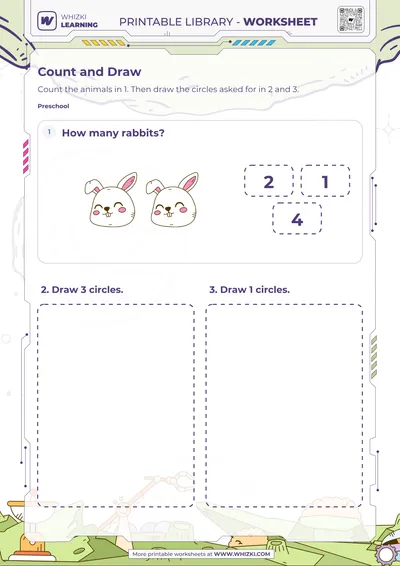
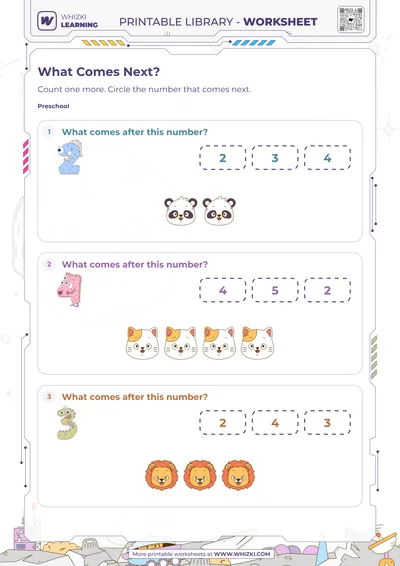
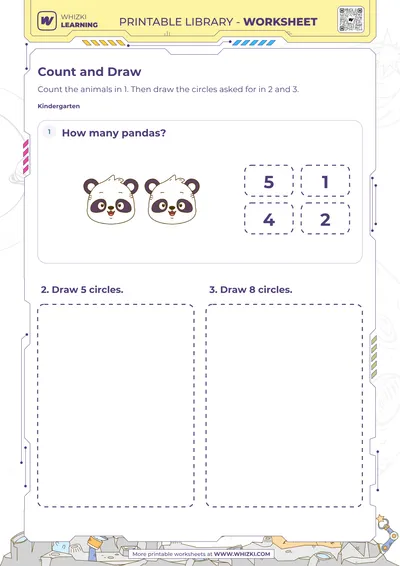
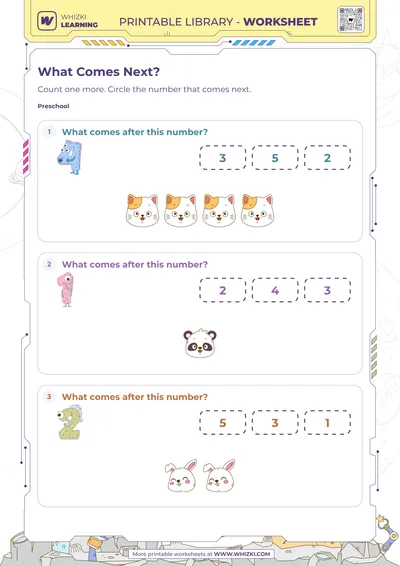
Animal rows → One-to-one counting → Child touches or points to each animal once and says the total.
Number choices → Numeral recognition → Child connects a spoken count to the printed number that shows it.
Rows with up to five objects → Quantity comparison → Child checks small groups before circling one matching answer.

Four-year-olds often know counting words before they can keep track of objects on a page. This worksheet keeps the task small and clear. Children count the pictured animals in each row, with no more than five objects, then circle the number that matches the total.
This is a good fit when a preschooler can say some counting words and is starting to connect those words to real groups. If the printed numerals still feel new, begin by naming the number choices together. For extra numeral practice before or after this page, the numbers one, five, and three matching worksheet gives another simple way to look at numbers and match them.
The practice works because each row asks for one-to-one counting. Have your child touch or point to each animal once, say the count out loud, then pause before circling. That tiny pause matters because it helps them check, “How many did I count?” before choosing the number.
Sit nearby and keep it light. If they guess, cover the number choices for a moment and count the animals again together. After this page feels comfortable, try the next number to five worksheet to keep working with numbers through five in a slightly different way.
Boost your child’s skills with our discounted workbooks. Engaging activities for preschool, kindergarten, and grade 1 - now at special sale prices!


Fast shipping
Secure Payment
Licensed Teachers
For the planet
Printed in the USA
Helpful guides for parents and teachers, and tips for making learning at home super fun.

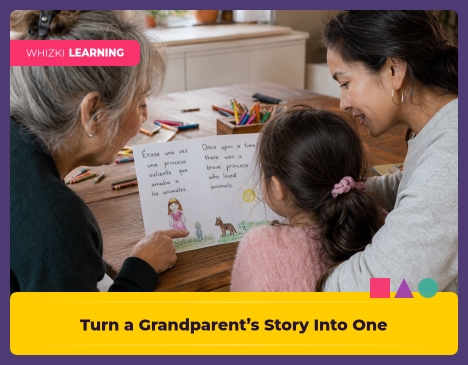
A simple plan for turning one grandparent memory into a bilingual keepsake page with exact words, a child drawing, and clear privacy boundaries.

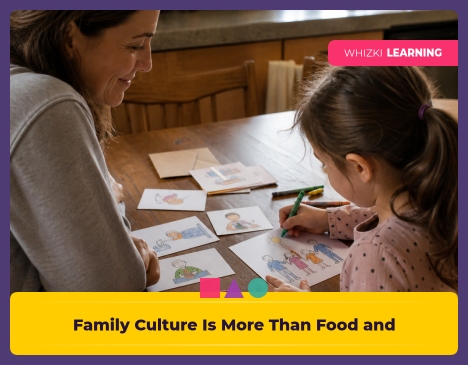
A practical guide for inviting family stories about names, language, music, routines, celebrations, and places without putting children on display.

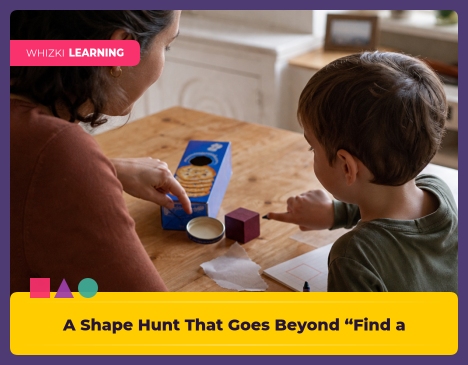
Turn a quick room search into early geometry talk by asking about sides, corners, curves, and shapes inside everyday objects.

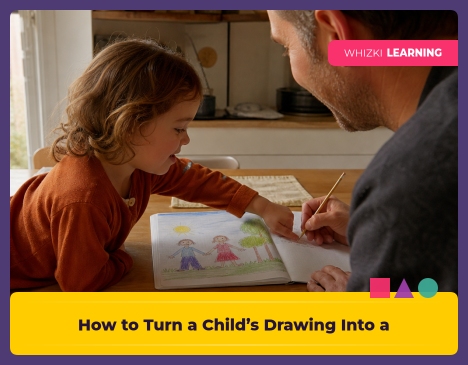
Use a child’s own drawing and spoken words to build a first sentence through adult dictation, shared writing, or optional child writing.
Get exclusive activities, expert tips, and inspiration for a more meaningful, offline family life.