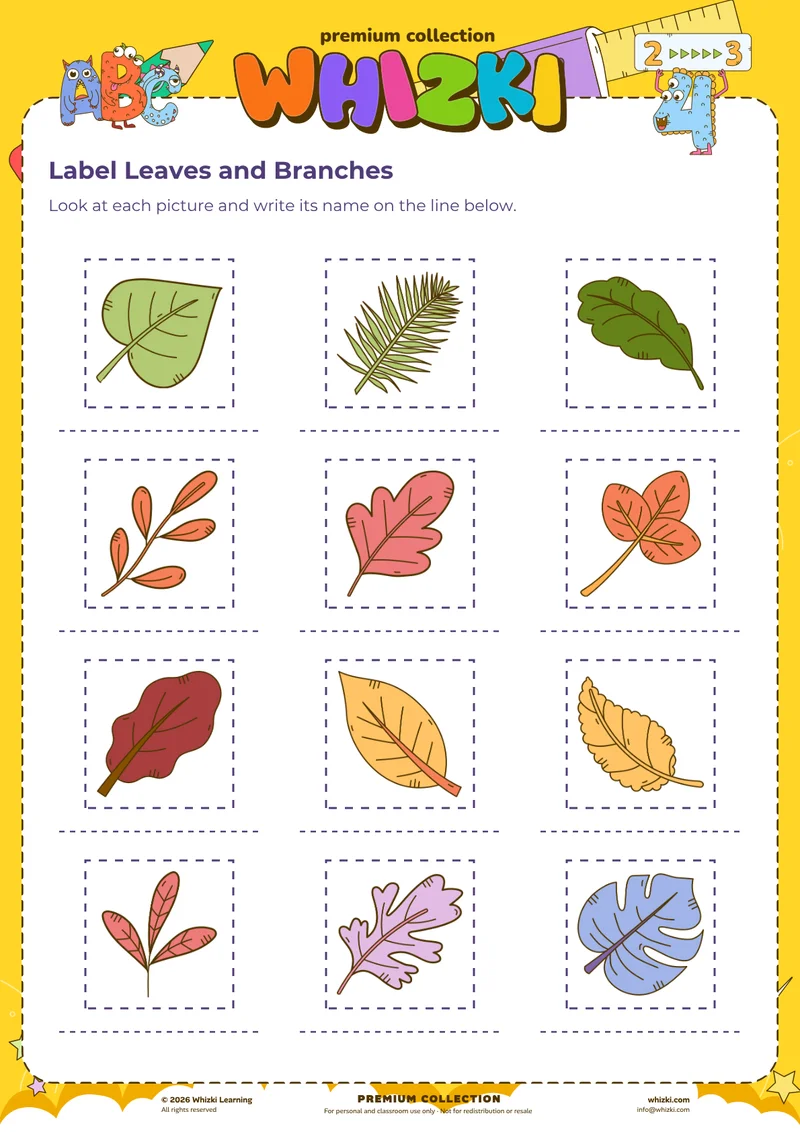
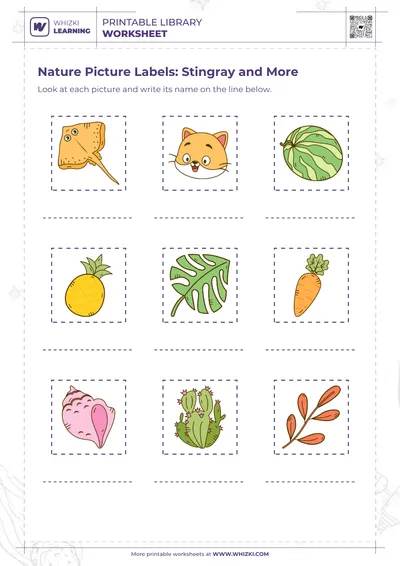
This nature picture labeling worksheet gives children twelve leaves and branches to name. Each illustration has a blank writing line beneath it. Begin with spoken naming, then write a suitable word or short phrase for the picture. An adult can provide a model to copy or write a child’s dictated words when independent spelling would get in the way of describing what they see.
The page shows twelve stylized leaves and branches, including a needle-covered branch, a heart-shaped leaf, and a split blue leaf. Compare an individual leaf with a branch carrying several leaves. Use an ordinary name and add a visible feature when it helps describe the specific picture. Ask your child to point to one detail that supports a label. Two pictures may share the same everyday name while looking different, which offers a useful reason to add a describing word.
Work on a few cards at a time and read each finished label back together. Keep picture recognition and spelling as separate steps: a child may know what an illustration represents before knowing how to write its name. Accept an accurate familiar name or a short description, and offer the written form when needed. The lines support labeling rather than a long written explanation.
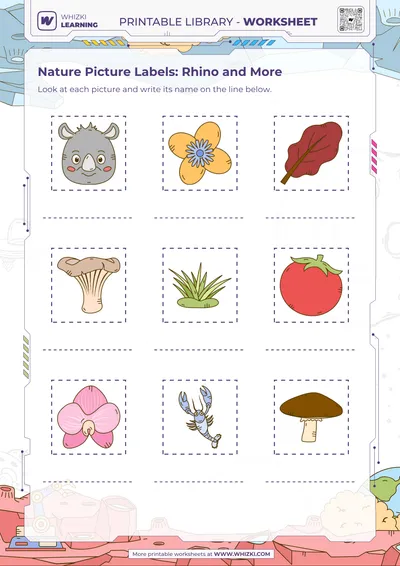
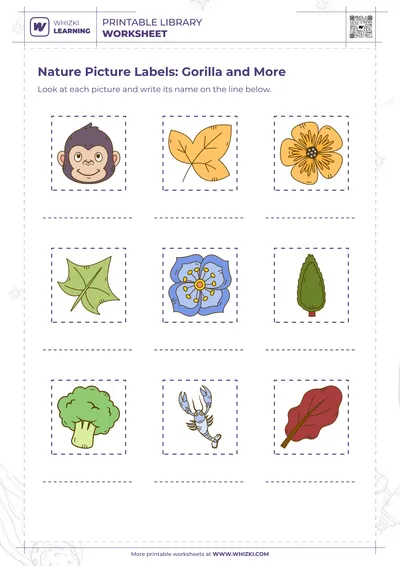
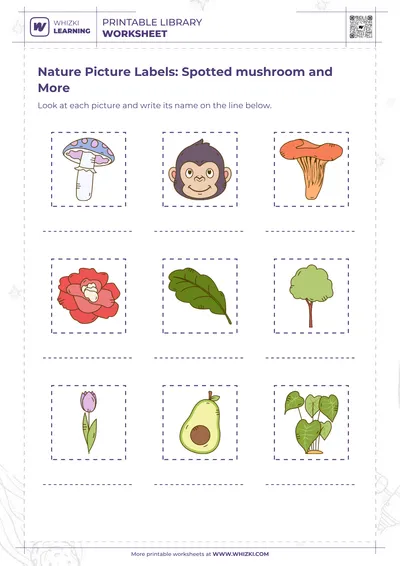
Choose another page from Animals and Nature Picture Activities for related naming and comparison. The Weather and Seasonal Picture Vocabulary pack offers additional illustrated objects and plants. After this page, select two pictures and explain one similarity and one difference aloud. You can return to the written labels to show which words name the object and which words describe a feature.