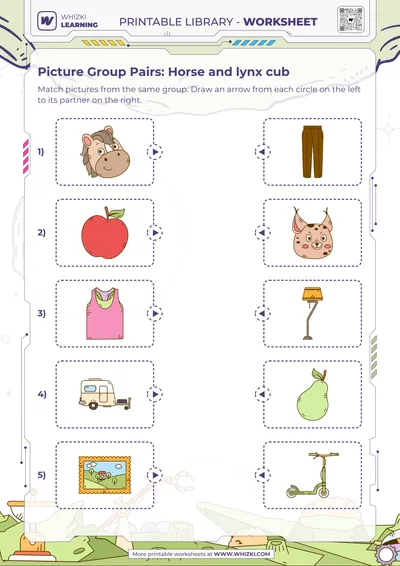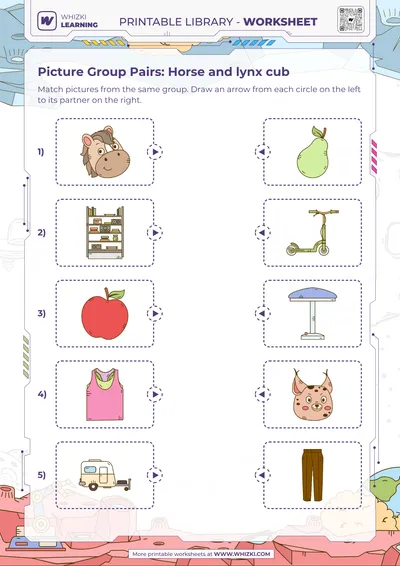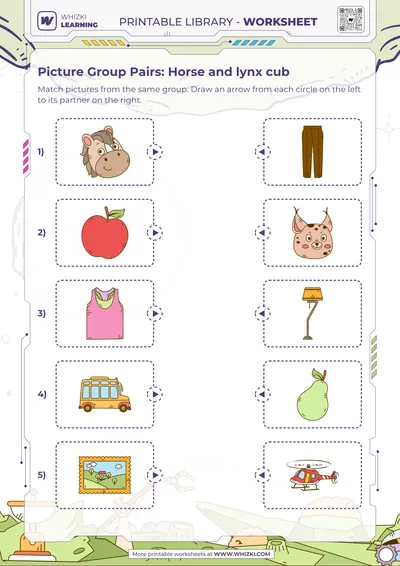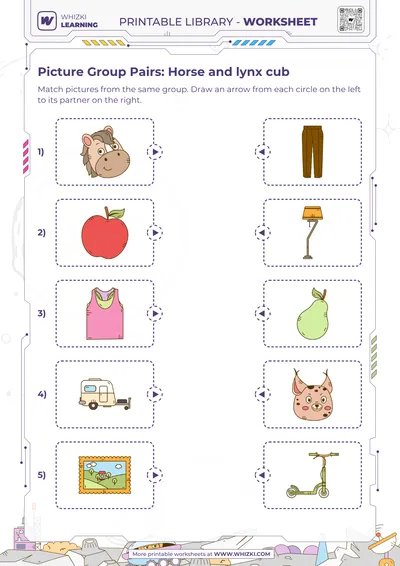
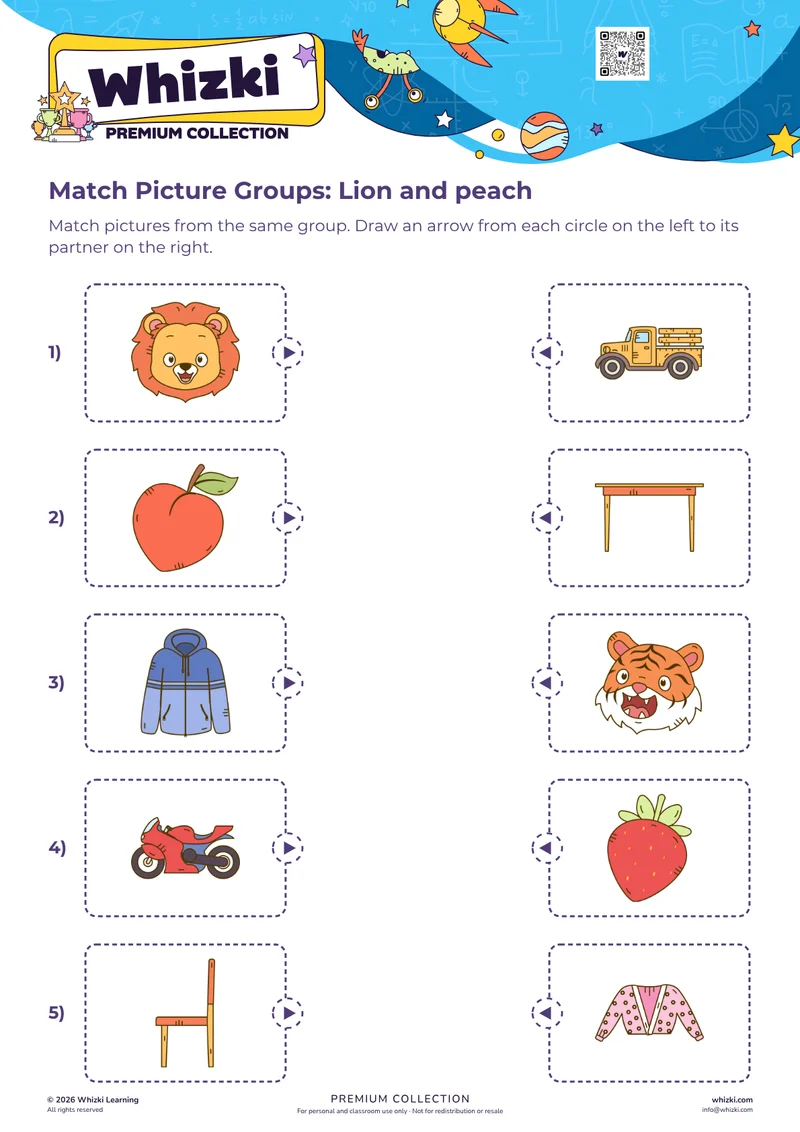


Group lion with tiger and identify corresponding pairs of fruits, clothing, vehicles, and furniture using their everyday meanings.
Find a partner in a shuffled column rather than matching by row position, checking that each picture is used once.
Explain a chosen pair using a shared category and suggest another familiar example that could belong to that group.

This picture category matching worksheet shows five pictures on each side. Draw a line between pictures from the same everyday group: animals, fruits, clothing, vehicles, or furniture. The page includes a lion and tiger as its animal pair, with a different pair for each of the other four groups.
Look at the left picture and say what kind of thing it is before searching on the right. For example, peach and strawberry belong together as fruits, while motorcycle and pickup truck are vehicles. The matching partner is placed on a different row, so compare meaning and use rather than drawing straight across without checking.
Name unfamiliar pictures together before the child starts drawing lines. An adult can offer a group word, then ask which other picture belongs with it. Each picture is used once in the intended matching. If a child suggests a different connection, listen to the reason and return to the five group names to work out which partner fits this particular activity.
Explore the Picture Sorting and Logic Pack for more grouping activities. The Animals and Nature Picture Activities offer other naming and comparison pages. After matching, choose one pair and name another item that could join its group. You can also gather a few familiar objects and explain how you would group them, using the same categories when they fit.
Boost your child’s skills with our discounted workbooks. Engaging activities for preschool, kindergarten, and grade 1 - now at special sale prices!


Fast shipping
Secure Payment
Licensed Teachers
For the planet
Printed in the USA
Helpful guides for parents and teachers, and tips for making learning at home super fun.

A field note on choosing pictures, printed words, or both on early-learning pages so prereaders get the right clue for the skill being practiced.

A gentle gratitude decision tree for ages 3-7, with drawing, choosing, dictating, or passing so children can answer honestly without performing.

A field note on bilingual worksheet directions, with practical checks for parallel meaning, readable layout, clear verbs, and fair visual space.

Try a calm one-week moon watch with young children: look at a regular time, sketch the visible shape, note weather gaps, and compare what changed.
Get exclusive activities, expert tips, and inspiration for a more meaningful, offline family life.