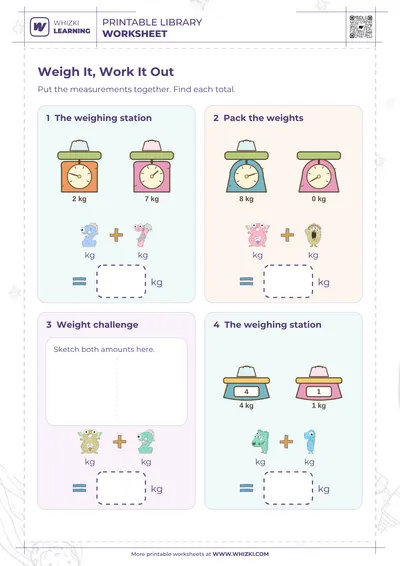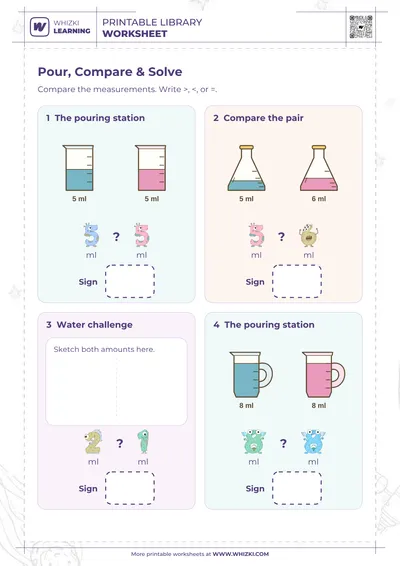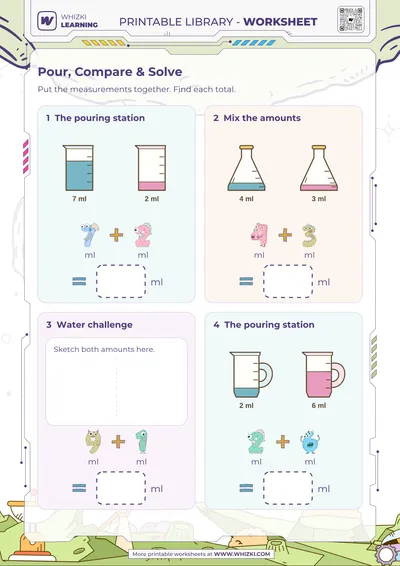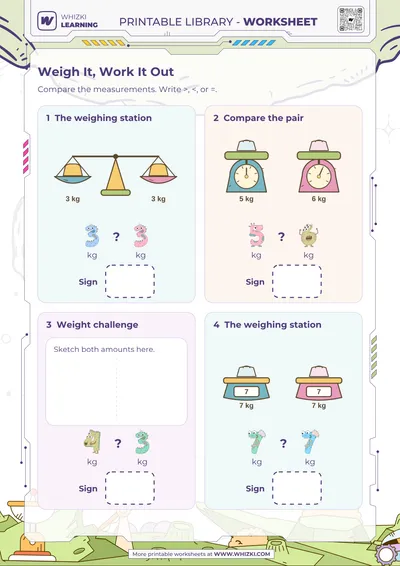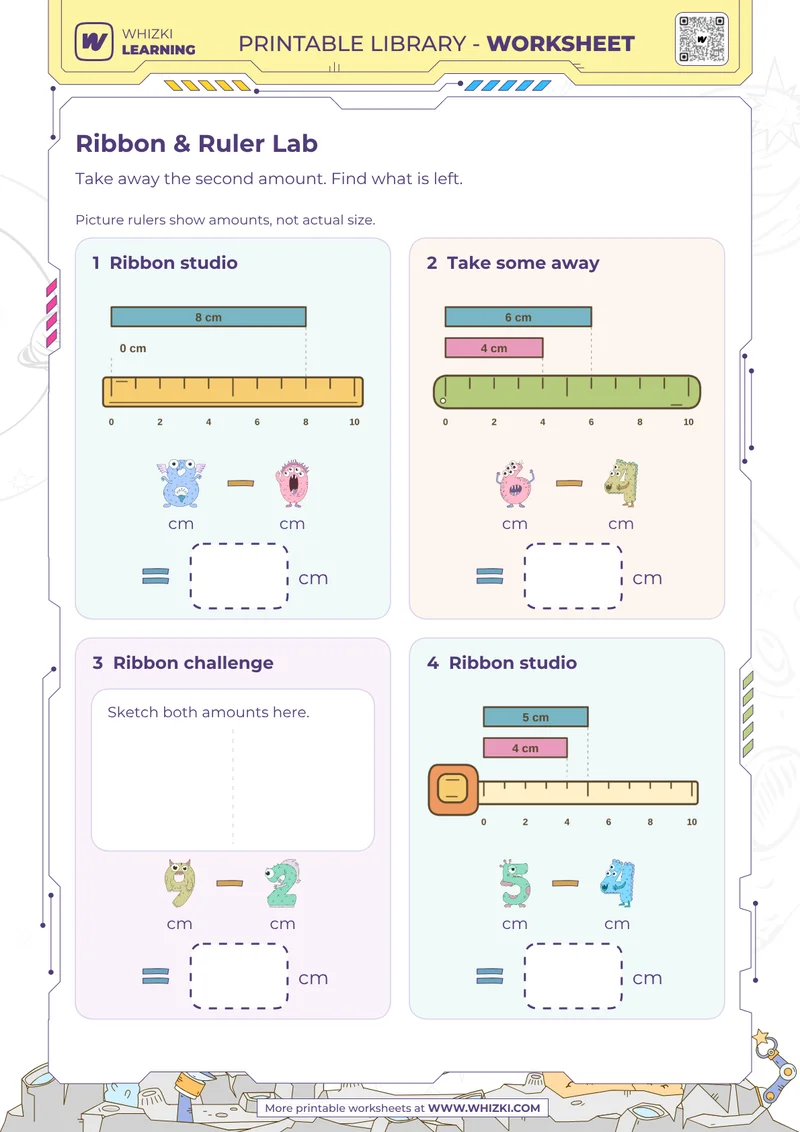


Centimeter quantities → Subtracting measurements → Records the difference in cm after looking at the matching picture model.
Measurement pictures → Reading model quantities → Connects the shown ruler, scale, or container to the subtraction problem.
Subtraction equations → Writing answers with units → Practices keeping the centimeter label with the final measurement.

Measurement can feel fussy at first, especially when a child has to keep the number and the unit together. This printable page has four subtraction problems in centimeters. Each problem is paired with an illustrated ruler, scale, or measuring container that matches the saved quantity, so the picture gives a visual clue while the child works.
This page fits a kindergartner who can read simple numbers, write numerals, and try basic subtraction with support. The pictures are models, not life-size measuring tools, so they are there to help make sense of the problem rather than to measure with. Say that out loud before starting if your child reaches for the ruler picture as if it were real.
As you work together, have your child read the centimeter amounts, subtract, and write the answer with cm. If they rush, point back to the model and ask, “What amount are we starting with?” and “What amount is being taken away?” That keeps the focus on measurement difference, not just on finishing the page.
For a good next step, keep the same talk about units and switch to a different measurement type. The kilogram addition measurement worksheet helps practice adding weights, while the pint addition measurement worksheet gives a simple way to talk about liquid amounts. Both can help show that the unit matters, even when the operation changes.
Boost your child’s skills with our discounted workbooks. Engaging activities for preschool, kindergarten, and grade 1 - now at special sale prices!


Fast shipping
Secure Payment
Licensed Teachers
For the planet
Printed in the USA
Helpful guides for parents and teachers, and tips for making learning at home super fun.

Use one familiar snack to build science talk and vocabulary without pressure to taste. This kitchen-table investigation honors allergies, texture needs, and child choice.

Help young children measure with paper clips before a ruler, using equal units, clear endpoints, and quick fixes for gaps, overlaps, and different answers.

Picture labels can build meaning, first-sound attention, or guessing habits. Use this parent-friendly decision tree to know when to cover or reveal the picture.

A vague school screening notice can leave families guessing, so start with seven plain questions about the test, timing, language, evidence, and next steps.
Get exclusive activities, expert tips, and inspiration for a more meaningful, offline family life.