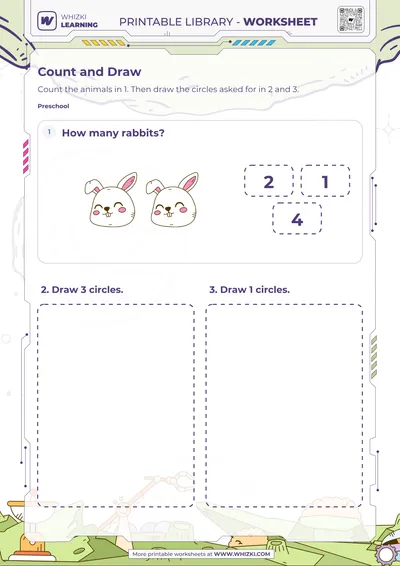
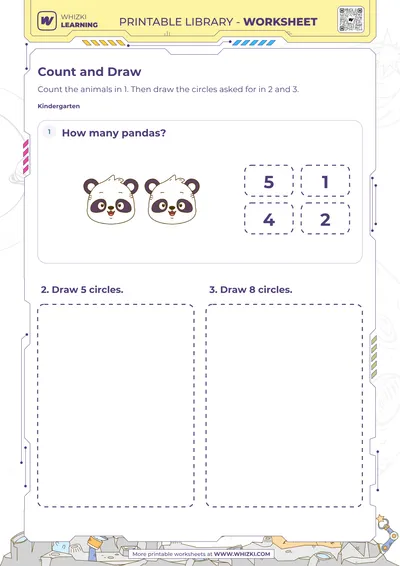
Child → Counts an existing circle group → Names the total after touching or pointing to each circle once.
Child → Draws requested circle groups → Makes two sets that match the given numbers, up to ten circles each.
Child → Checks set size → Compares drawn circles with the requested number and fixes extras or missing circles.

First graders often know the counting words, but they can still lose track when a page asks them to make a set. On this printable, kids count one group of circles, then draw two requested groups of circles. Each drawing stays within ten circles, so the work feels small enough to finish.
This is a good fit when a child can say number words in order and is ready to connect a written number with a small set. If they rush, slow it down with a pencil tap: one tap for one circle. That simple pace supports one-to-one counting without turning the page into a test.
The count-and-draw format makes number sense visible. First, they read or hear the requested number. Then they draw circles one at a time and stop when the set matches. Ask, "How do you know?" and let them recount, add a missing circle, or cross out an extra circle if needed.
For a next step, use number cards beside the page so the numeral stays in view while they draw. The Number Cards One to Twenty Worksheet helps with reading and ordering numerals before drawing sets. When teen numbers come up later, the Tens and Ones Number Cards Worksheet gives extra place-value practice, which helps children see how larger numbers are built.
Boost your child’s skills with our discounted workbooks. Engaging activities for preschool, kindergarten, and grade 1 - now at special sale prices!


Fast shipping
Secure Payment
Licensed Teachers
For the planet
Printed in the USA
Helpful guides for parents and teachers, and tips for making learning at home super fun.

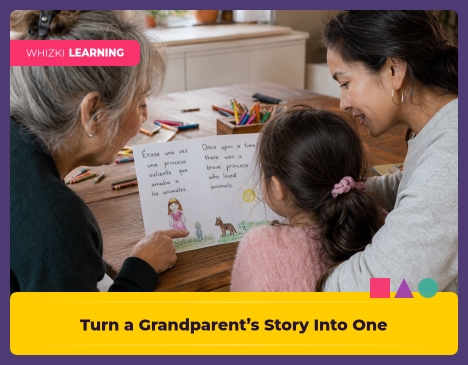
A simple plan for turning one grandparent memory into a bilingual keepsake page with exact words, a child drawing, and clear privacy boundaries.

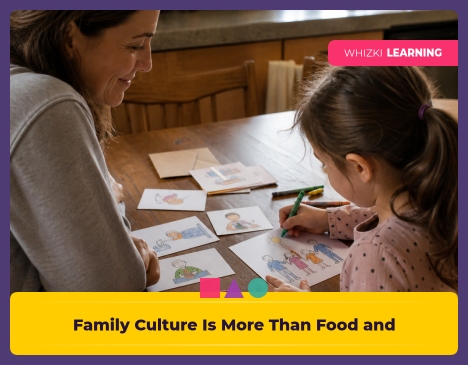
A practical guide for inviting family stories about names, language, music, routines, celebrations, and places without putting children on display.

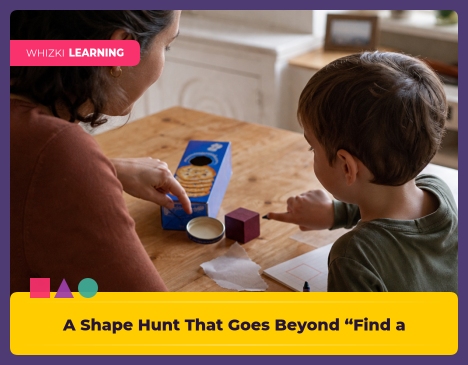
Turn a quick room search into early geometry talk by asking about sides, corners, curves, and shapes inside everyday objects.

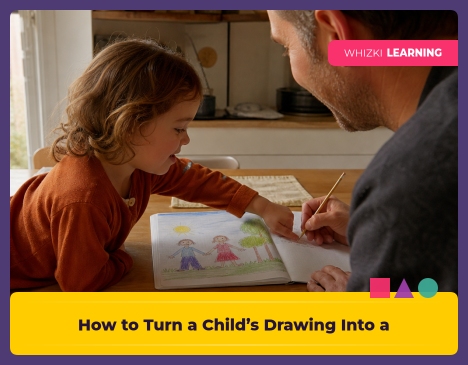
Use a child’s own drawing and spoken words to build a first sentence through adult dictation, shared writing, or optional child writing.
Get exclusive activities, expert tips, and inspiration for a more meaningful, offline family life.