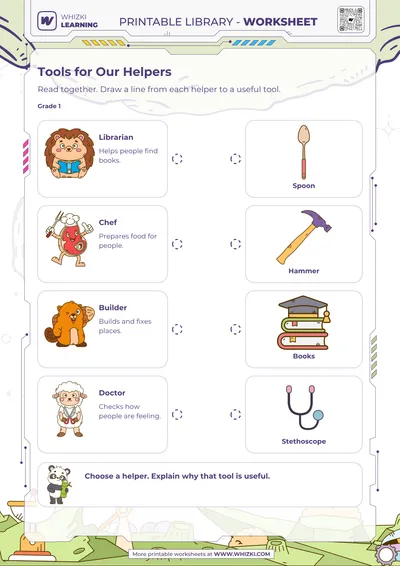
Community helpers → Identify familiar roles → Child points to or names helpers while connecting each one with a simple job idea.
Community helpers → Build social studies vocabulary → Child uses words about helpers, work, and community during short parent-led conversation.
Community helpers → Explain purpose → Child tells one way a helper supports people using a spoken phrase or sentence.

Preschoolers can recognize familiar uniforms or tools, but they may stall when asked, “What does this person do?” Use this community helpers page as a calm, screen-free conversation starter. Sit side by side, look at each item on the page, and invite your child to name the helper or describe the job in their own words.
This is a good fit when a child is starting to notice people who work in the neighborhood, at school, in stores, or during errands. The practice is about social studies vocabulary and real-world understanding. If the answer does not come right away, offer two choices, then let them point or say the word. That keeps the task doable without turning it into a quiz.
As you work, model a short sentence such as, “This helper keeps people safe,” or “This helper helps when someone needs care.” Then ask one small follow-up question. The goal is to connect each helper with what they do, not to memorize a long list. For more practice with the same theme, try this community helpers preschool worksheet to revisit the idea in another printable format.
When the page is done, bring the learning into the day. Ask, “Who helped us today?” after a walk, appointment, delivery, or store trip. If your child enjoys the topic, this additional community helpers activity gives you another simple page for naming, comparing, and talking about helpers together.
Boost your child’s skills with our discounted workbooks. Engaging activities for preschool, kindergarten, and grade 1 - now at special sale prices!


Fast shipping
Secure Payment
Licensed Teachers
For the planet
Printed in the USA
Helpful guides for parents and teachers, and tips for making learning at home super fun.

Help young children measure with paper clips before a ruler, using equal units, clear endpoints, and quick fixes for gaps, overlaps, and different answers.

Picture labels can build meaning, first-sound attention, or guessing habits. Use this parent-friendly decision tree to know when to cover or reveal the picture.

A vague school screening notice can leave families guessing, so start with seven plain questions about the test, timing, language, evidence, and next steps.

A field note on the May 2026 move to one shared worksheet generator API, with a simple parent preview for print consistency and handwriting comfort.
Get exclusive activities, expert tips, and inspiration for a more meaningful, offline family life.