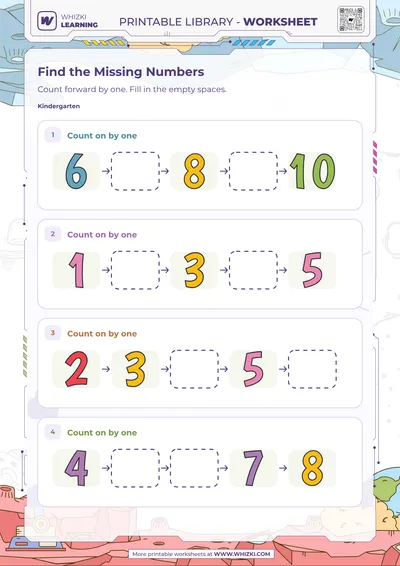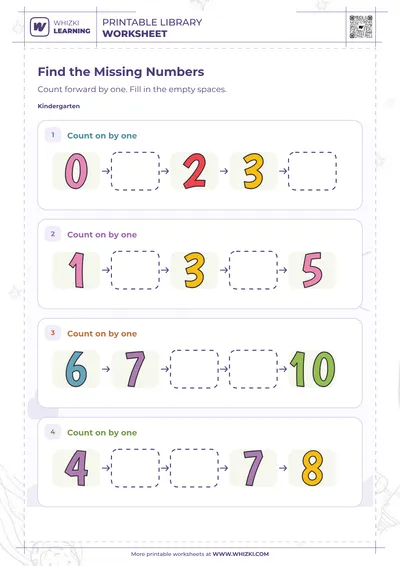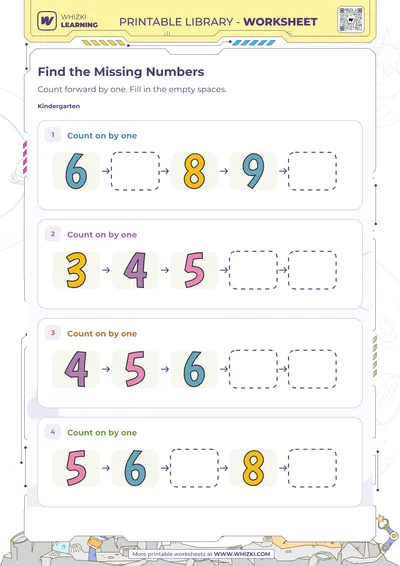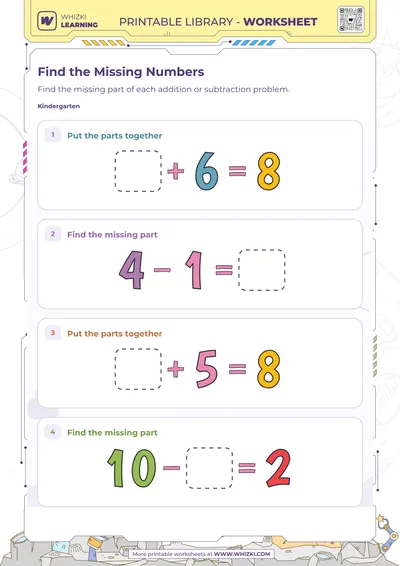


Find the Missing Numbers worksheet → counting forward within ten → Child fills skipped numbers and sees how number order stays steady.
Find the Missing Numbers worksheet → comparing before and after numbers → Child uses nearby numbers to choose each missing value.
Find the Missing Numbers worksheet → simple addition and subtraction facts → Child connects missing numbers with parts and totals within ten.

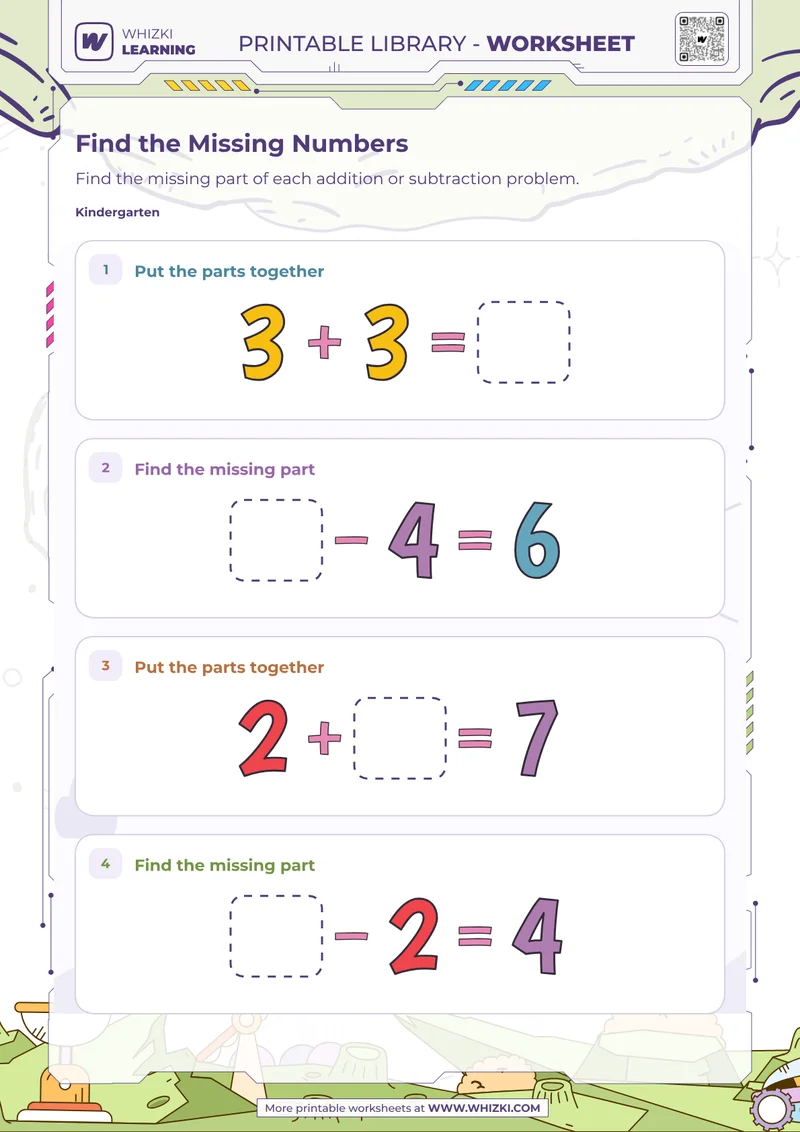
The Find the Missing Numbers worksheet gives kindergarten children practice with counting order and number sense. Each row shows a short number sequence, such as 5, 6, 7, 8, 9 or 0, 1, 2, 3, 4, with two missing spots for a child to fill in. The page also includes simple addition and subtraction facts within 10, so children connect missing numbers with part-whole thinking.
At age 5, many children can count out loud but still pause when a number disappears from the middle of a line. That pause is normal. The worksheet helps a child look before and after the blank, say the sequence slowly, and decide which number belongs in each open space.
A parent or teacher can sit beside the child and read one row at a time. Ask the child to point to each number, whisper the counting pattern, and write the missing numbers in the blanks. For the addition and subtraction facts, use fingers, small blocks, or drawn dots to check the missing part together.
The worksheet stays focused on four short rows, so the work feels doable for a young learner who gets bored fast. The mix of number lines and simple equations makes the printable more useful than a plain counting page, because the child practices both number order and early math relationships on the same sheet.
Boost your child’s skills with our discounted workbooks. Engaging activities for preschool, kindergarten, and grade 1 - now at special sale prices!


Fast shipping
Secure Payment
Licensed Teachers
For the planet
Printed in the USA
Helpful guides for parents and teachers, and tips for making learning at home super fun.

Picture labels can build meaning, first-sound attention, or guessing habits. Use this parent-friendly decision tree to know when to cover or reveal the picture.

A vague school screening notice can leave families guessing, so start with seven plain questions about the test, timing, language, evidence, and next steps.

A field note on the May 2026 move to one shared worksheet generator API, with a simple parent preview for print consistency and handwriting comfort.

A seven-minute apple observation helps children compare color, stem, skin, weight, smell, and a cut surface, then draw what children noticed before any craft begins.
Get exclusive activities, expert tips, and inspiration for a more meaningful, offline family life.