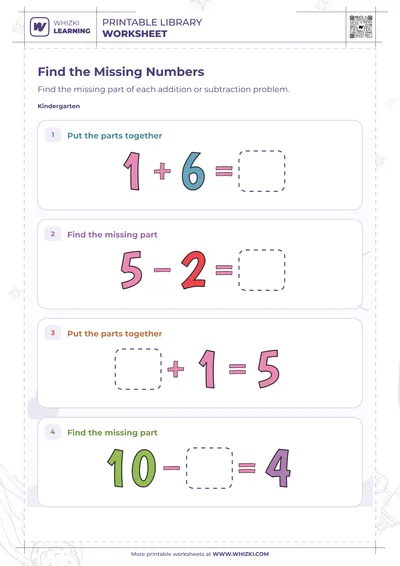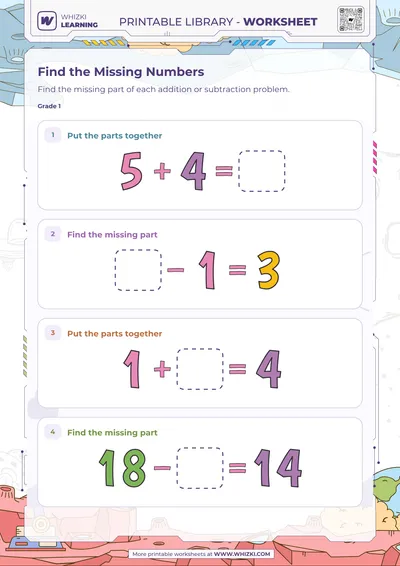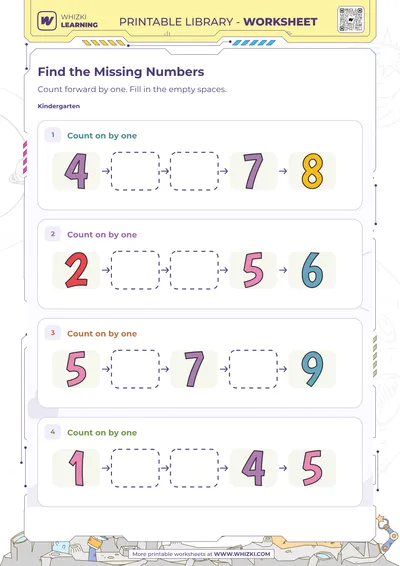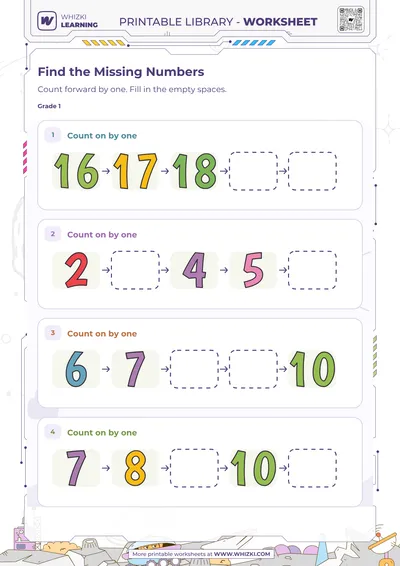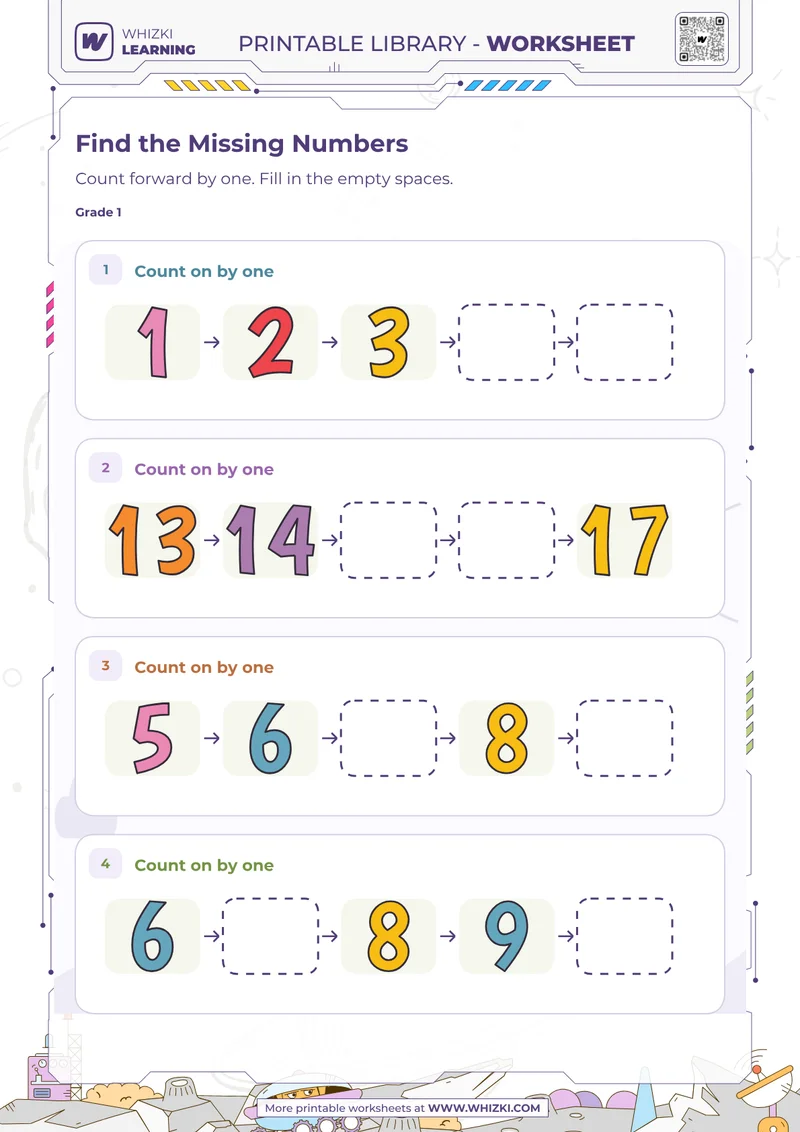


Number trails → Count forward by ones → fills missing spaces by using nearby numbers as clues.
Addition facts → Connect parts and totals → identifies the unknown number in two plus three equals five and two plus seven equals nine.
Subtraction facts → Compare starting numbers and takeaways → completes missing results for nineteen minus three and eighteen minus four.

Six-year-olds may know the count words but still stall when a blank sits in the middle of a row. This printable gives four short number trails and simple addition or subtraction facts, so your child can read the numbers that are shown, count forward, and write the missing numbers in the open spaces.
The page fits a Grade 1 learner who is working on counting in order and connecting that order to basic facts. Some rows use small counting ranges like 1 to 5 and 5 to 9, while others use teen numbers, including 13 to 17 and 6 to 10. If teen numbers feel shaky, the tens and ones number cards worksheet is a helpful next stop because it lets kids see how teen numbers are built.
The practice works by giving nearby number clues instead of asking for a long count from memory. In the trails, your child can look before and after a blank to decide what belongs there. In the facts, the same number sense shows up in equations such as addition totals and subtraction results, including a missing start in one addition fact.
Sit nearby and ask, “What number comes right before this?” or “What number would make the fact true?” If frustration pops up, cover the other rows and do just one trail together. For a gentler warm-up before this page, try the counting animals number choice worksheet, which keeps the focus on counting and choosing a number before moving back to missing-number writing.
Boost your child’s skills with our discounted workbooks. Engaging activities for preschool, kindergarten, and grade 1 - now at special sale prices!


Fast shipping
Secure Payment
Licensed Teachers
For the planet
Printed in the USA
Helpful guides for parents and teachers, and tips for making learning at home super fun.

Use one familiar snack to build science talk and vocabulary without pressure to taste. This kitchen-table investigation honors allergies, texture needs, and child choice.

Help young children measure with paper clips before a ruler, using equal units, clear endpoints, and quick fixes for gaps, overlaps, and different answers.

Picture labels can build meaning, first-sound attention, or guessing habits. Use this parent-friendly decision tree to know when to cover or reveal the picture.

A vague school screening notice can leave families guessing, so start with seven plain questions about the test, timing, language, evidence, and next steps.
Get exclusive activities, expert tips, and inspiration for a more meaningful, offline family life.