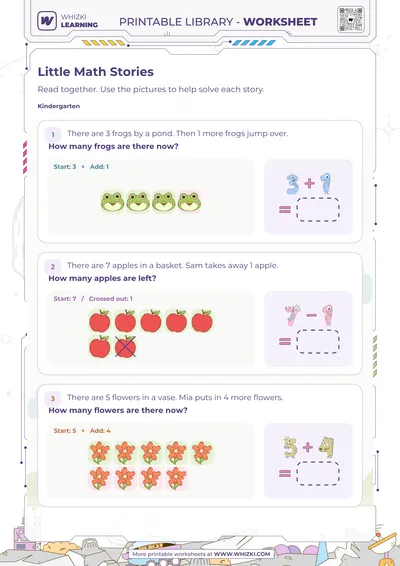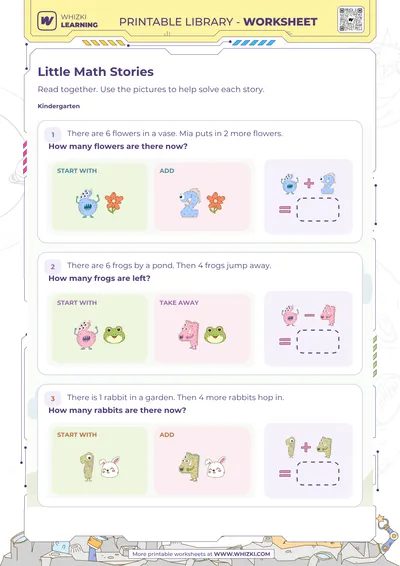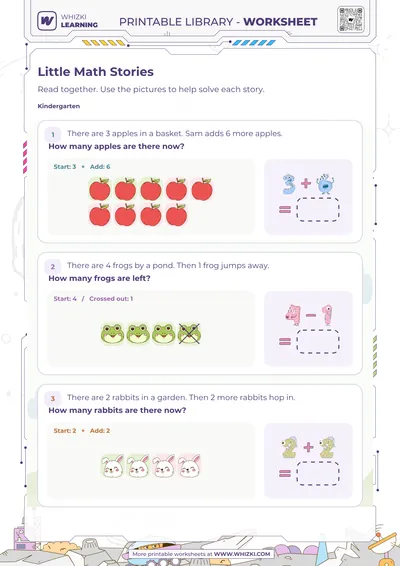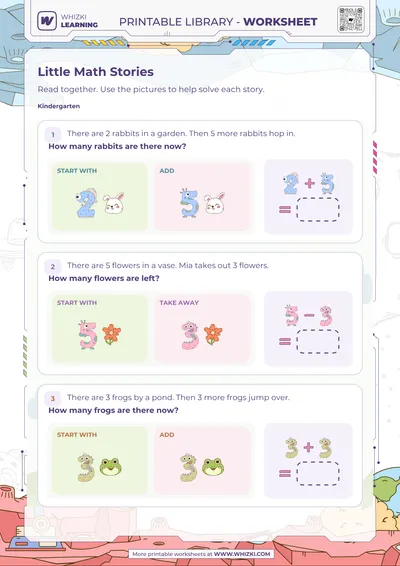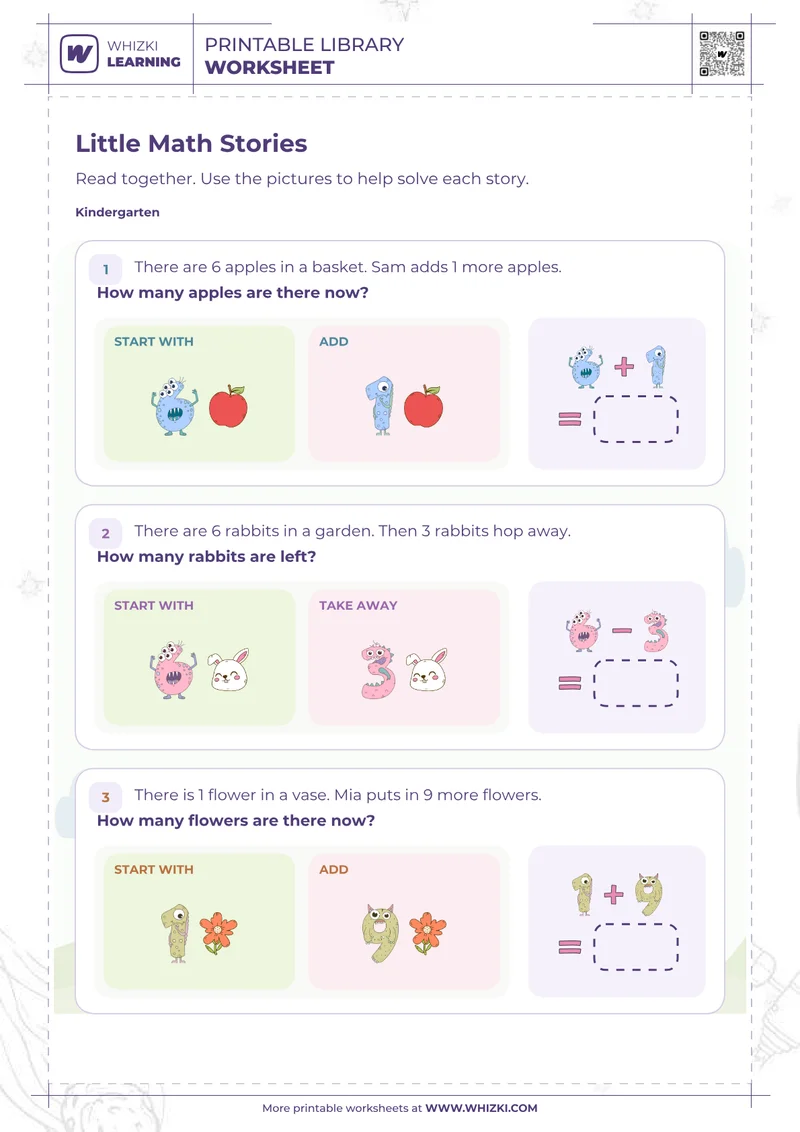


Apple story → Add one to six → Child reads the change, counts on, and writes or says seven.
Rabbit story → Subtract three from six → Child tracks rabbits hopping away and answers with three left.
Flower story → Add nine to one → Child combines parts to make ten and explains how many flowers are now shown.

Kids often know how to count, then stall when the numbers are tucked inside a story. This printable keeps the work small and clear with three little math stories: apples in a basket, rabbits in a garden, and flowers in a vase. One story adds 1 to 6, one takes 3 away from 6, and one adds 9 to 1.
This is a good kindergarten fit when a 5-year-old can count small groups and is beginning to hear words like more, left, and now as math clues. You can read each story aloud first, then let the child repeat the action in their own words. If reading the sentences is still hard, that is okay. The math practice can still happen through listening, pointing, counting, and answering.
The practice works best when the child slows down and notices the change. For the apple story, ask, “Did Sam add more or take away?” For the rabbit story, have them show 6 fingers, put 3 down, and count what is left. For the flower story, help them see 1 and 9 coming together to make 10. Small objects, fingers, or quick dots on scrap paper can make each story feel concrete.
Sit nearby and let them talk through the answer before writing it. If they guess, go back to the story and act it out once more. For more story-based practice, try another little math stories worksheet so the same routine feels familiar. When making 10 is the tricky part, make ten with ten frames gives a visual next step for seeing 1 and 9 as a full ten.
Boost your child’s skills with our discounted workbooks. Engaging activities for preschool, kindergarten, and grade 1 - now at special sale prices!


Fast shipping
Secure Payment
Licensed Teachers
For the planet
Printed in the USA
Helpful guides for parents and teachers, and tips for making learning at home super fun.

Use one familiar snack to build science talk and vocabulary without pressure to taste. This kitchen-table investigation honors allergies, texture needs, and child choice.

Help young children measure with paper clips before a ruler, using equal units, clear endpoints, and quick fixes for gaps, overlaps, and different answers.

Picture labels can build meaning, first-sound attention, or guessing habits. Use this parent-friendly decision tree to know when to cover or reveal the picture.

A vague school screening notice can leave families guessing, so start with seven plain questions about the test, timing, language, evidence, and next steps.
Get exclusive activities, expert tips, and inspiration for a more meaningful, offline family life.