Learning Outcomes
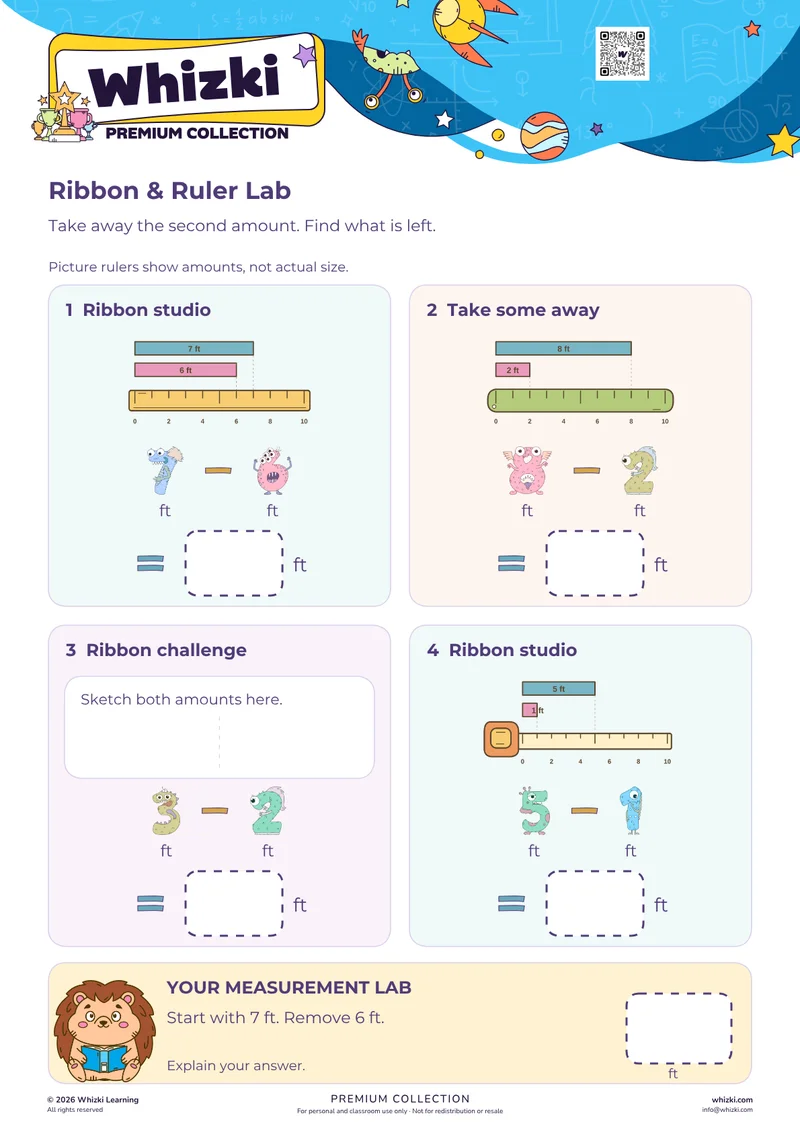
Subtracts lengths measured in feet. Each row asks the child to find the difference between two foot measurements.
Identifies the unit ft in a math problem. The worksheet keeps the unit consistent so children can connect the number answer to length.
Writes complete measurement answers. Children practice recording the difference with both a number and the ft unit.

Subtract Lengths in Feet: Measurement Math
Measurement can feel tricky when a child is still working hard to read numbers, remember the unit, and decide what operation to use. If you have ever watched a student guess because feet feels like extra noise, this page gives you one calm next step: subtract short lengths that all use the same unit.
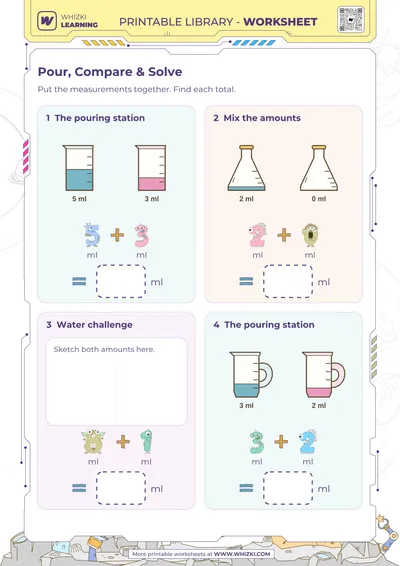
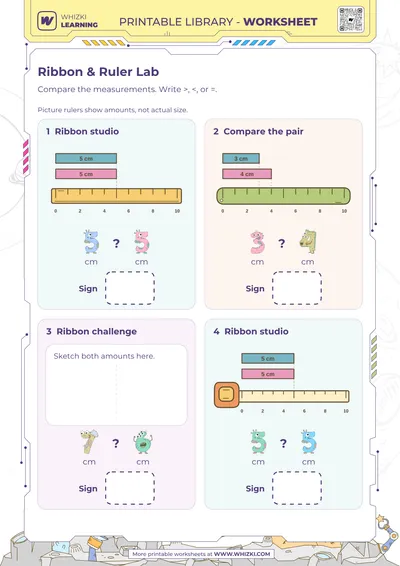
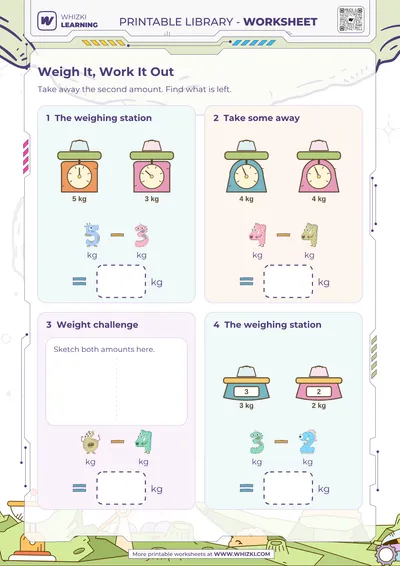
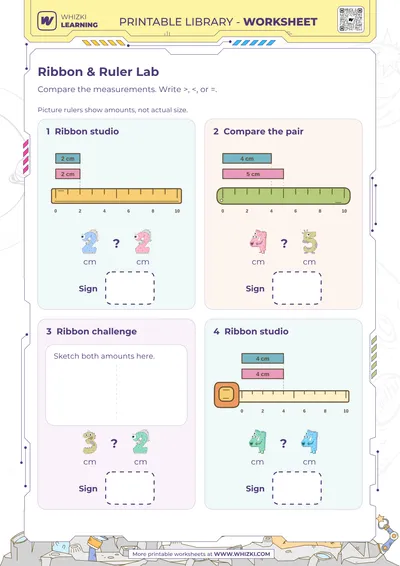
On the printable, children solve four horizontal subtraction problems with lengths in feet. Each row shows one foot measurement minus another foot measurement, so the child can focus on finding the difference and writing the answer with the ft unit. The small measurement mission reinforces the same idea with an illustrated prompt.
Use it after a quick hands-on warm-up: mark two pieces of string, paper strips, or blocks as longer and shorter, then ask, How much longer? Let your child solve one row at a time, say the equation aloud, and circle the unit before writing the answer.
This worksheet is part of the Measurement Workshop set in the Whizki Pro tier. The set explores length, weight, and liquid volume with illustrated tools and hands-on math, and this page zooms in on imperial length subtraction using feet.
Keep the session short. Do the first problem together, let your child try the next two, and save the last one for a quick check. If attention drops, stop after five minutes and return with a ruler or tape measure later.
Limited-time savings
on Whizki workbooks.
Boost your child’s skills with our discounted workbooks. Engaging activities for preschool, kindergarten, and grade 1 - now at special sale prices!


Fast shipping
Secure Payment
Licensed Teachers
For the planet
Printed in the USA
Find fresh ideas
To help your little learners grow!
Helpful guides for parents and teachers, and tips for making learning at home super fun.

A seven-minute apple observation helps children compare color, stem, skin, weight, smell, and a cut surface, then draw what children noticed before any craft begins.

A field note on why Ukrainian-English workbook pages need fresh design choices for letters, examples, space, and language-specific skills.

A fast weather window journal helps ages 3-7 notice sky and temperature feeling with simple symbols, compare a few days, and learn observation versus forecast.

A five-minute snack sort turns crackers, berries, or allergy-friendly objects into early data practice as children sort, count, compare, and clean up.
Join the Screen-Free Movement.
Get exclusive activities, expert tips, and inspiration for a more meaningful, offline family life.