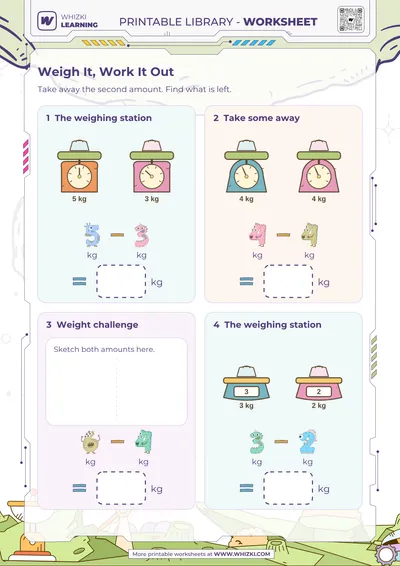
Pint subtraction problems → Subtract measured amounts in pt → Writes the remaining quantity with the matching unit label.
Illustrated measurement models → Match pictures to shown quantities → Connects a subtraction equation with a visual amount.
Adult-guided practice → Read each pt label and answer together → Checks work by pointing to the modeled quantity.

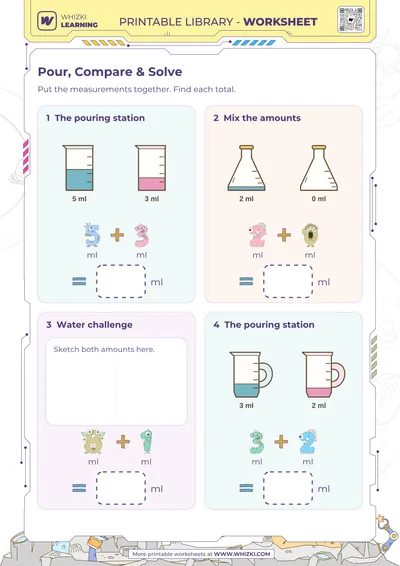
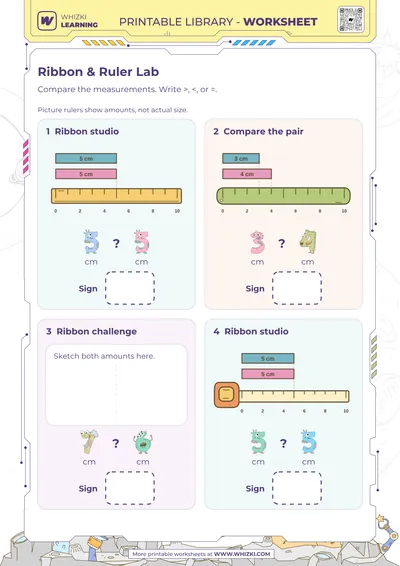
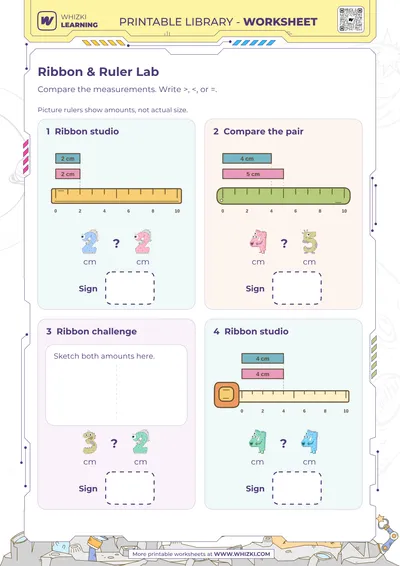
Kids may know how to take away, then pause when a tiny unit label shows up beside the number. This printable page gives them four subtraction problems in pt, the abbreviation for pints. The pictures match the quantities shown in the problems, so you can point, read the number sentence, and write the answer together.
It is a good fit when a child can count back or solve simple subtraction with support, even if measurement units are still new. Before writing, ask, “What unit do we see?” Then have them point to or say “pt” so the unit stays attached to the amount.
The work is small on purpose. Four problems leave room to slow down, read each amount, subtract, and check whether the answer makes sense as a measured quantity. The illustrated rulers, scales, or measuring containers are picture models, not life-size tools, so use them for thinking rather than measuring. If they are ready for another operation with measurement units, feet addition measurement practice gives them a related way to work with unit labels through addition.
Sit nearby and let them try the subtraction first, then step in with a counting-back prompt if they freeze. After finishing, ask them to reread each answer with the unit because the unit is part of the measurement. For a next step with a different unit and the same take-away idea, try kilogram subtraction measurement practice.
Boost your child’s skills with our discounted workbooks. Engaging activities for preschool, kindergarten, and grade 1 - now at special sale prices!


Fast shipping
Secure Payment
Licensed Teachers
For the planet
Printed in the USA
Helpful guides for parents and teachers, and tips for making learning at home super fun.

A practical guide for inviting family stories about names, language, music, routines, celebrations, and places without putting children on display.

Turn a quick room search into early geometry talk by asking about sides, corners, curves, and shapes inside everyday objects.

Use a child’s own drawing and spoken words to build a first sentence through adult dictation, shared writing, or optional child writing.

Turn one borrowed book into five short learning moments for ages 3 to 7, with choosing, rereading, drawing, counting, memory, and returning.
Get exclusive activities, expert tips, and inspiration for a more meaningful, offline family life.