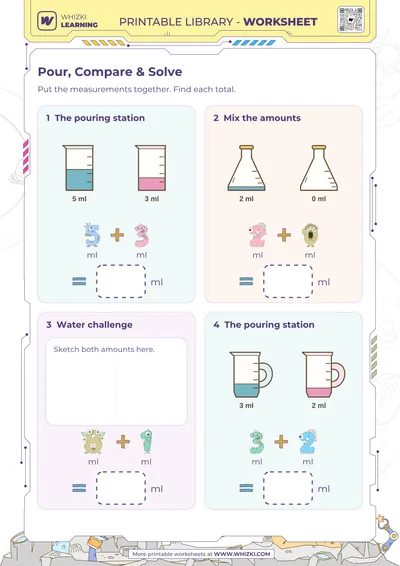
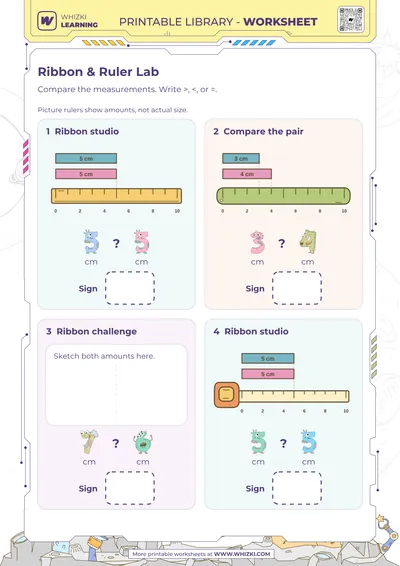
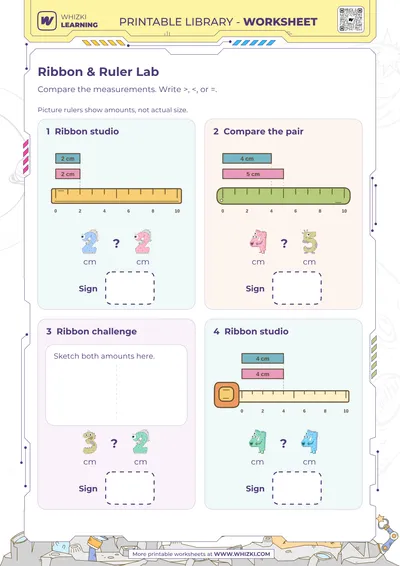
Milliliter amounts → Compare saved quantities → Child identifies which modeled amount is more or less using the printed measures.
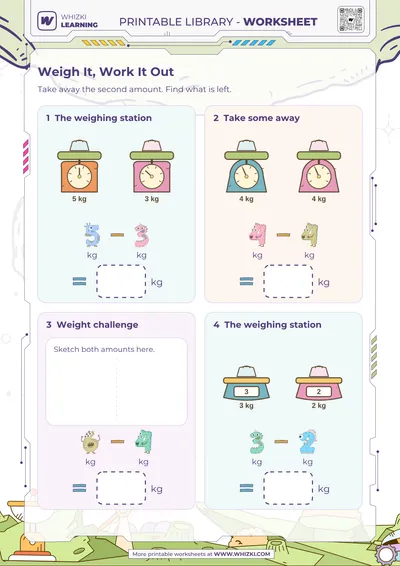
Measurement models → Read visual information → Child connects illustrated containers, rulers, or scales to the matching milliliter quantities.
Kindergarten math language → Explain comparisons → Child uses words like more, less, greater, or smaller while discussing each problem.

Kids can compare numbers one minute and get stuck the next when those numbers are tied to a unit. This one-page activity keeps the job clear. It has four comparison problems in milliliters, with illustrated rulers, scales, or measuring containers that match the saved quantities. The pictures are models, not life-size measuring tools, so the goal is to read, notice, and compare the amounts shown.
This is a good fit when a child can recognize written numbers and is starting to use words like more, less, greater, and smaller. Sit nearby for the first problem and ask, “What number do you see?” and “Which amount is more?” If your child needs a quick warm-up with another unit, the pint measurement comparison worksheet gives similar comparison practice with a different measurement word.
The practice works because each problem pairs a written milliliter amount with a visual model. That gives your child two ways to check the comparison. You can point to the numbers, then point to the model, and say the comparison out loud before writing the answer. Keep the pace gentle. Four problems are enough for a focused, screen-free math moment without turning it into a long lesson.
After the page, use a measuring cup, empty bottle, or kitchen container and look for the letters ml together. You do not need to measure exact amounts unless your child is interested. Just naming milliliters in real life helps connect the printed work to everyday objects. For a next step with the same unit, try the milliliter addition measurement worksheet, which moves from comparing amounts to adding milliliter quantities.
Boost your child’s skills with our discounted workbooks. Engaging activities for preschool, kindergarten, and grade 1 - now at special sale prices!


Fast shipping
Secure Payment
Licensed Teachers
For the planet
Printed in the USA
Helpful guides for parents and teachers, and tips for making learning at home super fun.

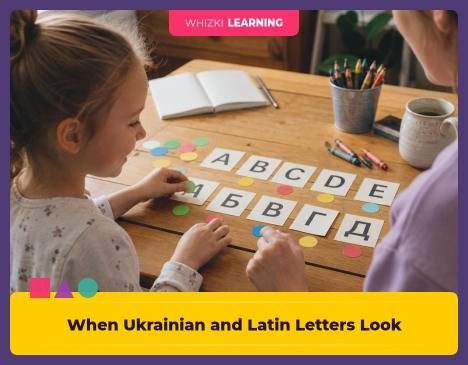
A warm, practical plan for helping ages 3-7 notice Ukrainian and Latin letter look-alikes with color cues, context, and short table routines.

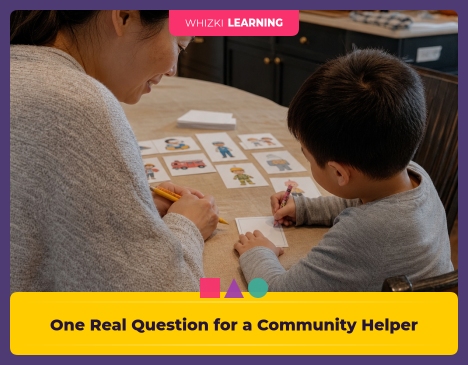
Help children ages 3 to 7 prepare one respectful question for a real community helper using a simple card, quick rehearsal, and honest context.

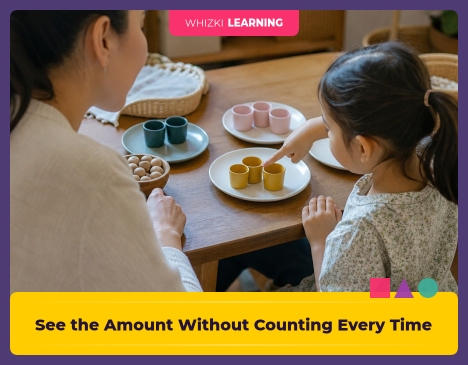
Use cups, plates, or blocks to help children ages 3-7 recognize small amounts without counting each object, in a quick table routine.

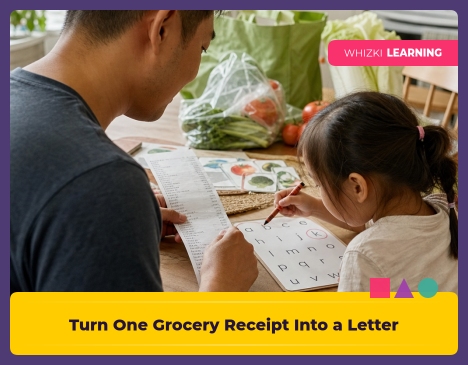
Use a grocery receipt for a short, screen-free letter hunt that compares uppercase and lowercase, spots repeated words, and stops before print feels tiring.
Get exclusive activities, expert tips, and inspiration for a more meaningful, offline family life.